The Birth of Light: Winter Solstice and the Eternal Circle
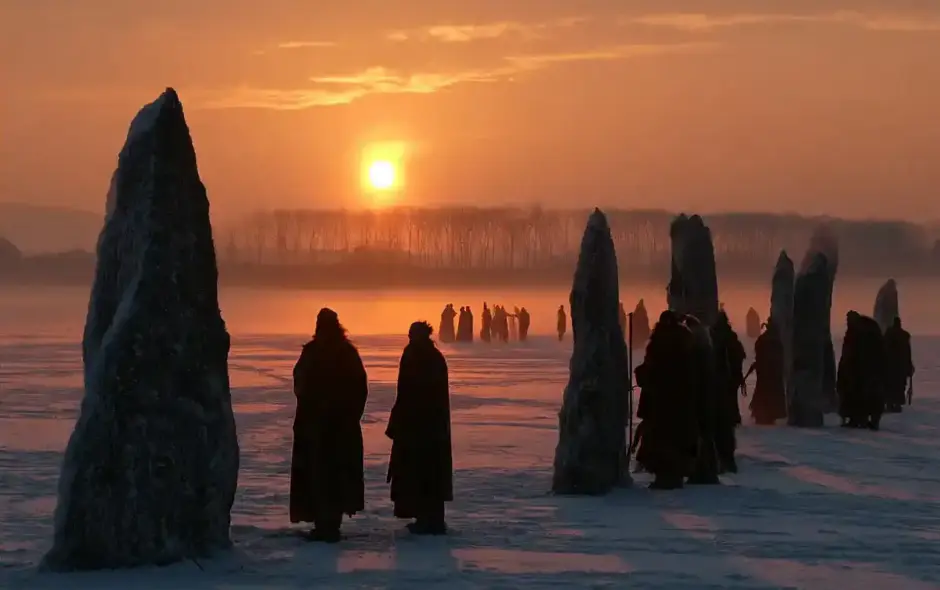
The Winter Solstice is the astronomical beginning of winter and, for the peoples of old, the return of the sun. Just as day emerges from night, so is the year reborn in the middle of winter. The Winter Solstice is the hour of birth for the new year – year after year in the eternal cycle.
In English usage, it is also called Solstice – the standing still of the sun. Now the days grow longer again, and the people of earlier times celebrated this day as the Birth of Light, the returning sun, or the coming spring. There can likely be no better symbol for the return of the sun than the festivals surrounding the Winter Solstice.
Yule Wheel and St. Thomas’ Night: A Pagan High Feast
The Winter Solstice was likely one of the great high feasts of the Germanic peoples. After the sun’s return, the Yule Wheel begins to turn, and immediately following comes the Yule festival. Although, among the Southern Germanic tribes, the Yule festival cannot be entirely proven.
Christianity placed St. Thomas or St. Thomas’ Night in place of the heathen Winter Solstice. It was celebrated in the circle of the family, with much food, games, and a giant fire.
Evergreen and Apple Magic: Bringers of Blessings for the Home
On this day, much evergreen wood was also brought into the houses. It was considered lucky and brought blessings into the home.
The Sacred Woods:
Apple tree
Mistletoe
Hazel tree
Yew
Fir
Holly
Juniper
Symbols of Abundance: For the fertility of the fields and gardens, which was vital for survival in those times, sheaves of grain were hung in the house. The home was also decorated with apples, nuts, baked goods, and symbols made of straw.
From Apple to Christmas Bauble: Our modern Christmas baubles symbolize the apples of heathen times, and our current Christmas tree represents the green branches of Germanic houses. In that era, there was an Apple Cult among the very early Germanic peoples; thus, it is also suspected that the apple tree is the mystical counterpart to the cultic Christmas tree. The apple symbolically bestowed eternal life and constant renewal, and its round shape is a symbol of the sun.
The Fire of the Long Night: Yule Log and Yule Candlestick
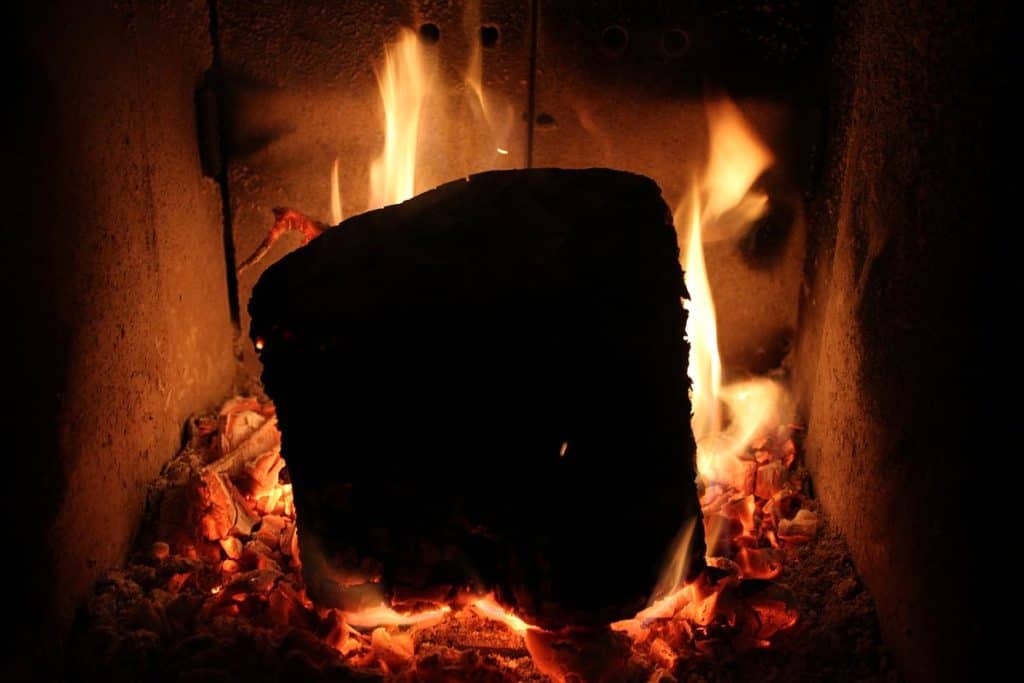
The oak log, also called the Yule Log, was fetched from the forest in those times, and it was not allowed to go out until the subsequent Rough Nights were over. It was lit on the first day of Yule.
In the night of the Winter Solstice, only the Yule candlestick (Julleuchter) was allowed to shine. Such a Yule candlestick was found in Halland, Sweden, and is exhibited in the Nordic Museum in Stockholm.
Thoughts on the Light: Here I ask myself: Did the peoples of that time already know candles? With what else did they illuminate the Yule candlestick? Animal tallow or beeswax, perhaps; unfortunately, I have found nothing about it. However, according to a church paper from the year 2007, candles made of beeswax were known and very popular among Germanic peoples from the 6th century of the common era. But there, too, only people of status, such as warriors, could afford them. Candles were also placed with these warriors as grave goods, which an excavation from the 6th century proves.
Light-Bringer Lucia and the Wild Nights
The Winter Solstice was understood as a pre-festival to the Yule feast. The Yule feast is arguably the most significant festival of our ancestors. In some regions, the Yule feast fell on December 14th and lasted for 3 days. It was the Winter Night, immediately after December 13th, the day of the Light-Bringer Lucia. In the Old Faith, this day was otherwise the shortest day.
In ancient knowledge, December 13th is the main “Trudennacht” (Witch’s Night) and in Christianity, the day of Saint Ottilie. Therefore, this day was observed as a Rough Night.
Not only in Winter: Rough Nights existed not only between December and January but often before major events, such as the day of the Light-Bringer Lucia. Rough Nights were also held on Walpurgis Night, in some regions even twelve, similar to winter. These are the “Wild Nights”.

Wodan and the Furious Host: The Wild Hunt
As Christianity gained importance and its December festivals coincided with heathen winter celebrations, the Yule festival was shifted. Yule was mostly a festival of joy and peace, celebrating fertility and the return of the sun, where the belief in gods played a subordinate role. The belief in diabolical powers, magic tools, and evil beasts partly only emerged with Christianity.
A devil seems to have been unknown to the Germanic peoples. The main Germanic god Wodan (or Odin in the North), Old High German Wuotan, was turned into the devil by Christianity, and the Wild Hunt became the “Furious Host”.
The Wild Hunt symbolized the partly severe winter storms of that time. This period was mystical, and nature and animals were filled with magic. To receive the blessings of the gods, food was left standing on the table.
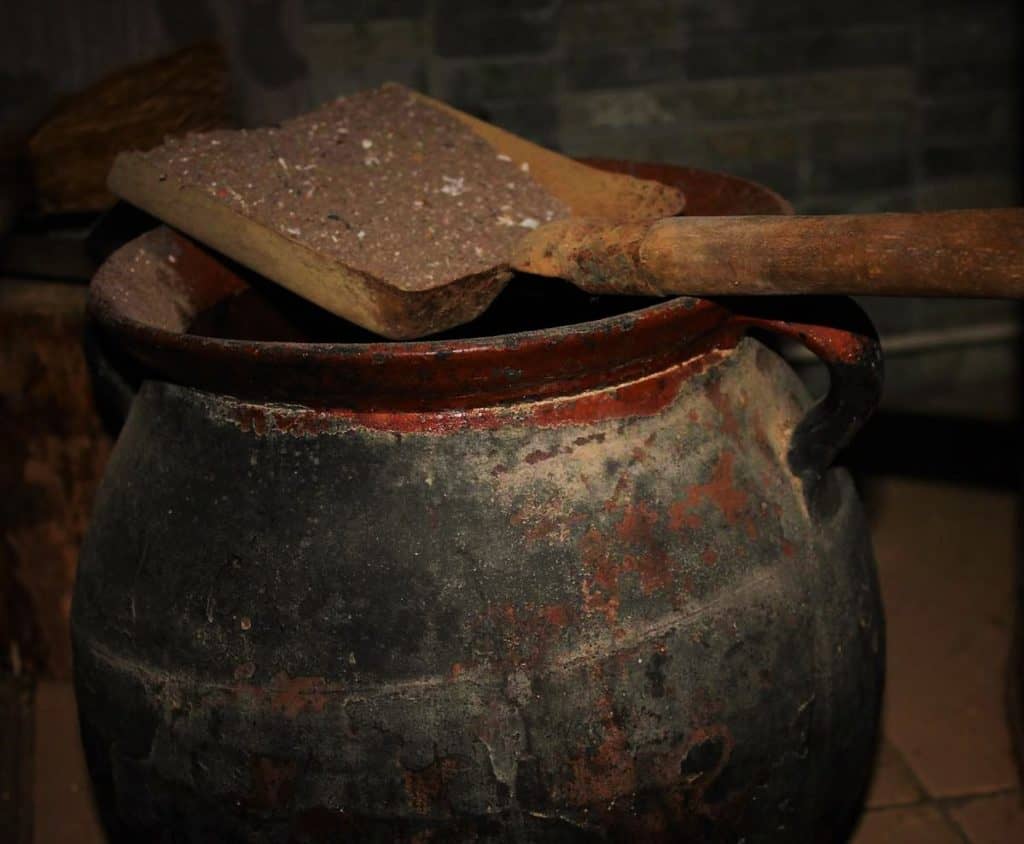
Sacrificial Bread and Sacred Ash: Customs of Darkness
Especially in remote places, the fear of winter was great, which led to the spread of protective rituals to ward off magic and demons. This belief accompanied people from November to January. All Souls’ Day in Christianity is said to be derived from a Germanic cult of the dead. In some places, the Rough Nights began on November 30th and ended on December 13th.
Cleansing and Gratitude: Houses were cleansed, and sacrificial animals were slaughtered. There were cult pastries in the shape of animals or sun wheels, and great fires burned on hills to celebrate the victory of the sun over winter.
The fire symbolized the rebirth of the light that displaces the darkness and had to burn during the Yule festival and the twelve Rough Nights. The ash of the Yule fire was sacred; in Christianity, there was the Easter fire ash, which was scattered in the spring during sowing.
The Watch of the Long Night: Luck into the House!
This silent, darkest time of the year with storms, cold, wetness, and snow triggered a fear in our ancestors that the sun might not rise again, which is why rituals were performed.
The Ritual of Lights: A ritual described as particularly beautiful for this night involves lighting a candlestick while other lights are extinguished and smudging the rooms with juniper branches.
With an incense pan, one went from room to room, waved it, and repeated aloud:
“Luck into the house – Bad luck out!”
People stayed awake all night to keep watch over the sunrise. After sunrise, the Yule Log, which symbolizes the sun, is lit and must not go out during the Rough Nights.
Warming Tea Punch for the Watch
For this night, a tea punch recipe is given:
Ingredients:
1 liter black tea
80 g rock candy (sugar)
300 ml Port wine
6 cl Brandy
Juice and zest of an untreated orange
Preparation: The sugar is dissolved in the hot tea, then mixed with the remaining ingredients, heated (do not let it boil!), and filled into glasses.

Foods of Light: Of Apple Dumplings and Sun Arcs
What is eaten at the Winter Solstice? We usually make apple dumplings for the Winter Solstice.
Shaped breads (“Gebildbrote”) were also baked, for example in the form of a little horn (croissant). We know the croissant from the bakery, where it can be bought at any time of year. A horn, baked for the Winter Solstice, shows the present and the future.
Symbolism of the Arc: In this arc, life ends and immediately gives new life again, as happens in the Winter Solstice. The arc also stands for inner contemplation and rest. Symbolically, this arc shows that life does not end after death.
The Soul Breads: Caraway Cakes from the 17th Century
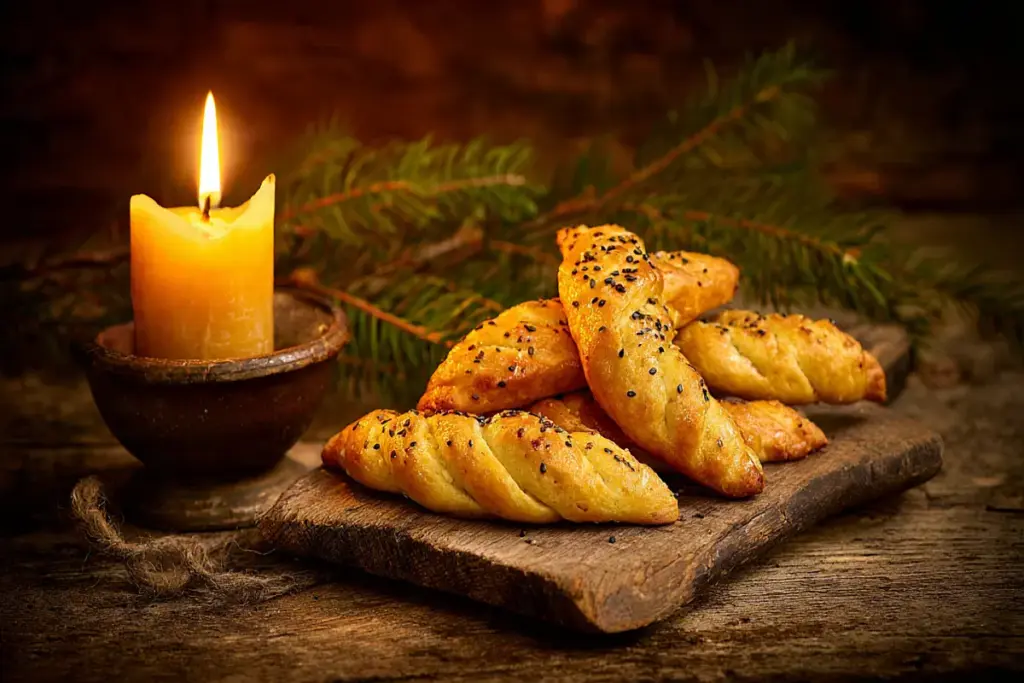
Caraway cakes (Kümmelküchlein) are an old cult food here in Germany. In some places, they are also called “Souls”. Caraway cake is traditionally baked and eaten at the Winter Solstice.
The Tradition: The belief was that if one fed poor souls with these soul breads in the transition from autumn to winter, a bountiful harvest would follow in the coming year. Later, these breads were given to poorer fellow human beings to eat during this time.
These customs are still present today, but mostly only in strictly Catholic regions. The recipe sounds tempting to me because I like caraway very much. Plus, it is from the 17th century; that sounds so wonderfully old.
Recipe: Historical Caraway Cakes (Souls)
Ingredients:
500 g flour
120 g melted butter
45 g yeast
2 whole eggs
2 egg yolks
1 small wine glass full of lukewarm milk
1 tablespoon sugar
A pinch of salt
To sprinkle: Caraway seeds and small flakes of butter
To brush: 1 egg
Preparation:
Start the dough: Dissolve the yeast with the small wine glass full of lukewarm milk. Add two whole eggs and two egg yolks. Add the sugar, a little salt, and the melted butter. Mix everything well.
Kneading: Now add the flour and mix everything well again so that a not-too-firm dough is formed.
Shaping: Sprinkle the work surface with flour. Shape the dough into small, elongated pieces that are pointed at both ends (in the shape of a finger). (Note: The shapes of these effigy breads vary from region to region. You can also shape them differently.)
Rising: Now place them on a baking tray that you have previously brushed with butter (or use parchment paper). Press them a little flat and let them rise a little in a warm place.
Decorating: Brush them with egg and prick 3–4 indentations into them. Then the cakes are sprinkled with plenty of caraway seeds and topped with small butter flakes.
Baking: They must be baked at a high temperature (approx. 200°C – 220°C / 390°F – 430°F) so that they get a beautiful golden-brown color.
Refining: When they are done, take them out of the oven and brush them once more with butter while they are hot.
Traditionally, tea or coffee is served with them.
Thor’s Fare: The Yellow Pea Soup of the North
In Sweden and Denmark, yellow pea soup is eaten at the Winter Solstice, a dish otherwise only consumed on Thursdays. Especially in the time before Yule, every Thursday. Where this tradition comes from is unfortunately not entirely clear.
It is suspected that the peas were offered to the Germanic god Thor because he loved peas and his day is Thursday (“Thor’s Day”). Thor was the weather god who stood for nature. Through this, one received luck, a bountiful harvest, and blessings.
If you would like to revive this tradition, I will reveal the recipe to you here:
Ritual Dish: Yellow Pea Soup
Ingredients:
500 g yellow peas
400 g smoked pork loin or smoked sausages (Kassler or Mettenden)
1 onion
1 leek
Salt, pepper, 1 teaspoon marjoram
2 liters water
Preparation: The peas must be soaked beforehand for 10 to 12 hours. Then they are brought to a boil in two liters of water, and the meat and vegetables (cut into small pieces) are added. Season with marjoram, salt, and pepper and cook for two hours.
Smoke in the Sacred Night: Rituals and Plants
Suitable plants for the Winter Solstice are: Mugwort, Yew wood, Holly, Ash, Fly Agaric (symbolic), Moss, Mistletoe, Pine bark, Elderflowers, Blackthorn wood, Fir resin, Sweetgrass, Juniper, and St. John’s Wort.
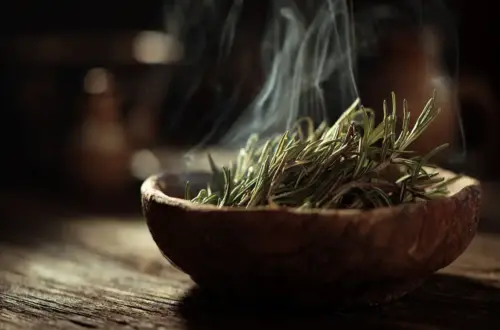
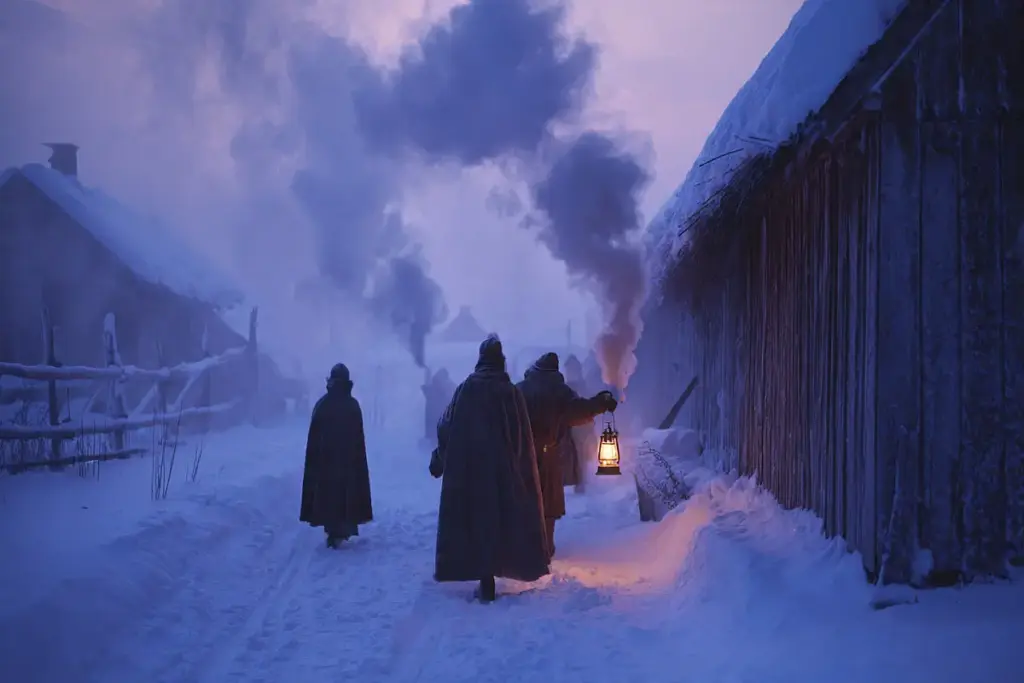
The Ritual of Cleansing: Smudging always began in the animal stables because the animals were the most valuable thing people had in those times. Afterwards, the house was smoked out, whereby one should not forget the corners. Much Mugwort was burned because it keeps everything negative away from house and farm.
A Christmas Incense Blend for Stillness
Since we also celebrate Christmas and it falls at the same time, I have gathered this Christmas incense blend for you, which supports us a little in enjoying the harmony of the Christmas season. It is perfect when we want to settle down in the evening and relax.
Especially now at Christmastime, we need much rest and inner contemplation. There is so much hustle and bustle around us that sometimes we can’t even switch off anymore. We become irritable and no longer enjoy this beautiful time of year, but perceive it as a burden. I personally find this a great pity when one looks at the other side: that Christmas is actually a time of rest and relaxation.
The Soul Pause: Sitting relaxed in a cozy armchair with a mug of mulled wine or a cup of Christmas tea and simply letting your soul dangle, reviewing what has happened in the year and what we might want to do better – that is very important for the soul and the spirit. Just as the earth begins a restart, so should we now also find inner peace to close with the old. December is made for concluding with everything old and planning the new. A contemplative time for body and spirit to come to rest.
Biblical Incense Plants: Historical Ingredients
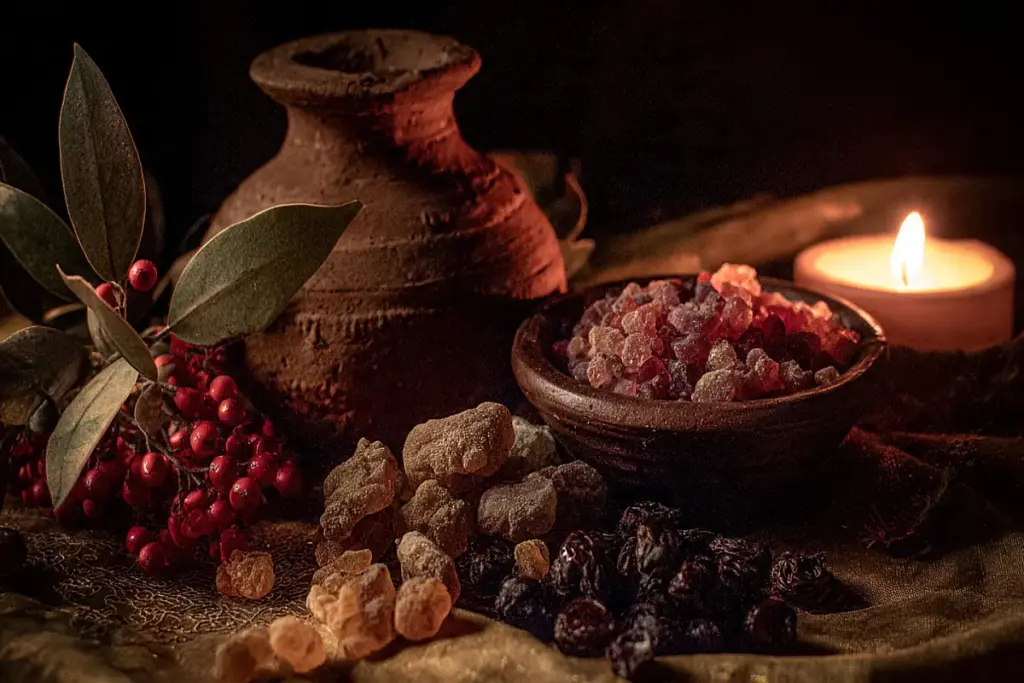
I present to you a few historical plants from the Holy Scriptures that can be wonderfully used for a Christmas incense blend. They are almost all plants that appear therein.
Apple wood & Wormwood
Olive leaves
Blackberry leaves & Nettle leaves
Syrian Oregano
Juniper berries
Reed leaves & Oak wood
Grapevine leaves & Bay laurel
Pine resin
Dill, Caraway & Saffron
Mint leaves (Horse Mint is best)
Myrrh & Frankincense (Use with care! Possibly exchange with Spruce resin and Amber.)
Corn poppy flowers or seeds
Willow wood
Black Cumin seeds
Pomegranate seeds or dried Pomegranate peel
Mandrake root (Smallest portion)
This incense can also be used as a fragrant incense. Unbelievably beautiful in the Christmas season when it smokes and smells somewhere in the background.
The Timeline of Winter: Solstice, Yule, and Rough Nights
According to our tradition, the Yule festival comes one day after the Winter Solstice, lasts three days, and is followed by the Rough Nights.
December 21st (Winter Solstice): The night of the Winter Solstice is spent awake with good food and tea punch, and the sunrise is eagerly awaited.
December 22nd to 24th (Yule Festival): Then the Yule festival begins, which goes on for three days and is celebrated with all kinds of games and festivities.
December 25th to January 6th (Rough Nights): In the night leading to December 25th, the Rough Nights begin. A time of silence in which not much is done. Everything rests; everything is left lying.
New Year’s Eve: On December 31st, the old year is driven away with loud noise.
New Year: The last Rough Nights in the new year are spent planning the garden anew and what we want to plant and start anew in the new year. Likewise, beautifications and elaborate repairs to the house are planned.
The Message of the Festivals: Conclusion
There are countless customs and traditions surrounding the Yule festival and the Rough Nights, including when they begin and when they end. I think no one knows exactly anymore, and we can only ever surmise how it was back then and how our ancestors lived and felt in this time. Therefore, everyone should use this beautiful time for themselves and shape it in a way that feels right for them.
The Winter Solstice is the shortest day and the longest night in the cycle of the year, and our elders feared that after this day the sun would not rise again. These festivals of the Wheel of the Year bear witness to ancient culture and ancient peoples, even if much is forgotten by today’s time or has so merged into us that no one notices anymore that it was once the tradition of our forebears. Through the festivals, we divine the thinking and feeling of our ancestors.
The first of the annual festivals, the Winter Solstice, indicates when the sun is at its lowest point. And it immediately indicates that the days are now getting longer again. This turning point was already a holy and blessed period of the year in pre-Christian times.