The Fly Agaric: Oracle of the Forest & Sacred Smoke
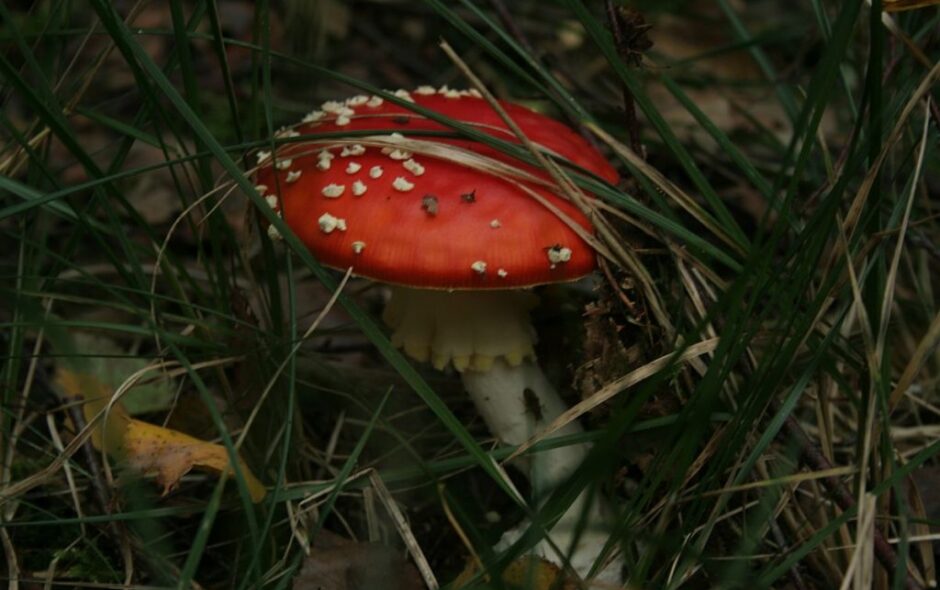
Incense rituals involving this magnificent forest mushroom have a long and shadowed tradition. The Fly Agaric (Amanita muscaria) is not merely a botanical specimen; in the context of smoke magic, it holds deep significance. It is primarily used to ask questions of the future.
Often, we are plagued by the uncertainty of what lies ahead. We seek to know where our actions will lead us. Here, the spirit of the mushroom acts as a guide.
The Spiritual Effect
Opening the Gates: The spiritual essence of the Fly Agaric opens the doors and gates to the future.
Expanding Consciousness: It widens our awareness, granting us the courage and capacity to dare a glimpse into what is to come.
The Answer: It is considered the supreme incense for posing questions to fate and interpreting the answers correctly. It reveals the mystery, divine knowledge, and spiritual power.
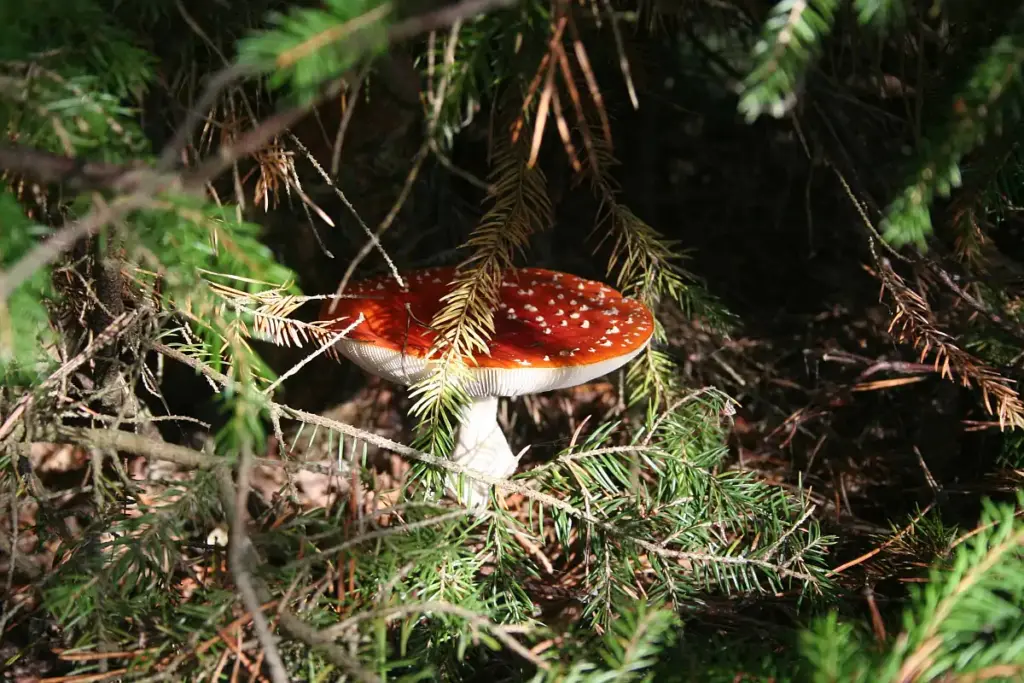
How to Smoke with Fly Agaric
To burn the Fly Agaric is an act that must be performed with awe and reverence.
Preparation & Materials
The Foundation: Dried Fly Agaric caps should only be burned on natural materials. I recommend using Tinder Fungus (Fomes fomentarius) or homemade charcoal from a wood stove. Avoid industrial quick-light charcoal if possible.
The Scent: The smell of the burning cap is… distinct. It is an acquired scent, earthy and heavy.
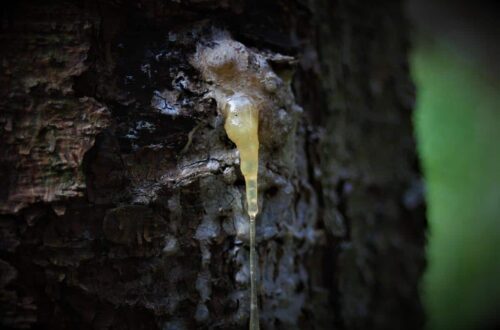
The Blend: To balance the energy and the aroma, it is best to mix the cut or pulverized caps with resins, Mugwort, and forest mosses. This blend is especially potent during the Rauhnächte (The Twelve Holy Nights).
Personal Practice & Safety
My own practice is one of restraint. I gather only one single Fly Agaric each year. I dry the cap at home, divide it into portions for the Twelve Nights, and burn it alongside other ingredients.
⚠️ Important Safety Note: To me, the Fly Agaric is a very strong entity; a messenger who comes from the future and takes us on a journey there. For Novices: I strongly recommend that incense beginners perform this ritual outdoors. There, under the open sky, you can acquaint yourself with this potent spirit and learn how to interact with it safely. Caution: Like any nature spirit that carries substances which can be intoxicating, toxic, or deadly to us, we must first earn the right to understand it before we use it. Therefore, I consider this incense suitable only for those experienced in the art of fumigation!
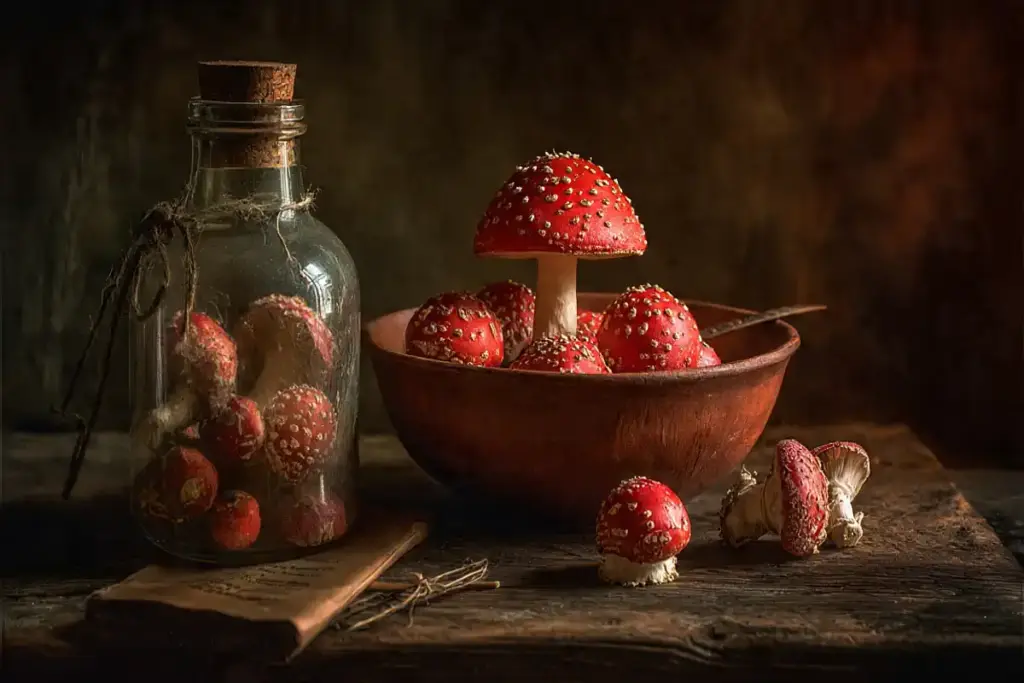
Myths & Folklore: The Magic of the Crimson Cap
The Fly Agaric is arguably the “Beauty of the Woods.” Volumes could be written about him alone.
In the North, people traditionally gathered him in autumn to dry for winter consumption. They held a firm belief that the mushroom could unveil the future if a wish was spoken before eating it. The Druids, too, were said to partake of it to travel to the Otherworld. Surprisingly, until well after World War II, the Fly Agaric could still be eaten in some restaurants in Northern Germany (with the red skin of the cap removed to reduce toxicity). In Russia, the custom of steeping the mushroom in vodka to drink as a tonic persists in some regions to this day.
Symbolism & Customs
The Poison Myth: In older times, the toxicity of the mushroom was linked to toads and snakes, which were believed to sweat their venom onto the mushroom.
The Soul: It was once a symbol for a newborn human soul.
Witch Defense: In the Middle Ages, the red color of its cap was seen as a ward against witches and demons. Because of this color, it was the ultimate “Magic Mushroom” of the past.
Ecstasy & Battle: Our ancestors used it to enter states of ecstasy, believing it increased strength for battle.
Wodan’s Blood: The Origin Story
The Fly Agaric was consecrated to the god Wodan (Odin). Legend tells that during the Wild Hunt, Wodan spurred his eight-legged horse, Sleipnir, so hard that bloody foam fell from the beast’s mouth onto the earth. Nine months later, the red Fly Agarics sprang from the soil where the blood had fallen. This is why the mushroom remains a symbol of luck at New Year’s (Silvester).
Historical Uses & The Name
In medieval times, the mushroom was prescribed as a preventative against consumption (tuberculosis) and was seemingly used as a remedy for worms. Well into the 18th century, it was prescribed for headaches, strokes, exhaustion, fever, and epilepsy. Its juice was even used to paint bed frames to kill bedbugs.
Why “Fly” Agaric?
The name derives from a household practice: the mushroom was cut small and boiled in sugared milk to attract and kill flies. Later, it was discovered that the flies were merely stunned and would often fly away groggily after a few hours.
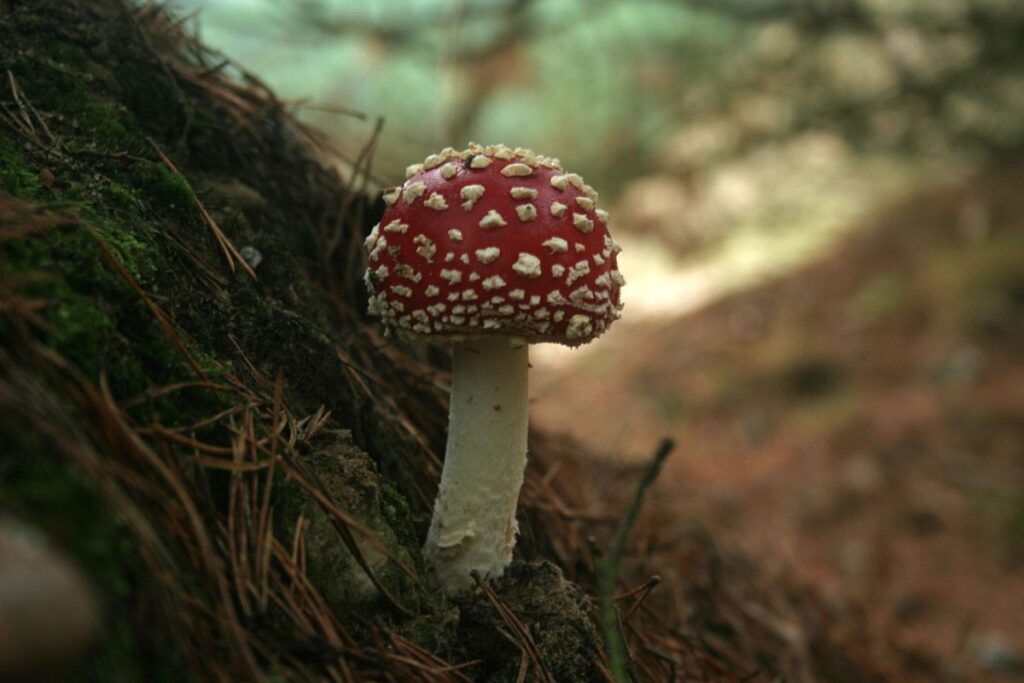
The Controversial Theory: The Mushroom God?
There is a theory that challenges the very foundations of religious history. The philologist and writer John Allegro (1923–1988) proposed that Jesus was not a man, but a code for the Fly Agaric.
Allegro was one of the few scholars originally tasked with deciphering the Dead Sea Scrolls (Qumran Scrolls), which are kept in the Vatican. In his book The Sacred Mushroom and the Cross, Allegro argued:
The flesh of the mushroom was the “Body of Christ.”
The red wine was the “Blood of Christ” (symbolizing the red juice/cap).
Christianity, in his view, was a continuation of the Dionysus cult—a fertility and drug cult.
He claimed the Gospels were pure invention; a cipher used by a sect that worshiped the Fly Agaric as the embodiment of God, created to preserve their secrets for future generations.
According to him, the “God of the Jews and Christians” never existed as a person but was an encrypted fertility symbol. John Allegro died in 1988, and his theories remain highly controversial, yet they add a fascinating layer to the mystery of this mushroom.
(Source reference: Discussion based on John M. Allegro’s theories and Spiegel archives).