🌿 Introduction: The Roots of Green Magic
Roots & Echoes: The Old Ways in Modern Times The use of plants as vessels of magic is as old as the roots beneath our feet. Magic and the Old Faith have always played a central role in the history of humanity. Even today, in our seemingly rational world, the whispers of the Old Ways still slumber within us:
Knocking on Wood: After praising something, we instinctively knock on wood three times. In the old lore, this was done so that mischievous house spirits would not hear our luck and turn it into the opposite.
Birth Traditions: Think of the celebrations of new life. Often, baby clothes are hung outside the house, and the stork is displayed as a symbol.
If we walk through our lives with open eyes, we see the threads of ancestral knowledge woven everywhere around us.
A Note on “Superstition” & Sacred Lore I consciously wish to address the word “superstition.” It carries a negative weight that I, personally, do not accept. Plants were among the most beloved tools of the wise, and our ancestors have always turned to them as allies in magic and healing. We approach this not as “false belief,” but as a deep connection to nature.
The Queens of the Green Realm Without a doubt, only a select number of plants have risen to become the true icons of herbal magic. To truly know them, we must learn their history, while being prepared to follow trails that are sometimes overgrown or faded.
Some of the most powerful magical herbs include:
The Mandrake (Mandrake): Known to all as the undisputed queen of magical plants.
St. John’s Wort: A bringer of light.
Juniper: The ancient protector.
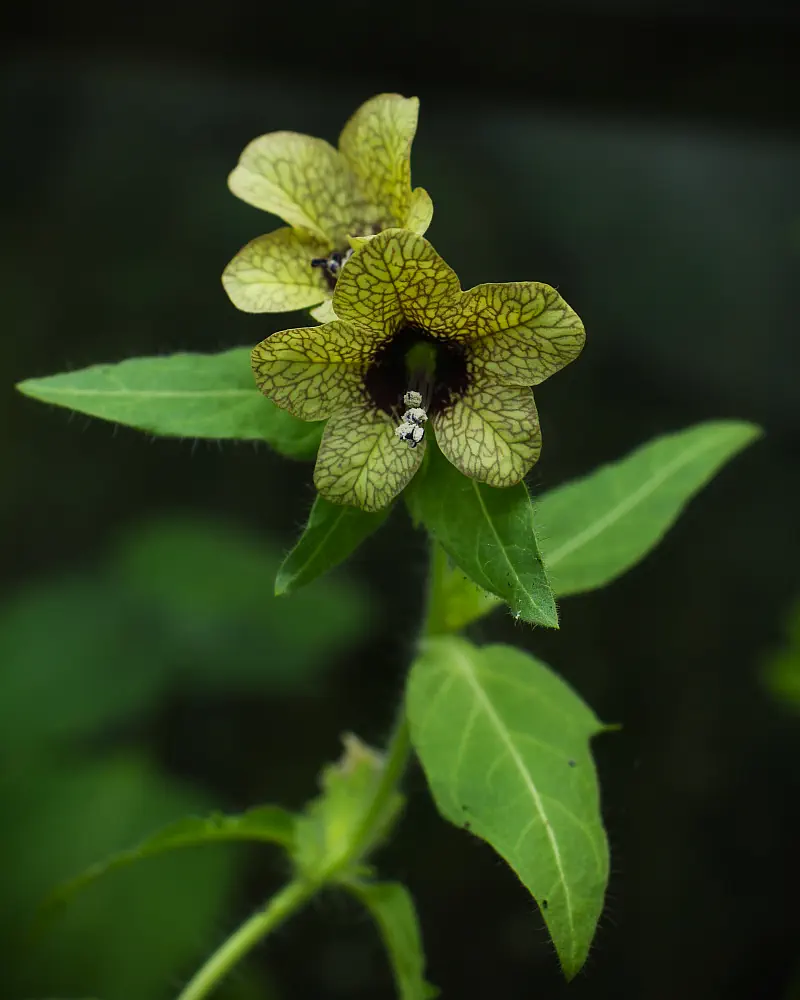
Henbane: The plant of the shadow realms.
Mugwort: The mother of herbs.
🌳 From Pagan Groves to Christian Heirs
The Unbroken Thread of Magic With the spread of Christianity, the thread of magic was by no means cut; it simply took on a different meaning. The new faith fought fiercely against the veneration of sacred trees and the traditions connected to their cults. Indeed, monks and priests not only felled these holy trees with their own hands to destroy the groves of the gods, but they also issued sharp threats in sermons and writings against any magic practiced with plants and trees.
Rulers and church councils sought to root out this ancestral knowledge through strict laws. Yet, in the hearts of the people, the essence remained.
Old Gods & New Names: The Transformation Where lay the difference, whether Wodan, Freyja, or Baldur—along with the darker deities—exercised their power, or whether it was now Jesus, Mary, the Saints, and the Devil? The church replaced the figures, but the belief in supernatural efficacy remained:
Signatures of Faith: Suddenly, people saw “Christ’s drops of blood,” crosses, nails, and the signatures of Jesus in the plants.
The New Guardians: Manifestations of the Mother of God, Saint John, and other saints replaced the old gods in the herbal lore.
Exorcism & Magic: The Church itself did not fail to maintain the belief in the supernatural power of such things through the practice of exorcism.
The Transformation of Sacred Places Just as the deities changed, the sacred sites were repurposed. The tree of Wodan or Freyja served as a foundation for the new faith:
Freyja becomes Mary: The sacred Lime trees of Freyja became “Marienlinden” (Lime trees of Mary).
Sacred Architecture: The monastery Marienheide was built near an ancient Lime tree.
Ancient Foundations: The monastery Reinhardsbrunn near Gotha was erected next to a sacred Beech tree.
The Green Cloak of History To this day, the tradition of adorning sacred trees with wreaths and illuminating them with candles has endured. What is our Christmas tree if not a pagan custom that has passed into Christian tradition?
Nowadays, we mostly find magical plants covered by Christian belief. However, we should not disregard them. They still tell the deep stories of pagan custom and the Old Ways—they simply wear a Christian cloak.

🌿 The Four Pillars of Green Magic: A Guide
I divide magical plants into four distinct categories: Herbs of Fortune, Weather Herbs, Wonder Herbs, and Warding Herbs (traditionally known as Berufkräuter).
Structuring your plants this way helps immensely, especially if you are planning a Witch’s Garden or a sacred grove.
Garden Wisdom: In every magic garden, a tree or shrub belongs in the very center. If you have the space, plant a tree or shrub in each of the four cardinal directions to anchor your intentions.
1. Herbs of Fortune: Amulets for Power & Love These are the plants of attraction. Herbs of Fortune were used in the old ways to grant prestige, courage, wealth, power, and to influence matters of the heart.
Usage: They were mostly worn close to the body as an amulet.
The Icon: The most famous of all is undoubtedly the Mandrake.
2. Weather Herbs: Shield against Storm & Lightning Weather herbs are the guardians of the home. They were used to protect against lightning strikes, house fires, water damage, and even plagues of insects or mice.
Usage: They were either kept dried inside the house or grown directly on the structure itself.
Examples: The Houseleek growing on the roof or dried Nettle placed in the gable. The Mullein (Aaron’s Rod) was also consulted to predict the harshness of the coming winter.
3. Wonder Herbs: Treasure Hunters & Path Openers Wonder herbs were the plants of revelation. They were believed to open hidden treasures and expose enemies and thieves.
Purpose: They assist the practitioner in clearing all paths they wish to walk, removing obstacles from the road.
4. Warding Herbs: Protection against the Evil Eye These are my personal favorites in the garden. In German tradition, we call them Berufkräuter. They protect against being “called” or “cried at” (cursed)—what is widely known as the Evil Eye.
Protection: They shield against ill-willed people, envy, evil spirits, and sticky negative energies that can become a plague.
The Stars: The most famous among them are Rue and the Blue Fleabane (specifically named Berufkraut in German).
Below, I share a list where you can discover which magical plant resonates with your specific intent.
📖 The Compendium of Magical Plants
Here you will find a list of the most important plants of Ancestral Knowledge, sorted by their magical purpose.
⚠️ Important Note on Safety: Some of these plants are toxic or highly potent. Please treat them with the utmost respect. † = Toxic | †† = Highly Toxic | ††† = Deadly Toxic
1. Herbs of Fortune: For Love, Courage & Wealth These plants were used to attract the good, strengthen the character, or assist in matters of the heart.
Elecampane (Alant): Used against hexes and also brewed into love potions.
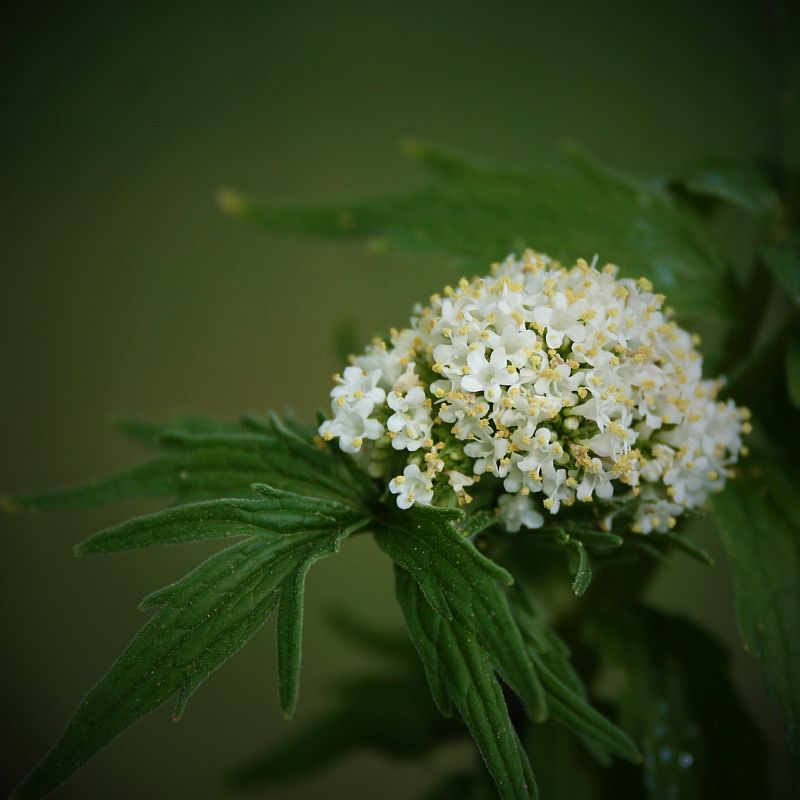
Valerian (Baldrian): A magical plant known to bestow luck and bravery upon the bearer.
Chamomile (Kamille): Gave the practitioner renewed life force and courage.
Nipplewort (Rainkohl): Traditionally used to help with the successful conclusion of business dealings.
Celery (Sellerie): Considered a lucky plant in the old lore. It was also used in love tinctures or burned as incense for matters of the heart.
Centaury (Tausendgüldenkraut): Used against “crying” (cursing) and to attract wealth.
White Water Lily (Weiße Seerose): A love charm believed to attract romantic bliss and riches.
Bryony (Zaunrübe) †††: Used for potent love magic and hung within the house as a protection against storms.
2. Weather Herbs: Wards against Lightning & Hail These plants were called upon to shield home and hearth from the raw forces of nature.
Hazel (Haselstrauch): Used as a shield against lightning strikes.
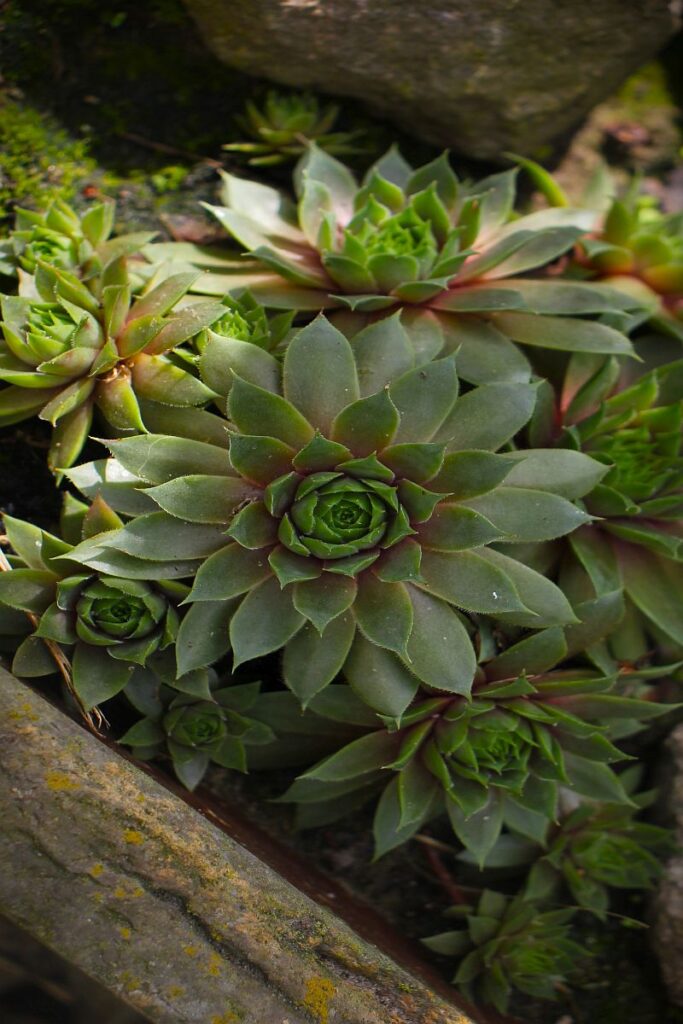
Houseleek (Hauswurz): The ultimate protector against lightning. According to tradition, this plant had to be grown directly on the roof to be effective (hence its connection to the Thunder God).
St. John’s Wort (Johanniskraut): A powerful weather plant against lightning. It was woven into window grilles or garden gates. Beyond the weather, it was also known to banish evil spirits.
Mullein (Königskerze): Known as the “King’s Candle,” it was a classic weather plant in the old lore.
Tansy (Rainfarn): Revered as a weather plant that offered protection against lightning, hail, and floods.
Silver Thistle (Silberdistel): Regarded as a weather prophet, as it only opens its silver leaves in sunshine. In the Old Faith, it was also used to cure fatigue.
Hemp Agrimony (Wasserdost): A weather plant that held a fixed place in the sacred herbal bundles.
Hawthorn (Weißdorn): A guardian against storms. Twigs were tucked behind roof beams or windows to ward off lightning.
3. Wonder Herbs: Oracles, Visions & Hidden Treasures These plants opened the mind to the Otherworld, assisted in divination, or uncovered lies and secrets.
Branched Asphodel (Ästiger Affodill): A herb of spirit conjuring, traditionally used in fumigations to thin the veil.
Henbane (Bilsenkraut) †††: A powerful oracle plant of the ancients.
Birch Twigs (Birkenzweige): Were cast or read for oracles and divination.
Monkshood / Wolfsbane (Eisenhut) †††: Used for prophecies and inducing deep visions.
Orpine (Fetthenne): An oracle plant, where the strength and direction of the stems were read to foretell the future.
Hawkweed (Habichtskraut): Sharpened the “inner eye,” allowing one to recognize lies or betrayal before they happened.
Moonwort (Mondraute): A master of revealing secrets and exposing lies.
Peony (Pfingstrose) †: A crucial ingredient in spirit fumigations. The dried petals were used for summoning.
Cowslip (Schlüsselblume): The “Key Flower.” It was believed to unlock secret places and reveal hidden treasures.
Greater Celandine (Schöllkraut) †: Symbolically opened one’s eyes, sharpening the senses against slander and ill-intentioned people.
Devil’s Bit Scabious (Teufelsabbiss): According to folklore, placing this plant under a table would cause strife and discord among those seated.
Belladonna (Tollkirsche) †††: The dark queen of visions and clairvoyance.
Forget-me-not (Vergissmeinnicht): Pointed the way to hidden treasures.
Wormwood (Wermut): Used to induce visions and aid in prophecy.
Oxeye Daisy (Wiesenmargerite): The classic flower of the love oracle.

4. Warding Herbs: Protection against the Evil Eye & Curses The Warding Herbs (Berufkräuter) formed the largest group in the garden. These plants are the vigilant guardians against baneful magic, demons, and negative energies.
Columbine (Akelei) †: Used against enchantments and curses.
Mandrake (Alraune) †††: The ultimate shield against witchcraft (also used for love and wealth).
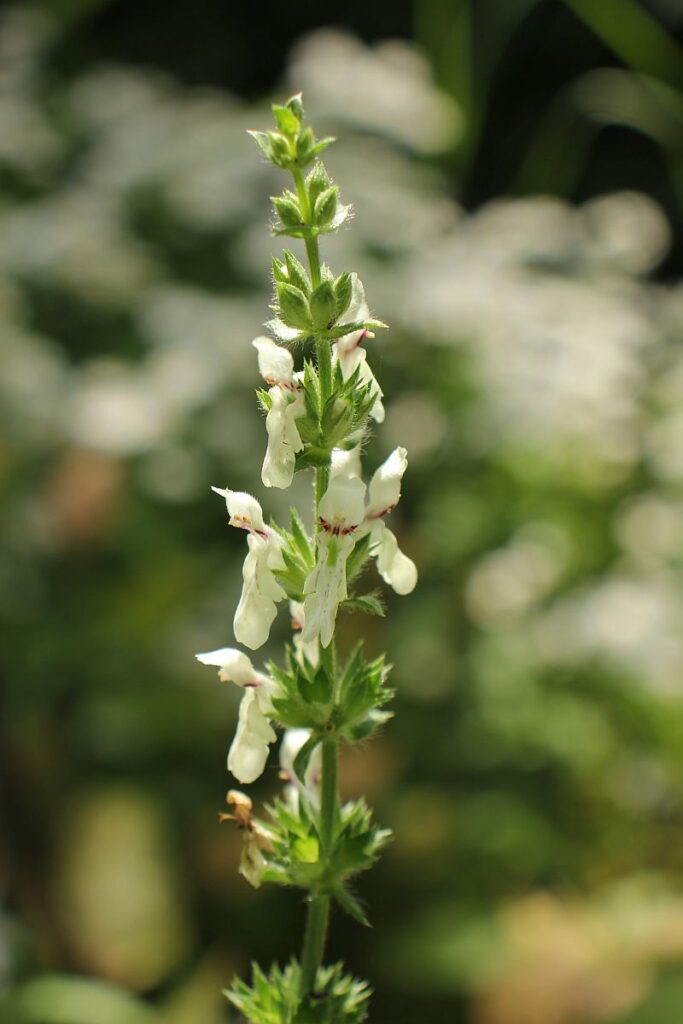
Upright Woundwort (Aufrechter Ziest): Buried beneath the threshold to deny entry to evil people, or worn as an amulet against enchantment.
Clubmoss (Bärlapp): Used against every form of “crying” (cursing).
Mugwort (Beifuß): The supreme protective plant for house and farm.
Blue Fleabane (Berufkraut): Specifically named for its power against “crying” and for casting counter-spells.
Bittersweet Nightshade (Bittersüßer Nachtschatten) ††: A protective plant against hexes.
Boxthorn (Bocksdornzweige): Twigs were hung over doors and windows to bar entry to all things evil.
Oregano / Wild Marjoram (Dost): Used against sadness, hexes, and loss of strength.
Southernwood (Eberraute): Regarded as a strong protective agent, especially for children who needed shielding from the Evil Eye.
Yew (Eibe) †††: Against enchantment. To use its power, a small piece of Yew wood had to be carried on the person.
Vervain (Eisenkraut): A talisman for strength. Placed under the pillow, it intensified dreams.
Ivy (Efeu) †: Against the enchantment of children. A small wreath of ivy was worn for protection.
Speedwell (Ehrenpreis): Against “crying” (cursing).
Angelica (Engelwurz): Against evil spirits and slander.
Alder (Erle): Used to remove ailments caused by magic potions.
Ground Ivy (Gundermann): A magic-shielding plant. A woven wreath worn on the head allowed one to recognize people with ill intentions.
Restharrow (Hauhechel): Worn as an amulet to protect against any kind of wounding.
Elder (Holunder): The great guardian of house, farm, and all living beings dwelling within.
Holly (Stechpalme): Mostly the dried red berries were used in protective fumigations.
Periwinkle (Immergrün): Against enchantments and necromancy.
Garlic (Knoblauch): Against sorcery, the Evil Eye, and calamity.
Bedstraw (Labkraut): Against negative influences.
Parsley (Petersilie): Kept evil spirits away from the home.
Sage (Salbei): Considered a banisher of demons and spirits. It was hung on the doorframe.
Victory Root / Alpine Leek (Siegwurz): Against wounds, evil spirits, sorcery, and ghosts.
Willow (Weide): Protected against pursuing enemies and drove them away.
Rue (Weinraute): Acted as a spell-breaker and banished bad habits. It was worn as an amulet or tucked behind the window frame.
🌿 The Path Continues
I believe this list serves as a solid foundation for now. However, the book of nature is never closed. I will continue to expand this collection as new herbs and trees find their way into my writing and research.
If you wish to delve deeper and perhaps cultivate your own sanctuary, I warmly recommend my article: Creating a Magical Garden.