🌿 The Call of the Roots: What is the Ancestral Cult?
When we delve into the smoke cleansing of wild plants, Manism (the ancestral cult), also known as ancestral veneration, comes up time and again. What is it exactly, and what do its rites look like? In this article, I will attempt to bring this Old Belief a little closer to you.
The Difference to the Cult of the Dead: The cult of the dead is often the exact opposite. In it, one seeks to prevent the deceased ancestors from returning (to banish them). Manism, on the other hand, rejoices in the participation of our ancestors in our lives; we actively invite them in.
One could fill entire books about this specific belief, so I will try to explain in a brief summary how I personally practice the ancestral faith.
🕯️ The Collective of Souls: Who Am I?
First of all, I firmly believe that one must first know where their own roots originate. For the ancestral belief stems from a collective thought.
The Collective Thought: What is a collective thought? This profound thought arises when you can truly identify with your forebears and feel a deep sense of belonging with your ancestors.
Seeking the Roots: The very first point, then, is to discover who your ancestors were, where they came from, and what they did. Once you have gathered all this and possess a “we-feeling” with your forebears—having welcomed them into your circle, so to speak—only then are you truly ready for your own ancestral belief.
The Knowledge of the Old Ones: This belief was widespread among our ancestors. Our ancient forebears still knew exactly where they came from and who their ancestors were. My grandmother, born in 1910 in East Prussia, still knew that our origins were of the Reformed Protestant faith (Switzerland) and that in 1723, a Huguenot was one of our great-great-grandmothers. Today, many do not even know who their great-grandparents actually were or what they did in life.
“He who does not know where he comes from,
does not know where he is going.”
🌬️ The Mental Image: Connection Through Smoke & Memory
I wanted to show you why this is so important: Because only when you truly know where you come from can you let a mental picture of your ancestors form in your mind, which is deeply important in the ancestral belief.
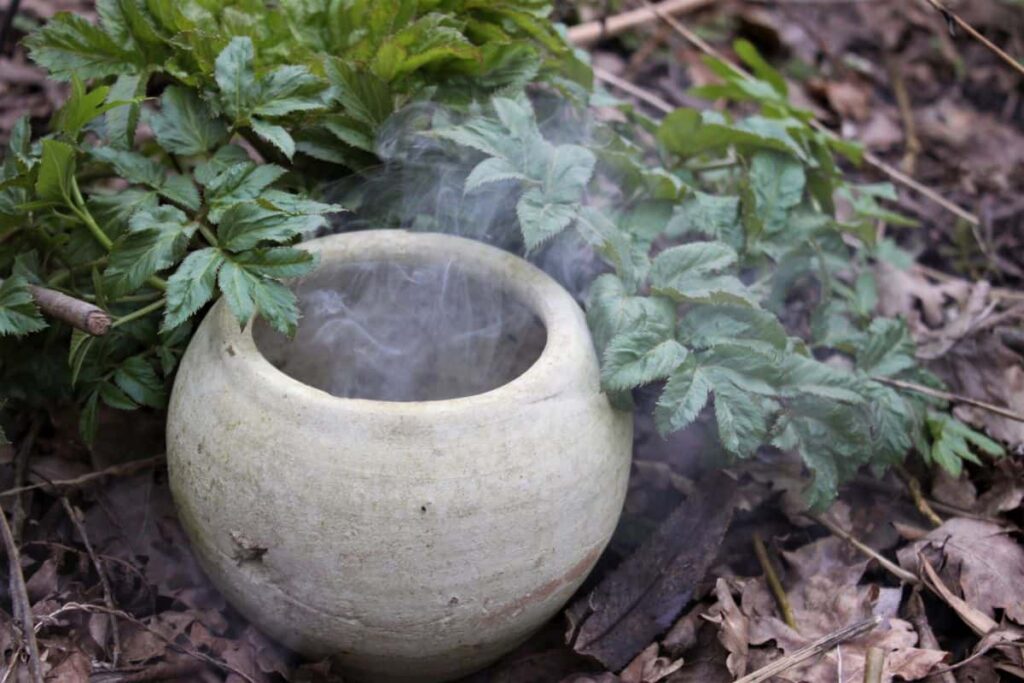
The most important element in this old belief is the burning of sacred smoke with certain substances, such as:
Tree resins
The Sacred Rites & Practice:
The Ritual: To connect with your ancestors, an incense blend made from the plants just mentioned is entirely sufficient. With this sacred smoke, you become deeply calm and can completely surrender to the collective feeling. The ancestral cult opens, symbolically speaking, closed doors to ask for guidance or to transmit loving remembrance to your forebears.
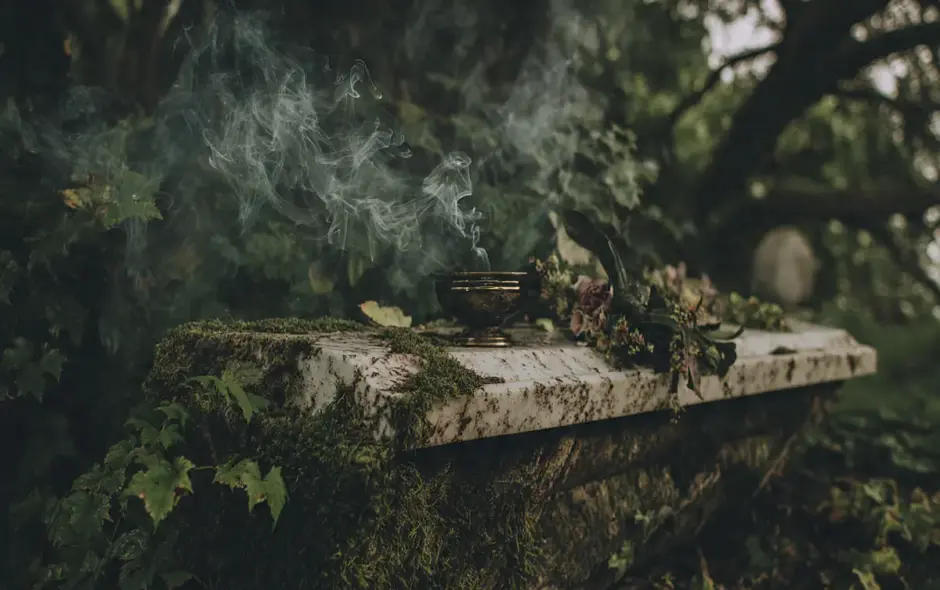
My Personal Practice: When I want to find mental peace, for example, I sit quietly at the memorial stone of my ancestors, lay down fresh flowers there, and burn a little incense made of wild plants and resins. I drink a cup of tea alongside it, enter into the deep peace and quiet of my thoughts, and thereby connect with my forebears. You simply come to rest and, through this profound “we-feeling,” you draw new energy that then beautifully affects your mood and your everyday life.
💀 Skulls in the Home & Weddings at the Grave: Ancient Practices
How did our ancestors actually practice the ancestral belief? Our forebears took things quite a bit further when it came to the ancestral cult.
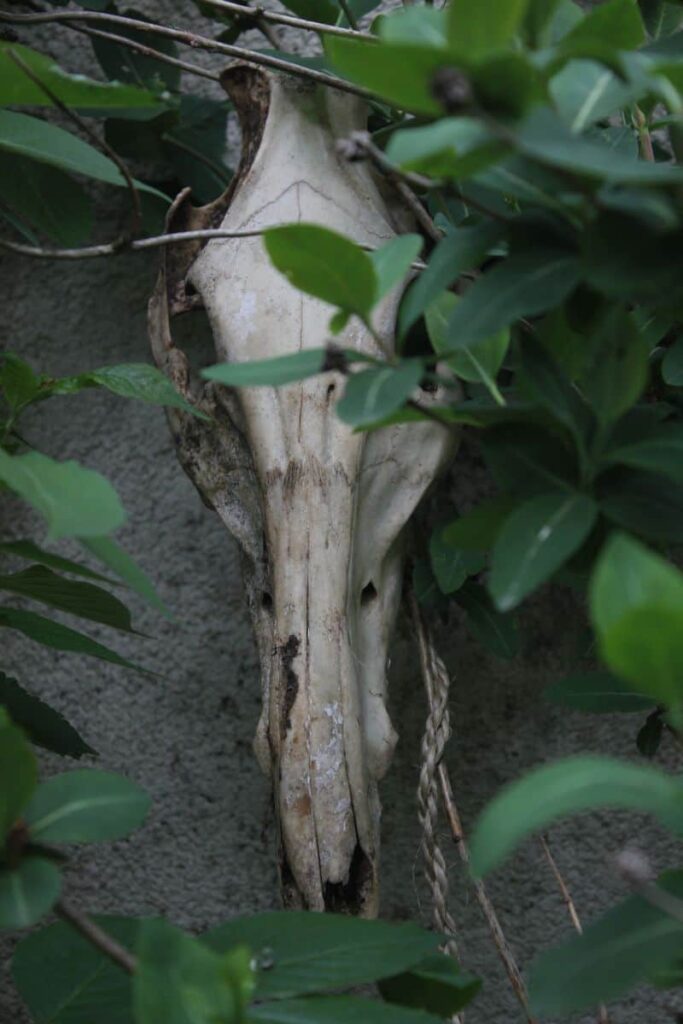
Skulls as Guardians: In Bavaria and Austria, the skulls of the ancestors were kept right in the home. According to the old belief, they were meant to fiercely protect the household against misfortune of any kind.
Inviting the Dead: Our heathen ancestors even walked to the graves of their forebears to formally invite them to their upcoming weddings. The graves were also beautifully adorned and decorated for these joyous occasions.
Belief in Protective Spirits: It is highly suspected that this ancestral belief is firmly intertwined with the belief in protective spirits. Which, of course, is of profound significance. The belief in guiding and shielding spirits played a major role in the Ancient Knowledge, as one reads time and again when it comes to the power of plants in the old magical lore.
Ancient Sacrifices: The ancient Germanic tribes had such an active and vivid ancestral cult that it even extended to human sacrifice. I think we are very far removed from such things today, and we much prefer to dedicate ourselves solely to gentle burnt offerings, such as the sacred burning of incense.
🏴 Ancestral Beliefs in Scotland: Clan Roots & The Graveyard Watch
Since I am currently deep into my family research in Scotland (Clan Morrison), I naturally looked right away into how the ancestral belief was practiced there, in the old Scottish lands. I found a few wonderful lines about it:
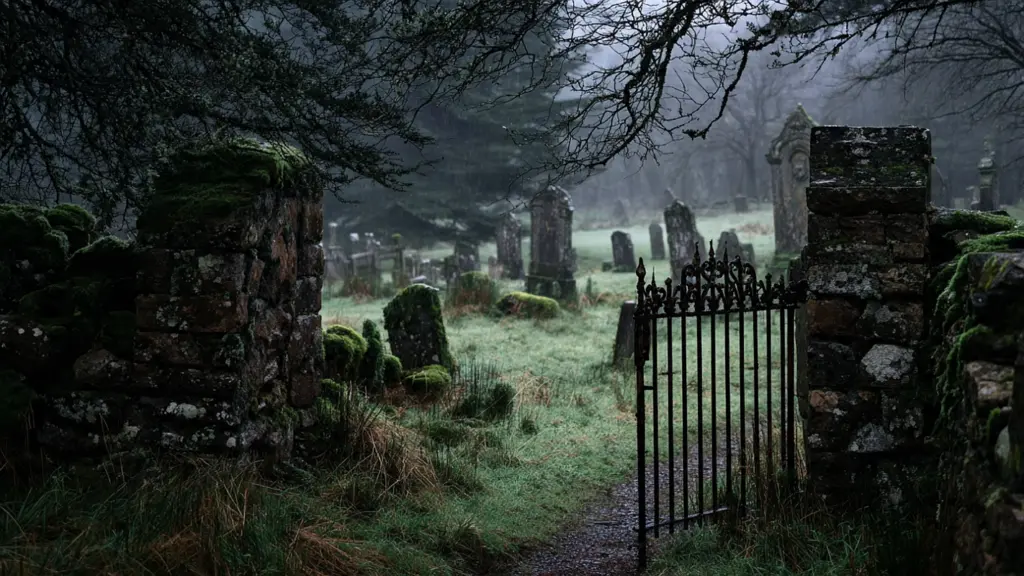
The Time of the Druids: This old custom is said to originate from the time of the Druids. According to ancient tradition, it was believed that the last person buried had to keep watch over the churchyard until they were relieved by the next one to follow. However, if two or more people passed away at the exact same time, disputes frequently arose among the bereaved over who should have their dead buried first, in order to grant them the complete peace of the grave as soon as possible.
The Mystical Churchyard: Another deep-rooted belief is tied to the northern part of a churchyard. Many people shied away from having their dead buried here, feeling that the rest of the deceased would be far more disturbed there than on the southern side. The reason for this old belief may trace back to the ancient custom of burying those who took their own lives, the executed, and children who died unbaptized on the northern part, which was therefore considered unconsecrated ground.
The Wandering Souls: If a child passed away before being baptized, one sinned against the innocent little creature; at least, the old lore in Scotland held that such children, known as Tarans, found no rest in the grave. Instead, they wandered restlessly through deep forests and wastelands, lamenting their desolate fate. In Northern England, ancestral knowledge warned that it brought misfortune to step over the graves of such children.
🌿 The Plants of the Ancestors: Protection & Messages
Which wild plants are used for the ancestral cult? The old ancestral knowledge holds an incredible number of plants ready for this profound purpose. The deep power of the ancestral belief was transferred to many of them.
The Task of the Plants: Their greatest attribute was to protectively envelop the one performing the smoke cleansing—shielding them from negative energies—and at the same time, to transmit the message to our ancestors. The plant spirit of the incense plant naturally played a deeply significant role in this.
The Sacred Numbers: From these sacred plants, one can blend a powerful incense for their personal ancestral cult. According to the Old Belief, the numbers 3, 7, and 9 are deeply important. The plants for the blend should be lovingly chosen exactly according to these sacred numbers.
📜 A List of Plants in the Ancestral Cult
Here is a selection of the most important plant spirits to strengthen the deep connection to the ancestors:
Elecampane (Alant), Mandrake (Alraune), Horehound (Andorn)
Mugwort (Beifuß), Birch (Birke), Nettle (Brennnessel)
Dill, Wild Marjoram / Oregano (Dost)
Yew (Eibe), Angelica (Engelwurz), Ivy (Efeu), Oak (Eiche), Ash (Esche), Fumitory (Erdrauch)
Bilberry (Heidelbeere), Elder (Holunder)
Periwinkle (Immergrün)
St. John’s Wort (Johanniskraut)
Mullein (Königskerze)
Peony (Pfingstrose)
Rosemary (Rosmarin)
Sage (Salbei)
Tobacco (Tabak)
Juniper (Wacholder), Wormwood (Wermut), Hemp Agrimony (Wasserdost)
Bryony (Zaunrübe)
(And many more. You can search for the individual wild plants on my blog or simply follow the links provided.)
🪦 A Place of Silence: My Personal Memorial Stone
As you can see, the ancestral belief is not hocus-pocus, nor does it have anything to do with conjuring and bloody rituals, as television often likes to suggest to us.
Inner Contemplation: Today’s ancestral belief is simply a profound, mental connection with our forebears. An inner contemplation and a coming to rest by using a burnt offering—a fine sacred incense—for this purpose.
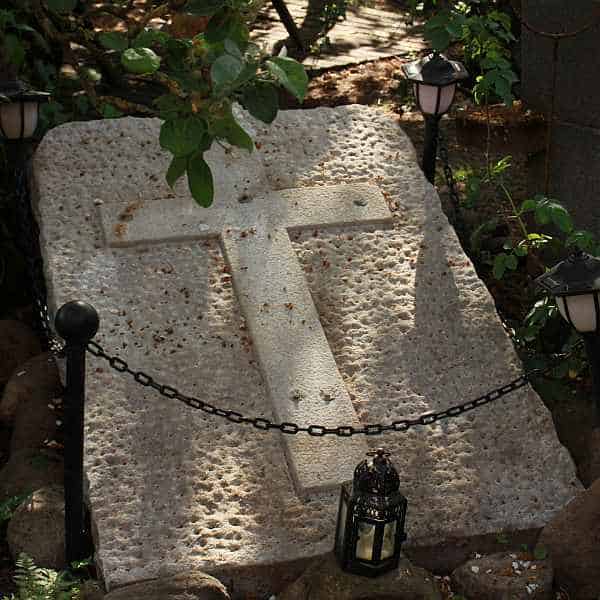
The White Marble: For my own very strong ancestral belief, I brought a grave slab, a memorial stone so to speak, into my wild garden. A place where I can linger when I need to find true inner peace. It is made of white marble and weighs over half a ton.
A Growing Sanctuary: In its overall picture, my memorial site is not quite finished yet; it still lacks a few very important elements here and there, which will gradually find their rightful place.
💨 The Smoke of Letting Go: A Blend for the Transition
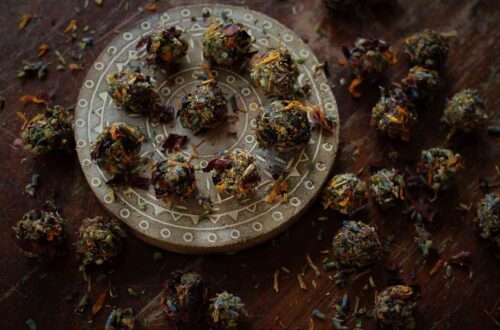
Finally, I would like to introduce you to a sacred incense blend for the transition, taken directly from my private book of incense.
Saying goodbye to a beloved person or even a beloved animal through death is never easy for us humans. We need a very long time to overcome it. It is this emptiness, this lingering question: What happens next with the deceased? Where does their soul go? This uncertainty, this profound loss—all of this brings us the deep mourning and the soul-ache that we feel inside us during this time.
Why Letting Go is Essential: We must not be endlessly sad and we must not cry endlessly, because by doing so we do not let go of the soul of the deceased, and thus it cannot release its physical body. According to an old belief, it will otherwise wander among the living forever. Through the act of letting go, we must show the soul the path into the light. So that it can beautifully unfold there and be welcomed into the ancestral realm forever.
🌿 The Ninefold of Farewell
I have gathered several sacred herbs and larch resin for a farewell incense. This incense is mixed in equal parts, although the rosemary must make up the largest portion in this blend, because this specific plant spirit guides deceased souls into the light.
I deliberately chose a count of nine incense ingredients, because the number 9 has always been deeply magical. Just think of the old belief of the Nine Woods.
The Ingredients & Their Meaning:
Mugwort (Beifuß): Belongs to the oldest ritual plants of humanity. It has always embodied protection and letting go. This wild plant stands for the profound release after a grieving process.
Boxwood (Buchsbaum): Known to us from our visits to the graveyard. There it stands as a mighty bush or as a small border around the graves. Boxwood branches formerly served the church as incense whisks. Because it never sheds its leaves and always appears green, it beautifully embodied eternal life.
Wild Rose / Rosehip (Hagebutte): This is the Frigga-thorn (Friggadorn) of our earliest ancestors. In the belief of our forebears, a hidden power dwelled within the Frigga-thorn. In the old vernacular, it was also called the mourning thorn (Trauerdorn) because it was used for burials. The ancient burial grounds and sacred groves were surrounded by rosehip bushes. This profound custom was widespread long after the arrival of Christianity.
Periwinkle (Immergrün): Embodied eternal life and kept negative energies away from the deceased. A small wreath of periwinkle was woven for little children and placed with them in the coffin.
Larch Resin (Lärchenharz): Has always been something very special in the art of sacred smoke. Its scent is somewhat more subtle and not as overpowering as other resins. In smoke cleansing, this resin symbolically builds a protective shield around us and removes negative energies that can settle deep within us during the grieving process. Burning Larch Resin & Needles: The Path to New Beginnings
Marigold (Ringelblume): Although the marigold originally does not come from here, it long stood as a beloved plant on graves. Through its intensely orange-yellow blossom color, it signaled redemption. Hence its traditional name, flower of the dead (Totenblume).
Rosemary (Rosmarin): Belonged to every burial in earlier times. This beautiful plant is the “heathen” opposite of the church’s boxwood. It has always powerfully symbolized farewell and deep mourning.
Fumitory (Erdrauch): With fumitory, our ancient ancestors already made contact with their forebears. A small, mighty incense herb that was therefore also called elf smoke (Elfenrauch).
Wormwood (Wermut): Served even in those ancient times as protection against the Evil Eye, which can also strike the deceased, preventing their soul from making the peaceful transition.
A sacred incense can profoundly accompany us in this process of mourning. This process helps us overcome our grief and simultaneously lets the beautiful memories and feelings come alive within us in a deeply comforting way. We feel the deceased within us and we become one with them. Afterward, we can truly let go and solidify the beautiful memories deep within our soul.