The Time Between the Years: Origins, The Lunar Gap & The Twelve Nights
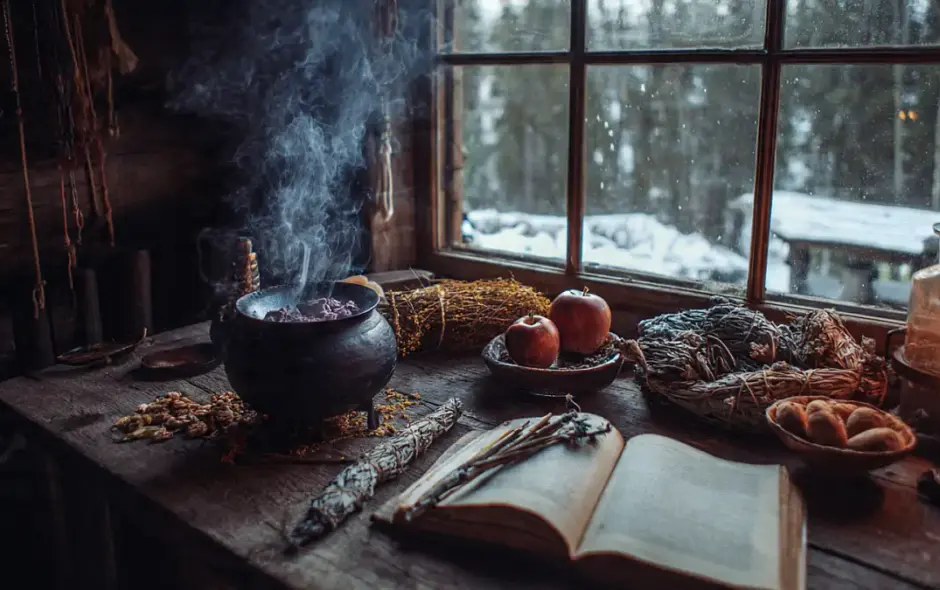
The Rauhnächte (Rough Nights) have always been a threshold in time—a sacred pause marking the Winter Solstice and the reawakening of nature’s dormant forces. From the moment the sun reached its lowest point until the day it began to climb again, the world held its breath. In some regions, these were known as the Twelve Nights; in others, the “Lost Days.” But regardless of the name, for our ancestors, this time was holy.
Regional Whispers: “De Twölften”
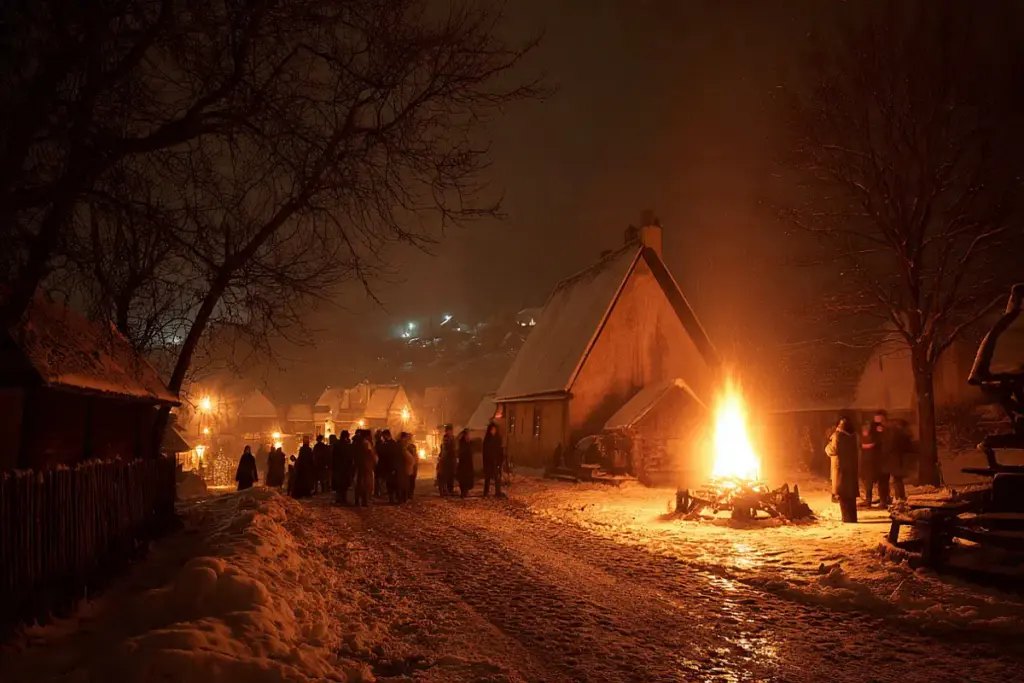
The names for this period vary as widely as the landscapes of the Old Country. While the south of Germany speaks of the Rauhnächte, in the north—specifically in my homeland of Mecklenburg—this time is known as “De Twölften” (The Twelve). It is a time steep in local custom and silent reverence.
The Lunar Gap: When Time Stands Still
Why do these nights exist? In the Old Ways, the Rauhnächte were viewed as a standstill in nature. The return of the light does not become visible immediately after the Solstice; it takes twelve nights for the sun’s progress to be seen by the naked eye. But there is a deeper, mathematical magic at work here. These twelve nights serve to balance the discrepancy between the Lunar Year (354 days) and the Solar Year (365–366 days). Our ancestors lived by the rhythm of the moon. The remaining eleven days and twelve nights were “time outside of time”—a gap in the fabric of the year where the laws of nature were suspended.

Origins: Ancestral Cults & The Forces of Nature
The Nordic Yule festival, deeply anchored in these nights, likely stems from an even older Cult of the Dead rooted in primeval Germanic tradition. The ritual acts—honoring the ancestors and praying for a rich harvest—were born not of whimsy, but of a profound humility before the forces of nature.
We must remember: For our forebears, the weather and the harvest were the highest goods. They did not live in the abundance we know today. The modern interpretation of the Rauhnächte—often reduced to mere “wish-manifestation” and dream journals—has little in common with the raw, survival-focused spirituality of the past.
When exactly are the Rauhnächte?
There was never just “one” way to keep these nights. The dates shifted depending on the region and the specific festival cycle. In the Christian interpretation, they begin on St. Thomas’s Night (December 21st).
The Reckoning of Time
The Four Nights: In some regions, only four specific nights were celebrated: December 21st, 24th, 31st, and January 6th. Often, only the first and the last were observed with full rites.
The Gift Nights (“Gebnächte”): Elsewhere, they were known as the Gebnächte. The name derives from the offering of gifts—leaving food on the table for the “Wild Huntsman” or the “Knocking Spirits,” such as the traditional Perchta’s Milk. In some villages, noodles were even laid upon the roof as an offering to the winds.
The Cream Nights (“Nidelnächte”): Preceding Yule were the seven Nidelnächte, sometimes called the “Knocking Nights.” Nidel refers to cream (abgestandener Milchrahm), which likely served as a food offering to the spirits.
The Twelve: Originally, there may have been only seven nights. It is believed that the Slavic migration influenced the expansion to twelve nights. In Mecklenburg and Franconia, these were counted after New Year, while in Silesia, they were held before Christmas.

 Fire, Brooms & Crosses: Customs of the Old Ways
The Pyramid of Brooms
In Thuringia, a striking custom was observed: villagers would build small pyramids of stone, moss, and turf on the hilltops, sticking old brooms into the structure. These brooms served as torches and were set ablaze during Yule. This ritual likely belongs to the ancient “Broom Magic”—symbolically burning the old to make space for the new. When the fire died down, the people returned to the valley. Note that these were not modern brooms, but traditional bundles of birch twigs and brushwood.
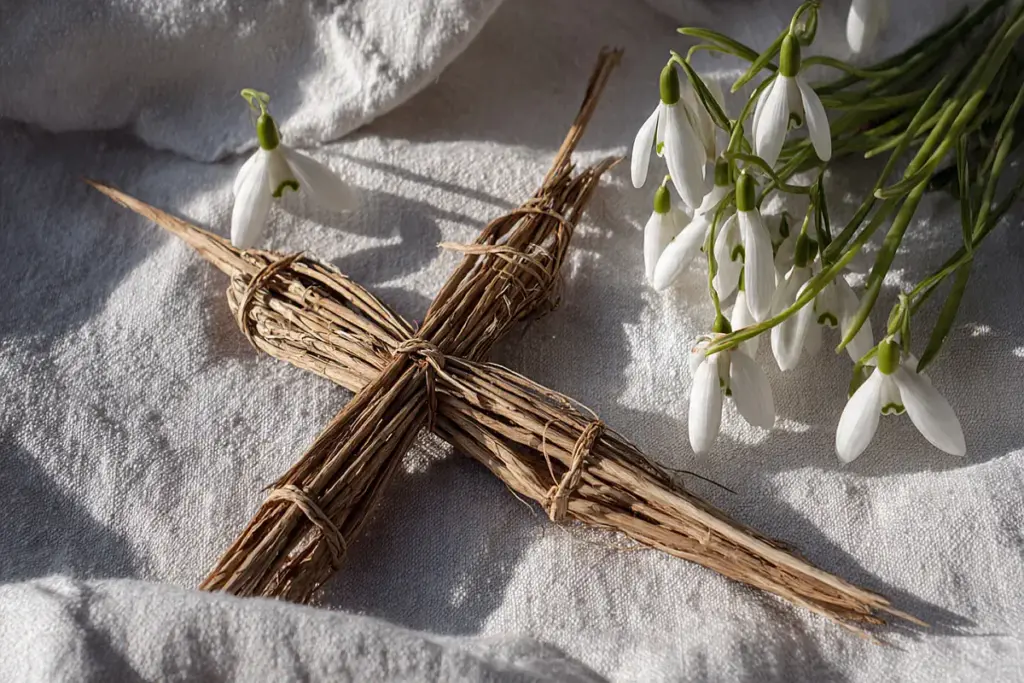
During the entire twelve nights, homes were smoked (cleansed with incense) and protected with horseshoes and crosses to ward off unseen entities.
An Old Incense Ritual
While rummaging through dusty, leather-bound books, I stumbled upon a small ritual for the Rauhnächte. I wish to share it, for I cherish these fragments of old lore. Though it bears a Christian veneer, we know that the Church often adopted pagan customs. We can look through the veil and see how our ancestors truly practiced.
When: December 25th.
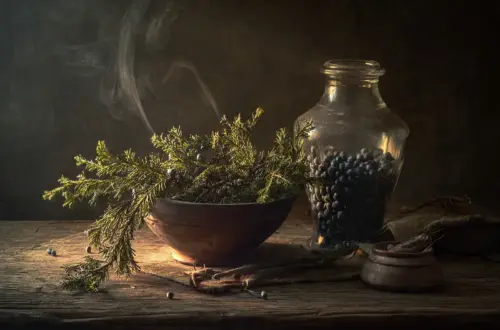
What: Frankincense, Blackthorn twigs, and herbs consecrated at Easter are burned in an incense pan. (Note: Before the influence of the Church, our ancestors almost certainly used native conifer resins, such as Spruce or Pine, instead of imported Frankincense).
Where: The ritual began in the animal stables. From there, the incense pan was carried room by room through the entire house. In older times, this was done by the village priest or the head of the household.
The Bedside Protection: Once the smoking was complete, the family retired to bed. But before sleep, a cross was symbolically drawn on the floor with the left foot. This ensured that no witch or Nachtmahr (nightmare spirit) could creep up to the bed. Those who prefer not to use the cross may trace the Drudenfuß (the Pentagram, point standing up) instead.
Wodan & Fria: The Procession of the Gods
During the Rauhnächte, the veil between the worlds is thin. In the old Germanic belief, this was the time when the great gods, Wodan (Odin) and Frigg (Fria/Holle), led a procession through the land, intervening in the lives of mortals to bless or to punish.
Wodan swept through the skies, leading the Wild Hunt.
Fria, his consort, inspected the dwellings to ensure they were tidy and clean.
It was customary to sprinkle the houses with water drawn from sacred springs. A small portion of this holy water was set aside to be used for ritual acts in the coming year.
Offerings for the Souls: The “Berchtmilch”
The Old Ways tell us that spirits and souls wander freely during these nights, often appearing in disguised forms. To appease these wandering entities, food offerings were left out. A classic offering was the “Berchtmilch” (Perchta’s Milk), a thick pottage of boiled milk mixed with hard bread rolls or dumplings.
The Spoon Oracle
One half of this offering was left on the dining table overnight for the spirits. Because the bread made the milk so thick, one could stick a spoon into it, and it would stand upright. This served as a serious omen: If, by the next morning, anyone’s spoon had fallen over, it was interpreted as a sign of misfortune—or even death—for that person in the coming year.

The Time of Standstill: Rest for Man & Nature
The Rauhnächte demanded a sacred pause. All work in the house and fields ceased. The wheels stood still, and the plow rested.
Rituals of Fire & Straw
Offerings: Animals—historically pigs and horses—were sacrificed to the gods. Great feasts and drinking bouts were held to honor the season.
Sacred Groves: The holy groves and forests were illuminated with pitch torches and candles.
Mountain Fires: Massive bonfires were lit on the peaks to unite the light of the house gods with the wild forces of nature.
Straw: The floors of the homes were strewn with straw, which remained there throughout the twelve nights, bringing the energy of the harvest into the living space.
Feeding the Spirits: Apples and nuts were burned in the hearth fire as food for the unseen guests.
Beware of the Beasts
One had to be wary of strange animals during this time. Witches were believed to shapeshift into creatures to move unnoticed. Therefore, strange animals were never lured in. Even hares were safe from the hunter, for the Devil himself might appear in the form of a hare. Legend says only those sitting on a cowhide could see his true form.
Foods for Gold & Luck
The menu was not just for nourishment, but for magic.
Millet Porridge & Herring: Eaten to ensure happiness and luck throughout the year.
Yellow Roots (Carrots/Parsnips): Eaten to attract gold and prosperity.
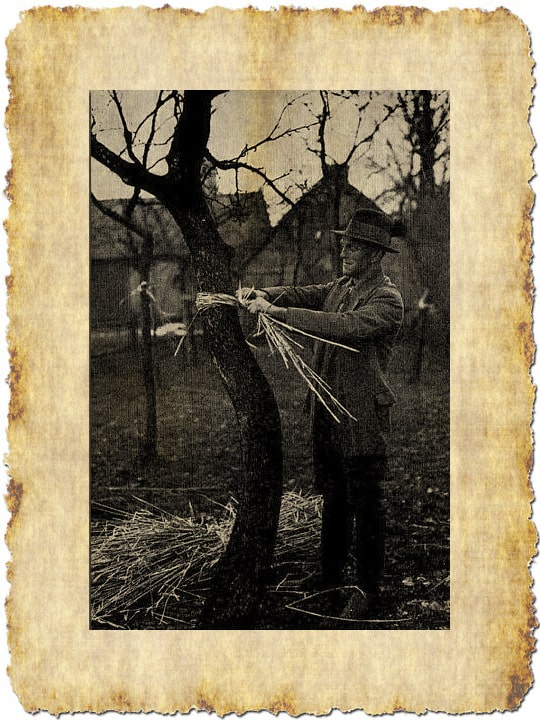
Straw-Bound Trees: Fruit trees were wrapped in straw to promise a bountiful harvest—a pagan custom of fertility often overlaid with later Christian meanings.
The Strict Order: Bans & Taboos
The Rauhnächte were a time of strict order and silence. It was said that if one had to cough, one should cough into a bucket to muffle the sound. Even unruly children were sometimes stuck into a sack to ensure the necessary quiet!
The Laws of the Twelve Nights:
Closed Doors: Doors were never to be left ajar. Anyone slamming a door risked attracting lightning strikes in the summer.
Orderliness: No baking tools or wood could be left lying in front of the stove.
The Laundry Ban (Most Important): No white linen was to be hung on the line. Lore suggests that hanging white laundry invites death, as the sheets resemble shrouds. This is also where the German idiom “unter Dach und Fach” (safe under roof and lock) likely finds its roots.
Sweeping: Dust and dirt were not to be swept out the door, nor stables mucked out. To do so would be to sweep the luck out of the house and give dark powers influence over the homestead.
Lending: Nothing was lent, and all borrowed items had to be returned before the start of the nights. To lend during this time was seen as the act of a witch.
Body Care: Dirty laundry was not left to pile up (lest one become sick), and cutting hair or nails was forbidden, as it was believed to cause headaches in the New Year.
Further Warnings:
Whistling in the early morning brought severe misfortune.
Picking up apples or nuts from the ground caused rashes.
Eating outdoors meant one would suffer hunger in the coming year.
Moving a chair, speaking too loudly, or placing a light in a room before smoking it out invited bad magic.
The New Brooms
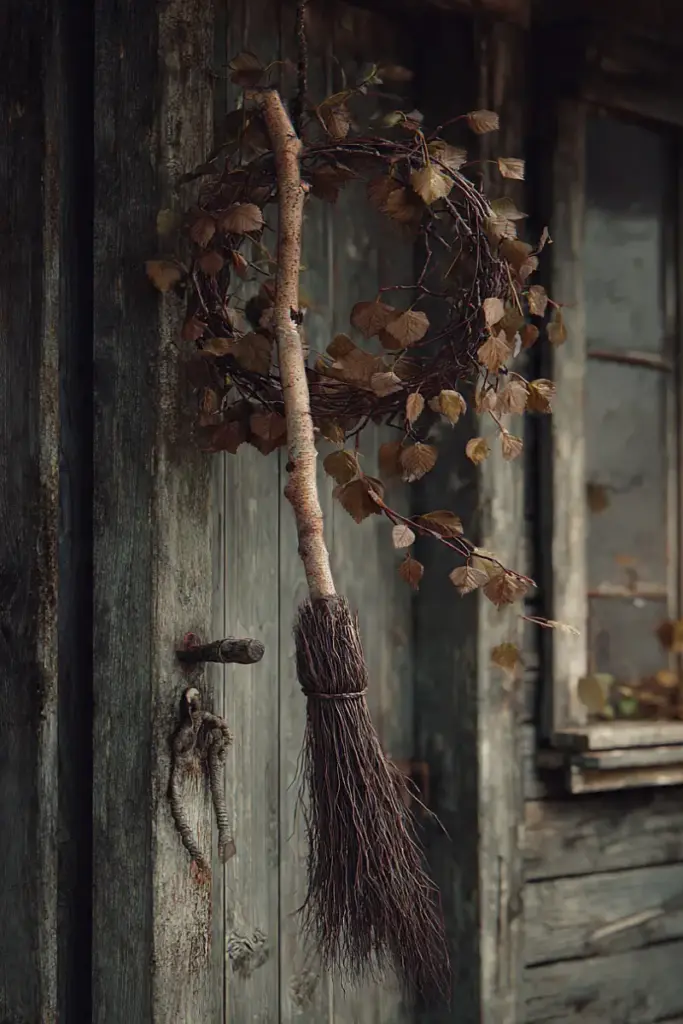
Despite the ban on sweeping out, the Rauhnächte were the time to make new brooms. Brooms bound during this magical window were said to be especially powerful. While the old brooms were burned to banish the past, the new ones protected against witchcraft and ensured the animals in the stable thrived.
Divination & Destinies: Peering into the Future
The Rauhnächte were—and remain—a time for oracles. When the laws of time are suspended, the future lies open to those who know how to look. Popular customs included Lead Pouring (Molybdomancy) and Shoe Tossing to predict travel or marriage in the coming year.
The Dream Oracle
Dreams during this threshold time are said to possess a heavy weight of truth.
The First Three Nights: Whatever is dreamt in the first three Rauhnächte is said to come true quickly.
The Twelve Month Prophecy: Dreams from each of the twelve nights correspond to the twelve months of the coming year (First night = January, Second night = February, etc.).
Timing: Lore suggests that a dream had before midnight will manifest in the first half of the corresponding month; a dream after midnight belongs to the second half.
Signs & Omens
The world speaks to us through small signs during these days.
The Stolen Coins: If buttons are found missing from a garment, it is an omen that one will lose money or suffer theft in the exact amount of the missing buttons.
The Ghost Seers: Children born during the Rauhnächte were considered “Sunday Children” or lucky souls. However, they were also credited with “The Sight”—the ability to see spirits and talk to the unseen.
Marriage Ban: In the Middle Ages, church weddings were forbidden during this time. To marry during the “Rough Nights” (or in a Leap Year) was to invite misfortune into the union.
The Weather Almanac
The Rauhnächte were used to “make the calendar.” The weather of each single day foretold the weather of the corresponding month.
Example: If the first day is stormy, January will be wild. If the fifth day is sunny, May will be fair.
The Day of Reckoning: January 6th is the key.
If January 6th is dry, the “Weather Calendar” of the twelve days is valid and true.
If it rains or snows on this day, the forecast is null and void.

The Legacy of the Holy Nights: Old Faith & New
Originally, the Rauhnächte were a time when the gods walked the earth. As Christianity spread across Europe, these customs were not erased but transformed. The “Rough Nights” became the “Holy Nights” or “The Twelve.” Yet, the very fact that we count by “Nights” instead of “Days” reveals the pagan root, for the Church counts by days, while our Germanic and Celtic ancestors reckoned time by the nights.
In the 19th century, homes and stables were heavily smoked with Frankincense and Valerian (Speick) to protect against the very gods who once blessed them. The Wild Hunt of Wodan was reinterpreted as the “Furious Host” or the Devil’s chase, flying through the air with screaming hounds, harming anyone who did not take cover.
Sacred Symbols
The Sun Wheel (Pretzel): In Northern Germany, pretzels were baked specifically for this time. They are not merely food, but a symbol of the Germanic Sun Wheel, invoking the return of the light.
Evergreens: Fir branches were brought inside as a promise of the Spring God’s return.
Wreaths: Ivy and Mistletoe adorned the trees and stones, honoring the ancient spirits of vegetation.
Fruit: Apples and nuts were displayed as symbols of the reproductive force of nature.
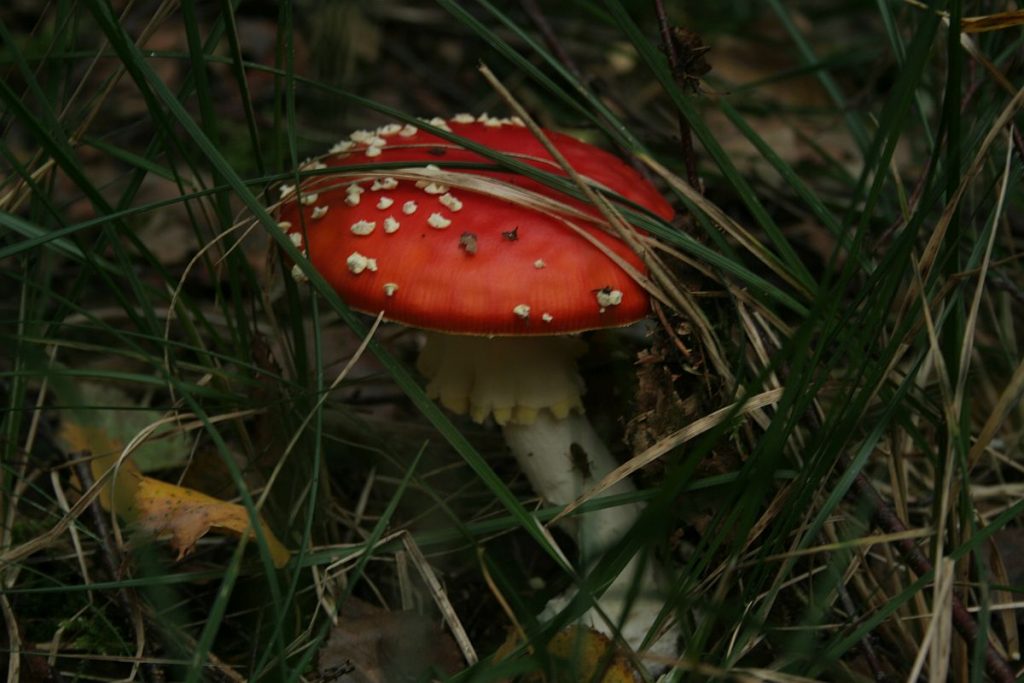
Of Fly Agarics & Lucky Pigs
Have you ever wondered why we gift marzipan pigs and mushrooms at New Year’s? The answer lies in the deep mythology of Wodan (Odin).
The Fly Agaric (Amanita muscaria)
The red-and-white mushroom is born of the gods. Legend tells that when Wodan rode his eight-legged horse, Sleipnir, across the winter sky, the beast would foam at the mouth. Where the bloody foam and the spurs of the god struck the earth, the red Fly Agarics sprang up nine months later. They are the “Flesh of the Gods,” a shamanic symbol of the Otherworld.
The Lucky Pig
The little pink pigs we exchange today are linked to the Goddess Holle (or Freya), who was said to ride through the skies on a wild boar. Furthermore, the intensity of the Wild Hunt was directly linked to the fertility of the land. The more the “Wild Sow” raged, the richer the harvest. Thus, the pig became a timeless symbol of luck and abundance.
Gates to the Underworld: The Oracle of the Rauhnächte
It is said that on the very first of the Rauhnächte, the gates to the Underworld swing open. In the old legends, he who stepped through these gates would not return for thirty years—though to him, it would seem but a fleeting moment.
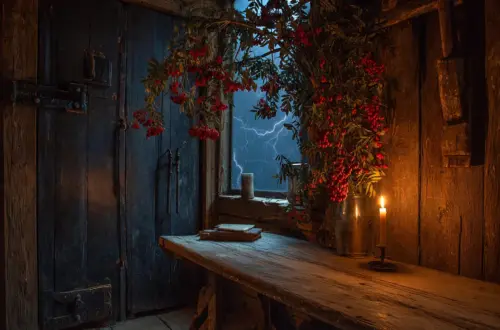
Because the veil is so thin, divination (Oracles) flourished during these twelve nights. Everything felt possible; the air itself was charged with mysticism. Yet, it was advised to keep windows and doors tightly bolted after dark. For outside, the Goddess Fria (Holle) swirled through the winter skies with the souls of the unborn, accompanied by Wodan and his Army of the Dead.
A Little Oracle: The Nine Hats
I wish to share a small, almost forgotten oracle with you: The Oracle of the Nine Hats. The number nine was sacred to the Germanic tribes, and Wodan himself was known as the “Hat-Bearer” when he walked among humans in disguise.
The Ritual: Take nine small paper hats (or cups) and place them upside down on a table. Under each hat, hide one of the following symbols:
A Ring: Marriage or deep connection.
A Coin/Purse: Wealth and prosperity.
A Key: A new home or expanding one’s estate.
A Comb: Trouble, annoyance, or “vermin” (petty enemies).
A Small Doll: Parenthood or fertility.
A Cloth/Handkerchief: Grief or tears.
A Bundle: A journey or wandering.
A Rosary (or Beads): Spiritual growth or piety.
Empty Hat: Death or a great ending.
The Reading: Lift three hats. Whatever lies beneath reveals the themes of your coming year.
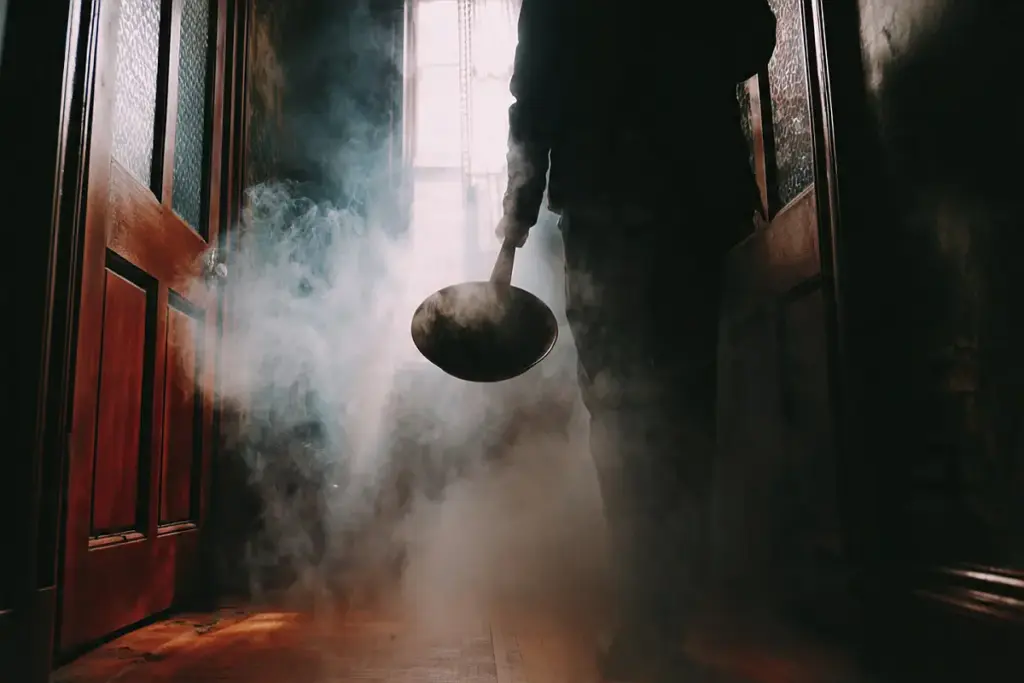
Smoke & Coal: The Plants of the Holy Nights
Incense is the heartbeat of the Rauhnächte. Traditionally, our ancestors used the charcoal from wood burned on Easter Saturday to light the incense, connecting the cycle of spring to the depth of winter.
While the prayers were spoken to banish witches and malevolent spirits, the plants used were earthly and strong. In the Alps, Speick (Alpine Valerian) was common, alongside Frankincense or simple Spruce resin.
Modern Incense for the Twelve Nights
Today, we turn to the plants that grow around us:
Mugwort & Wormwood: For clearing and vision.
Elder Wood & Yew: For connection to the ancestors.
Blackthorn & Mistletoe: For protection and light.
Spruce Resin & Juniper: For purification.
Note on Frankincense: I recommend using local resins (like Spruce or Pine) instead of imported Frankincense (Boswellia), as the latter is often overharvested and endangered. The “Forest Incense” of our own woodlands is just as potent.
A Wall of Protection: The “Seelengeister” Blend
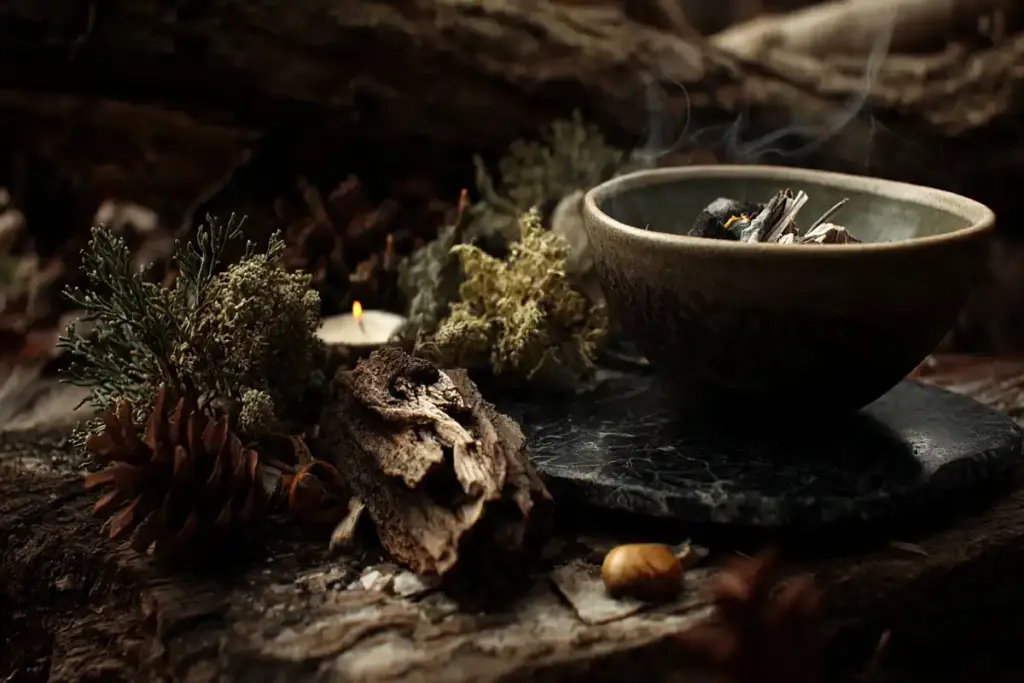
The purpose of smoking the house, barn, and yard was to create a barrier—a spiritual wall that wandering souls and demons could not cross. The Christians adopted this pagan custom, trying to override the Old Ways. Yet, the people were stubborn. They might have joined the new faith under pressure, but behind closed doors, the embers of the old rituals continued to glow. Even today, while some Protestant traditions frown upon “smoking” as superstition, the custom survives in the Catholic use of frankincense and, more importantly, in the homes of those who remember their roots.
Incense Recipe: “Spirits of the Soul”
Use this blend to cleanse your home during the Twelve Nights:
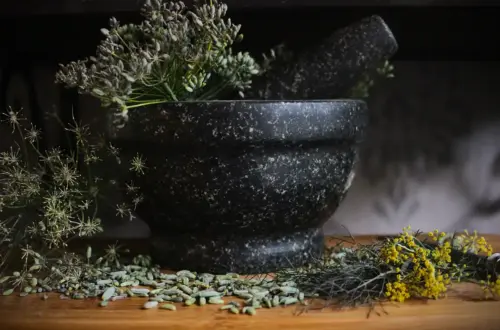
Sweet Vernal Grass (Anthoxanthum odoratum – “Ruchgras”)
Fir or Spruce Resin
My Personal Touch: I like to add dried Woodruff and Hazel leaves. I find this gives the blend a grounded, ancient strength.
The Wood of the Lightning: Powerful Protection
If you walk through the forest with open eyes, you may find a tree struck by lightning. You can often smell the charred wood long before you see it. Gather a small piece of this “Lightning Wood.” Burned during the Rauhnächte, it is considered the ultimate protection magic for your intentions in the New Year. It holds the raw power of the sky fire.
Silence & Sanctuary: Time for You
The Rauhnächte are, above all, a time of inner stillness. It is a time to create a small altar, pour a cup of herbal tea, and withdraw from the noise of the world. Play a board game, lay the Tarot cards, or simply write in your journal. Leave the drudgery of the old year behind and dream the new one into being.
I wish you a contemplative, magical, and profound time between the years.