🌳 The Sacred Guardian of the North
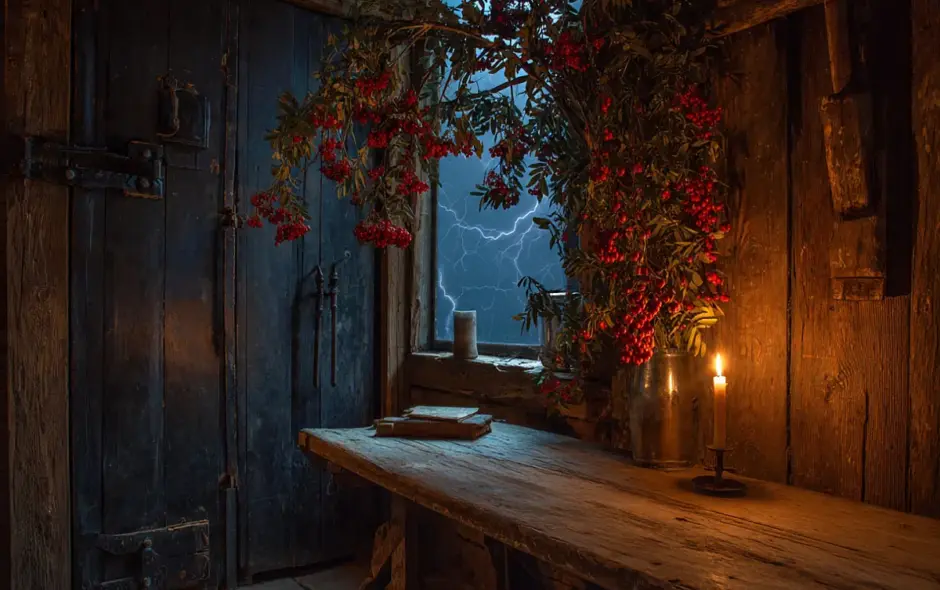
The Rowan (Mountain Ash) was held sacred by our ancestors, revered just as deeply as the Black Elder and the Hazel. It provided them with food and medicine, but its true power lay in the spiritual realm. In the ancestral lore, the Rowan played a vital role in protection and magic.
Folk Names & Whispers The old names tell us much about its character:
Bird Berry Tree (Vogelbeerbaum)
Witch Tree (Drudenbaum)
Dragon Tree (Drachenbaum)
Cloud Tree (Wolkenbaum) – connecting the earth to the heavens.
🔴 Red Berries: Coral of the Woods & Child Protection
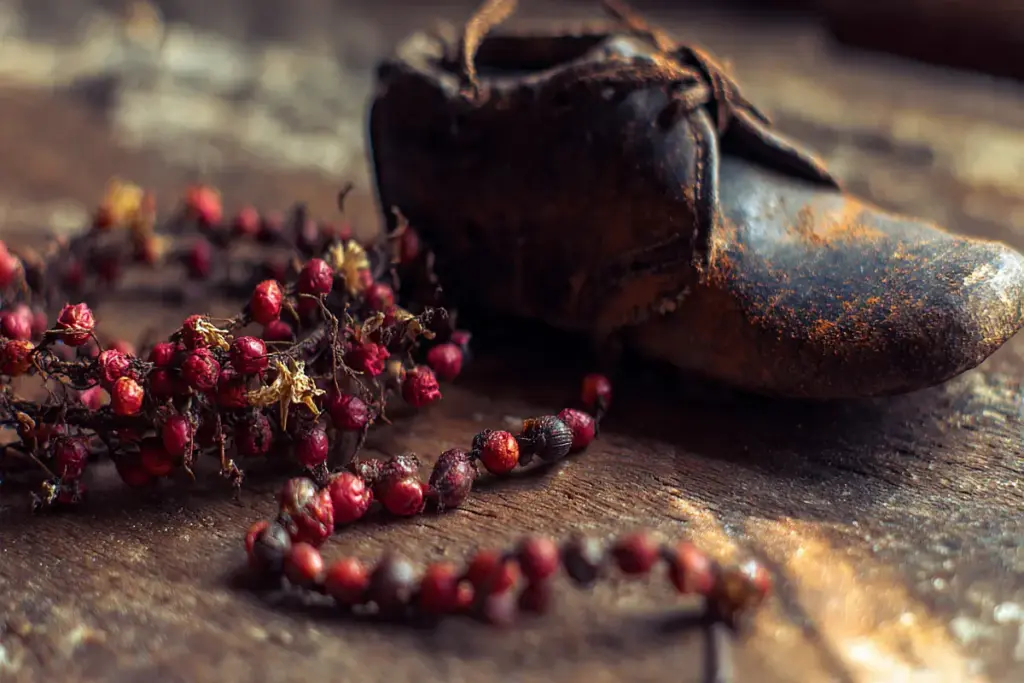
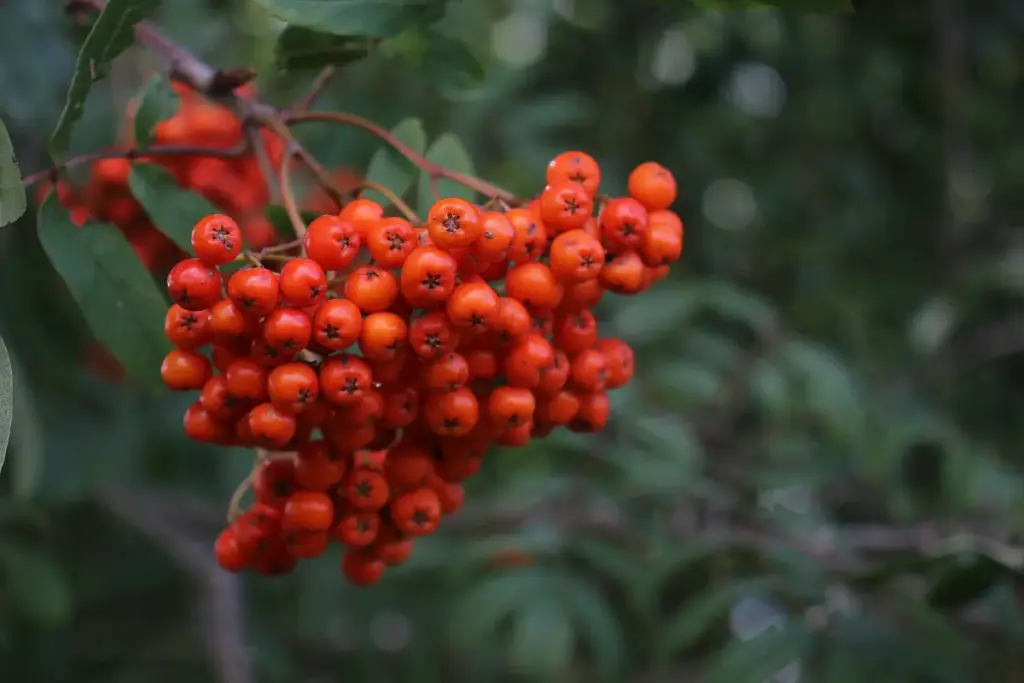
In earlier times, children would craft necklaces and bracelets from the vibrant, coral-red berries. I believe this was done with the same deep intention as the wearing of real red coral necklaces in historical tradition.
The Magic of Red
Protection: In the belief of our ancestors, the red “corals” of the forest were magically charged. They warded off all evil from the child and bestowed robust health.
Living Memory: This is not just ancient history; it is living memory. My own mother, born in 1951, still wore such a protective chain as a child.
⚡ Thor’s Cloud Tree: Sacred & Untouchable
To Donar (Thor), the Rowan was sacred above almost all others. Echoes of this ancient belief and reverence for the Rowan persisted for a long time in the German lands. Later in history, the god’s attribute was replaced by the Cross or St. Wolfgang’s Axe. Both animals and humans share an infinite and intimate bond with this tree consecrated to the Thunder God.
The Seat of the Gods The primary dwelling place of the nature spirits is the realm of the air—a landscape of the sky. In the center of this landscape, the old Germanic tribes placed a giant Cloud Tree.
The Connection: In Scandinavia and Iceland, the Ash was seen as this Cloud Tree. However, the powers of the Cloud Ash are identical to those of the Rowan (Mountain Ash): they possess a healing, fertilizing force that wards off evil.
Taboos of the Wood: Respecting the Tree Soul Among the North Germanic peoples, the soul of the Rowan was held inviolable. It was strictly forbidden to use this tree as common timber. The Ancestral Lore speaks of clear warnings:
Fire & Strife: If one throws Rowan wood into the fire, strife and discord will erupt among those standing around the hearth, even if they were the best of friends.
Fertility: If used as lumber for building, it was believed to cause barrenness, preventing women and animals in the house from bearing offspring.
Shipbuilding: If Rowan is used to build a ship, the vessel is doomed to sink—unless Juniper is placed in the hull to balance the energy. If the oarlocks on only one side of a boat are made of this wood, the boat will capsize.
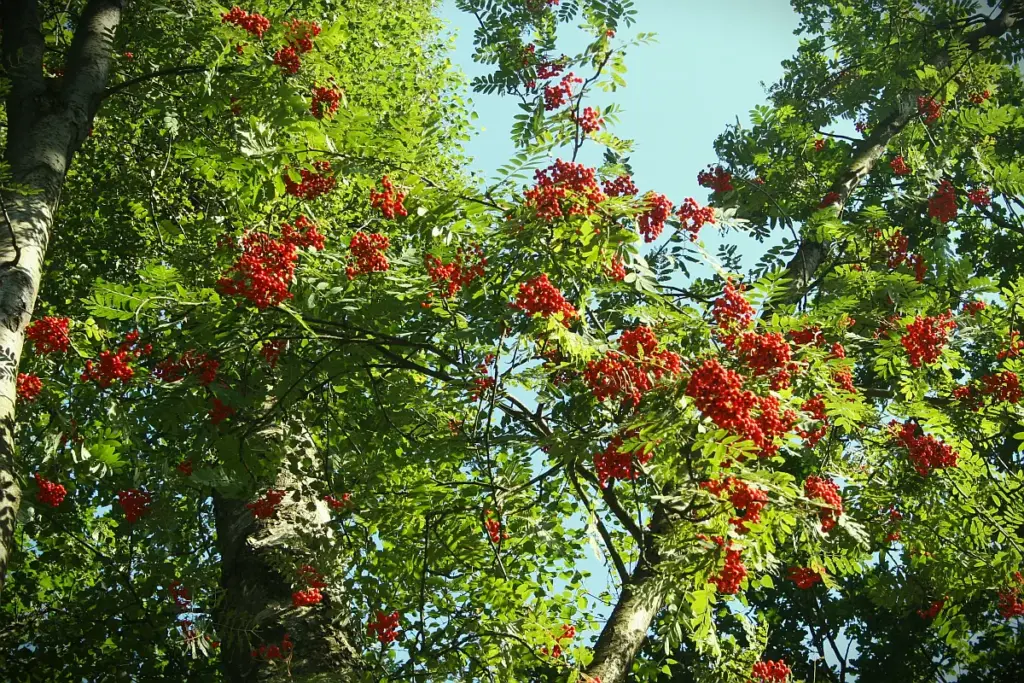
🐉 Guardian against Dragons & the Evil Eye
The Dragon Tree In the Lower Rhine region (Niederrhein), it was tradition to plant a Rowan tree in front of the stable door, usually on May Night. The purpose was clear: to ward off dragons and other monsters. This is the origin of its striking folk name: the Dragon Tree.
Protection in the North
The Barn & The Beast: In the Scandinavian North, farmers would stick Rowan twigs into the bull’s yoke and the dung heaps. This served a dual purpose: to promote fertility and to banish evil spirits.
Serpent & Spirit: The Rowan repelled not only dragons but also snakes. For this reason, in Oldenburg and throughout the North, stables and manure piles were often surrounded by protective Rowan trees.
The Red Shield: In Scandinavia, the wood of the Rowan was specifically used because of its red color—a potent remedy against the Evil Eye.
The Witch’s Tree: On St. John’s Day, it was said that witches (the “Truden”) would break the branches of the Rowan; hence the old Germanic name Trudenbaum.
🌿 The Life Rod: Rituals of Renewal & Fertility
Customs of Correction & Care
The Disorderly: While a Birch tree was placed before the house of a well-behaved girl, a “disorderly” maiden was given a Rowan.
Icelandic Taboo: In Iceland, the reverence went so deep that there was a strict ban on ever striking an animal with a Rowan branch.
A Chronicle from Mecklenburg (1760) Deep in the archives of my home region, Mecklenburg-Vorpommern, lies a story from the year 1760. An old tailor in Güstrow confessed that his daughter had taken a small twig from a Rowan bush brought into town by a boy and used it to “quitz” (an old dialect term for ritually striking or quickening) her brother. He went on to recount that thirty years prior, his master’s children had done the same to the master himself. The master, knowing the old ways, said he knew exactly what they wanted and gave them three shillings as a reward.
The Meaning of the “Beating” With the twig of a Rowan, people in the spring would strike not only animals but also humans. We penetrate deeper into the meaning of this custom when we learn that in older times, a bride was also ritually struck with a Rowan twig before her wedding.
Striking with the Rowan rod and planting it as a Maypole ultimately hold the same meaning: It is the Life Rod (Lebensrute), imbued with fertilizing, miraculous powers. An ancient, widespread belief reveals itself here—not as punishment, but as a blessing of life force.
🌿 The Gateway of Healing: Passing Rites & Magic Wreaths
He who grasped the branch of a Rowan tree before sunrise and murmured a specific blessing was freed from clinging illness. This was the promise of the Old Ways.
Rituals for the Little Ones
England: It was common practice to pass sick children through natural holes in the trunk of a Rowan tree to strip away the ailment.
Jutland (Denmark): Here, a child was healed of certain diseases in a very specific manner: A Rowan branch was split down the middle. The child was then passed through the split three times against the sun (widdershins) and backwards, without ever touching the ground. During this, the Lord’s Prayer was recited continuously. Once done, the child was considered healed.
Deep Dive: I have written a separate article with many photos showing what these fascinating trees looked like. You can read more here: The Split Tree (Zwieselbaum): Stripping off Illness & Forest Magic.
The Underground Ones & The Thursday Rite People would seek out a large Rowan tree in a place where the “Underground Ones” (nature spirits or hidden folk) were believed to dwell.
The Ritual: This tree was split with wedges just wide enough to pass a child through. For three consecutive Thursday evenings, the child was brought there.
The Silence: Two people were required: one pushed the child backwards through the split, the other received them. This was repeated three times in absolute silence.
The Connection: Thursday was crucial because this day is named after Donar (Thor), and the Rowan is consecrated to him. These practices were known as “Passing Cures” (Durchziehkuren).
Healing Wreaths for Limbs Our very ancient ancestors crafted wreaths from Rowan branches. If an arm or leg was believed to be “hexed” or enchanted with illness, the limb was placed inside this wreath. The wreath was then bound to a post, symbolically transferring and binding the sickness, leaving the person “freed” (gefreit).
🌾 Of Dowsing Rods, Sowing & The Mystic Nine
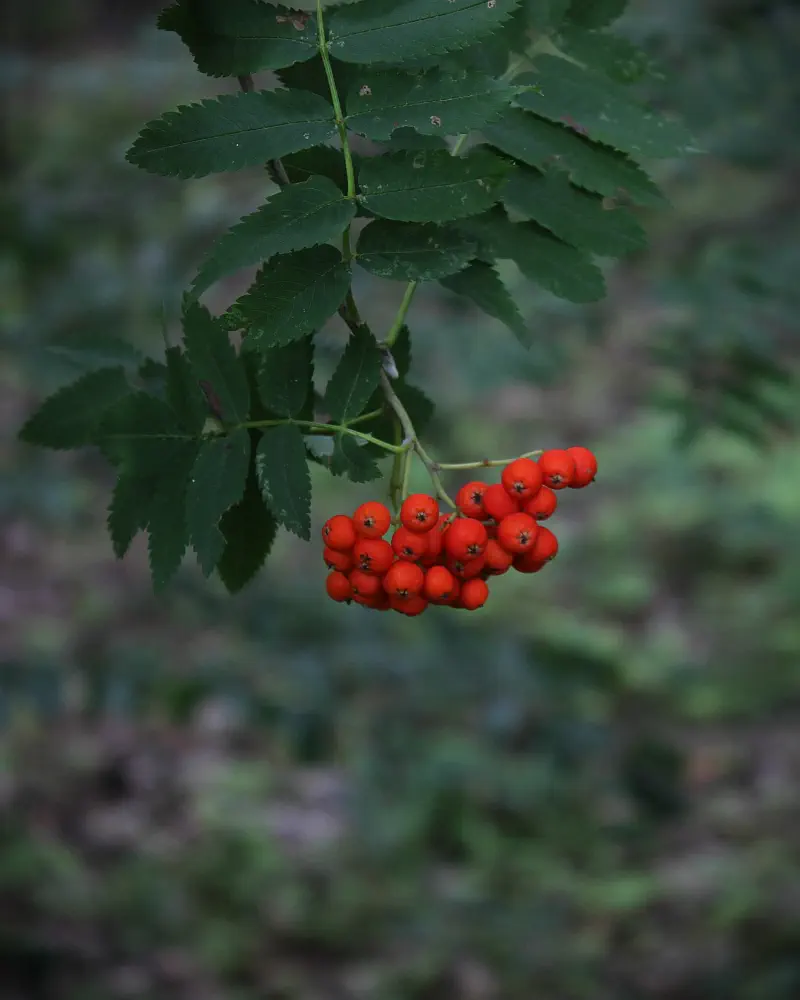
The Divining Rod A Rowan branch cut specifically on May Day became a powerful dowsing rod. It did not merely point out hidden treasures; it was believed to make all wishes come true. Much like the Mandrake, this dowsing rod was often given a human shape, “baptized,” and named by making three crosses over it.
Farmer’s Wisdom & The Fields
Corpus Christi: Rowan leaves were woven into wreaths, consecrated, and then torn apart to be scattered over the fields. This was done to protect against “Durchschnitt” (a term for crop damage or pests “cutting” the harvest).
Sowing Time: When the Rowan begins to bloom, it is the sign from nature to begin sowing barley and oats.
The Magic of Nine Of course, the “Nine-Sorts-Belief” (Neunerlei) must not be missing, for the wood of the Rowan held a high place there. The number nine offers us a special handle on magic.
The Hessian Farmer: Later in history, nine Paternosters were considered healing in Germany as well as in old England. In Hesse, during the first sowing, the farmer would speak a sowing charm against worms and wild game at three corners of his field, throwing three handfuls of grain nine times at each corner.