Hag Stones & Witch Stones: Protective Amulets from Nature
Fossils and strange stones have always held humanity in thrall. But what meaning do they carry? Through their peculiar shapes and forms, a vast web of folk belief and folk medicine was spun around them.
Today, I wish to introduce you to the Chicken Gods (Hag Stones), Thunderbolts (fossilized squid parts/Belemnites), Toadstones (fossilized sea urchins), and St. Boniface Pennies (fossilized crinoid stems), and reveal what significance they held for the people of old.
A Personal Note: I grew up with these fossils and treasures of the earth. As a child, they fascinated me immensely, and that fascination holds true to this day. Whenever the weather is fair, you will often find my husband and me in the sand pits of Mecklenburg, hunting for these beautiful pieces. Since I have been doing this since I was knee-high to a grasshopper—taught by my father—I have a well-trained eye for these fossils and stones.
1. The “Chicken God” (Hag Stone / Hole Stone)
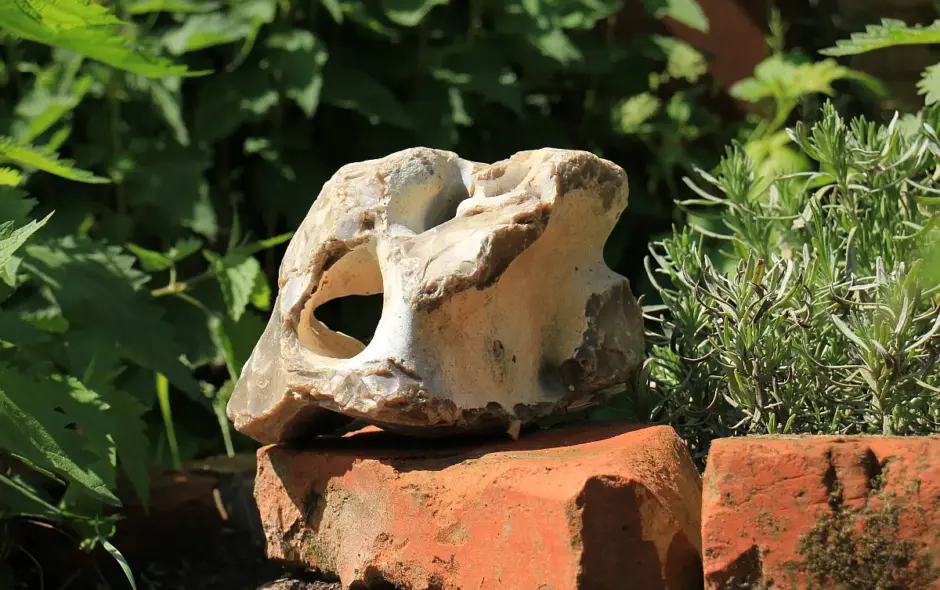
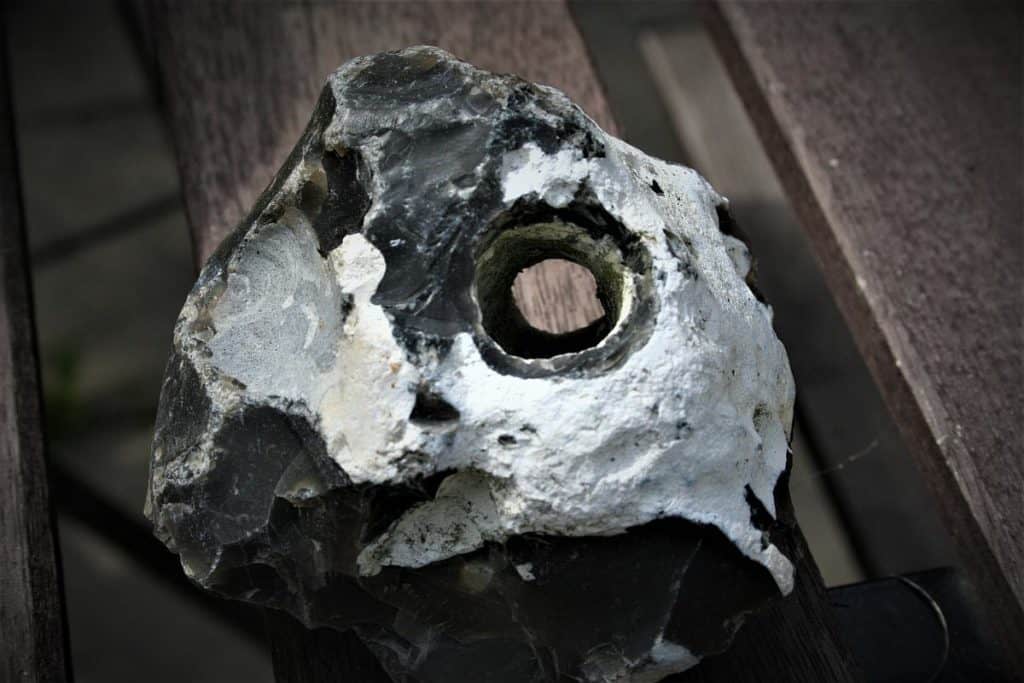
Let us begin with the Hühnergott—literally translated as the “Chicken God.” These stones with natural holes spread a great, ancient belief and magic. In the vernacular, they are known by many names: Lochsteine (Hole Stones), Drudensteine (Witch Stones), Schratensteine (Goblin Stones), or Trudenstein. In English folklore, they are best known as Hag Stones or Adder Stones.
The Gospel of the Witches
In the famous book “Aradia, or the Gospel of the Witches” (1899), it is said of these stones: To find a stone with a hole in it is a special sign of the favor of Diana. He to whom this happens shall take the stone in his hand and, having observed the necessary ceremony, repeat the following:
“I have found A holy stone upon the ground. O Fate! I thank thee for the happy find, Also the spirit who upon this road Hath given it to me; And may it prove to be for my good and my good fortune!”
Paramoudra & Houseleeks
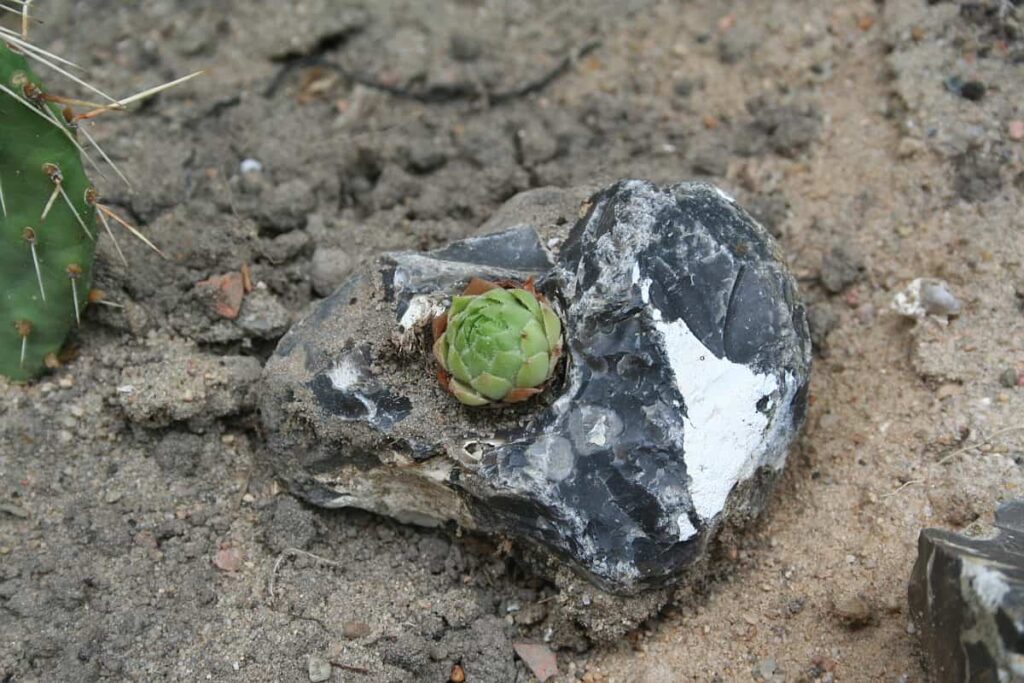
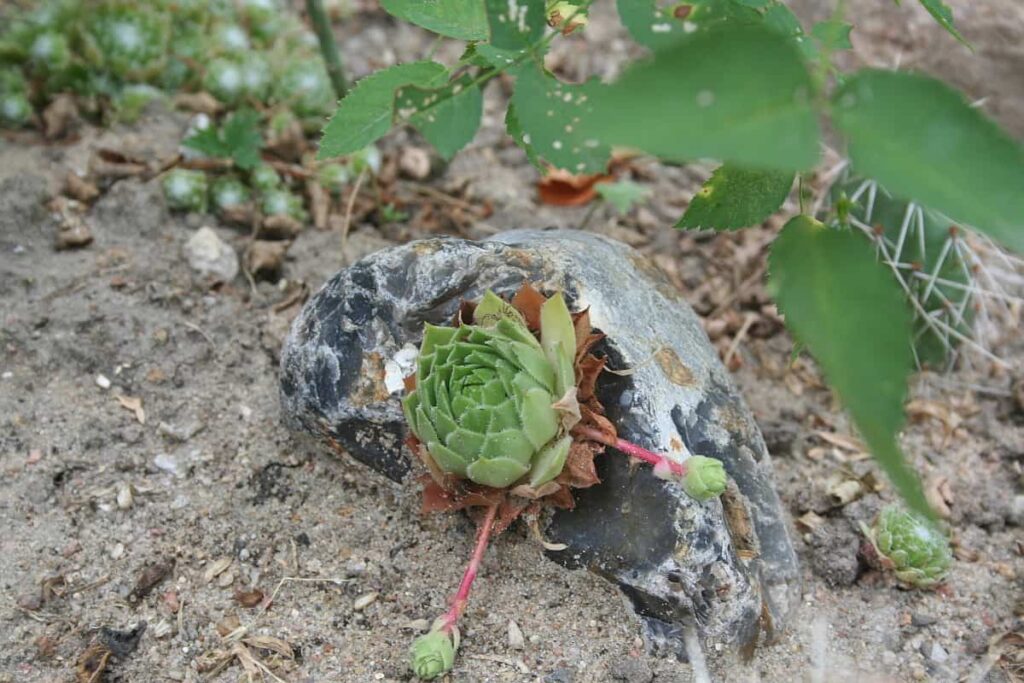
In geological terms, these stones are called Paramoudra. This term usually refers to the truly massive hole stones (Pot Stones). Often, these stones do not have a hole that goes all the way through, but rather a deep hollow or cup. We find many small specimens of these Paramoudras, mostly made of Flint. These hollows in the small stones were often formed when a fossilized sea urchin, once trapped inside, fell out, or they were created by water erosion over eons. In German folklore, they are sometimes strangely called “Murder Stones” (Mördersteine)—why, I sadly do not know, but the word certainly sparks the imagination!
Garden Magic Tip: I take these small “Half-Paramoudras” (stones with a cup-like hollow) and plant Houseleeks (Sempervivum) in them, distributing them throughout my garden. The Houseleeks feel very at home in the stone. Historical Note: The Houseleek was also beloved for protection against lightning strikes and was often planted on roofs, earning it the folk name “Thunderbeard” (Donarsbart).
Origins & Where to Find Them
The “Chicken Gods” are of natural origin. They are mostly Flint stones (Feuerstein) created millions of years ago. Flint can form the most rustic and bizarre tuberous shapes imaginable. The hole in the stone usually originates from the stem of a sea lily (crinoid) or a belemnite that was embedded in the silica and later dissolved or fell out, or it is the result of water washing through a soft spot over millennia.
Where to look:
You can often find them on the beaches of the Baltic Sea and the North Sea.
In gravel pits and sand pits.
With luck, on unpaved country paths.
Pro Tip: If you order a load of gravel or river stones for your garden paths, search through the pile before spreading it! Systematically sift through it. You will almost always find fossils or small Hag Stones hidden within.
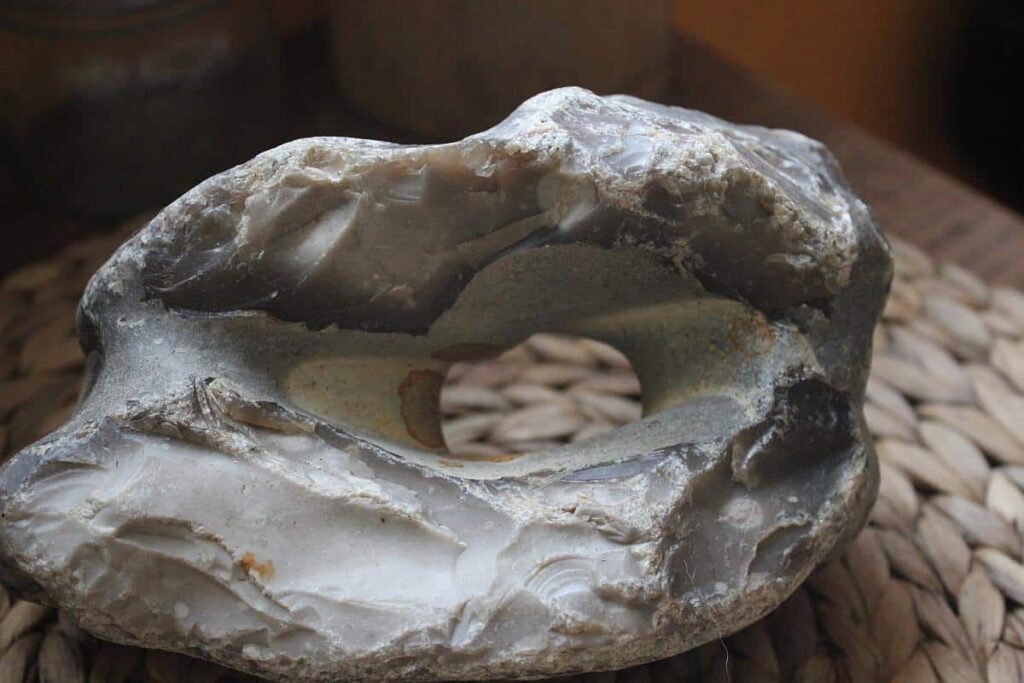
The Chicken God in Folklore: Protection & Old Gods
The “Chicken God” (Hühnergott) has served as a talisman for centuries. It brings luck and protection. There is an old maritime belief that says: Whoever wears one around their neck cannot drown.
The Law of Authenticity However, there is one strict rule: The hole must not be man-made. A stone with a drilled hole holds no power. It must be of natural origin—eroded by water or time. With a little practice, you can tell if a stone is a fake. Therefore, please be careful if you buy such a stone online. The auction sites are full of fakes, exploiting the longing for the old magic of our great-grandparents.
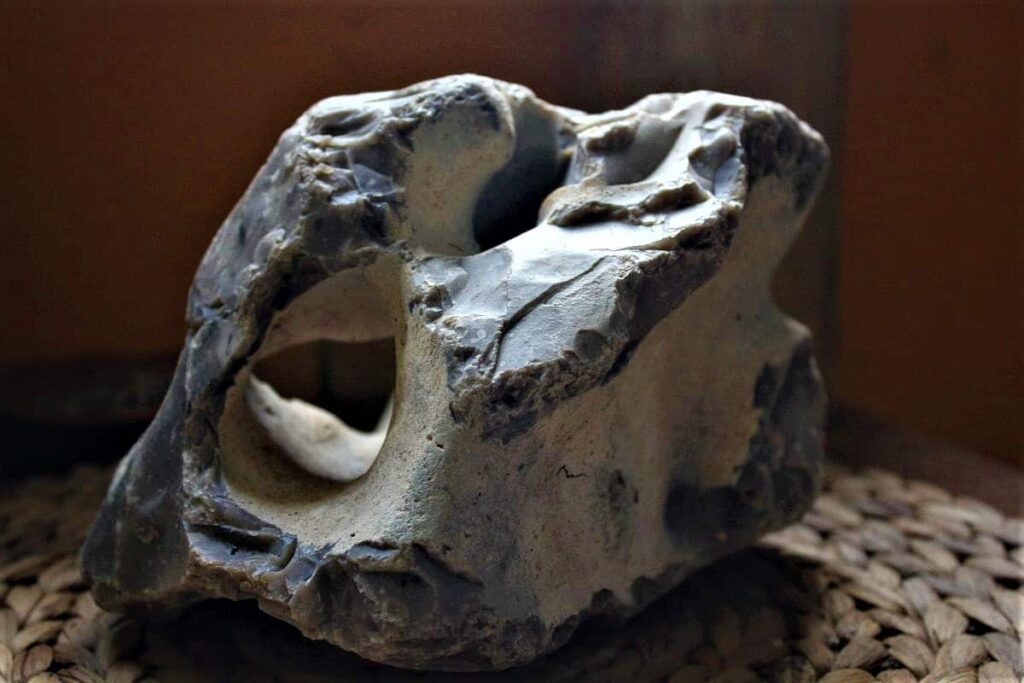
Slavic & Germanic Roots
This ancient belief reaches back deep into Slavic culture. Here, the Chicken God was used to protect poultry from the Kikimora, a female house spirit who, if displeased, would harm the chickens. The Slavs believed that merely seeing the Kikimora brought misfortune.
Weles: The Slavs used these stones to invoke their god Weles, the guardian of cattle, magic, and the underworld.
Donar: The Germanic tribes used them to honor Donar (Thor), the god of thunder.
In both cultures, as well as among the Franks, Alemanni, and Anglo-Saxons, the hole stone served as a tool against evil spirits and to ward off the Evil Eye. The belief was that the harmful magic would get “caught” in the hole and could not reach its target.
Hearth & Farm: How to Use the Stone
The Witch Stone In the past, these perforated stones were hung over the front door to keep witches out. In England, they are widely known as “Witch Stones” for this very reason.
The Rule of Finding: Any stone with a natural hole can serve as a Hag Stone, provided it was found without looking for it. It is a gift from nature.
Placement: The longer a stone is used for protection, the more powerful it becomes. Traditionally, it is hung behind the outermost door of the house. Smaller ones are tied to the key ring.
In the Stable (Why “Chicken God”?) The name “Chicken God” comes from its most practical use: The stones were hung in the windows of stables or placed directly into the nesting boxes of hens. This ensured that the eggs were not bewitched and that the hens remained productive. They were also hung on cradles, mangers, and fruit trees to ensure fertility and health.
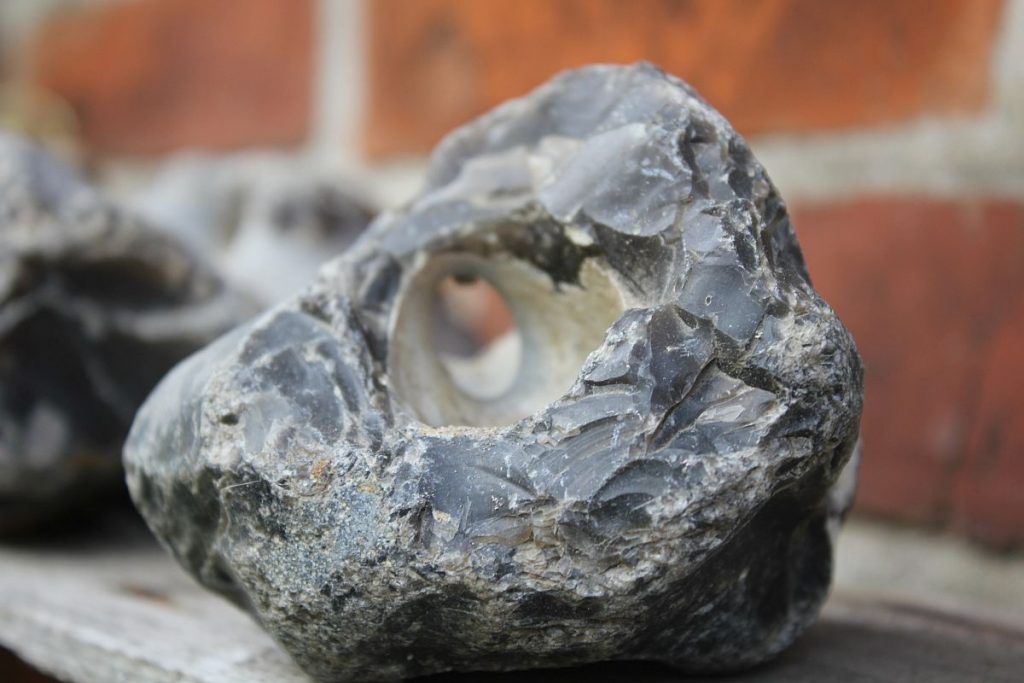
Protection against Nightmares & Lightning
The Roof Guardian The stone was also an amulet against lightning strikes. In old German farmhouses, if you are lucky, you can still find rows of hole stones hanging from the rafters in the attic.
The Night Hag (Trude) The stone protects against the Alp or Trude (the Night Hag/Mara) who sits on the sleeper’s chest. Even children were given Chicken Gods in their beds, not only for protection but also with the belief that it helped them learn better.
Through the Looking Glass In Austria, these stones are called Linsensteine (Lens Stones). It is said that if you look through the hole, you see everything larger—or perhaps, you see the true nature of things.
Jewelry & Gifts You can thread a leather cord or silver chain through the hole to create a necklace. I often make these amulets myself. On a silver chain, the rugged stone looks noble and grounded. I give them to people who are important to me as small bringers of luck.
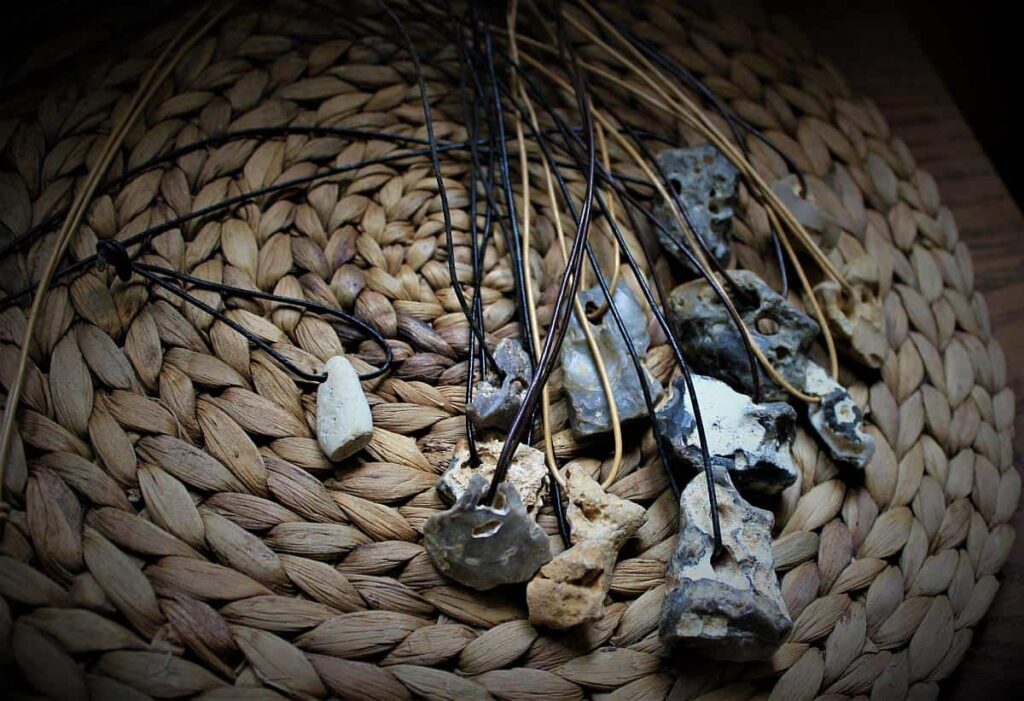
Crafting a Magical Hag Stone Amulet
A Hag Stone can be used as an amulet or talisman. Remember the lore: The stone must be found, not bought. If you buy it, it loses its effect. You may accept it as a gift from a loved one, but never from a stranger.
The “Trude” Defense These amulets have many names: Hag Stone, Protection Stone, Drudenstein. The “Trude” or “Drude” is a folkloric witch-figure who causes mischief in the house and stable. Symbolically, this often stood for bad weather, accidents, or sudden illness. The stone prevents this damage.
Finding Your Stone These stones are gifts from the water. You find them on beaches (Baltic Sea, North Sea), in riverbeds, or in sand pits. In my region (Schleswig-Holstein/Mecklenburg), I often find them on fields freshly plowed by farmers.
What to do when you find one:
If you find a stone with a hole, take it with you. Keep it safe. It is now your protector.
Wear it around your neck.
Keep it in a small pouch (tradition suggests a black linen bag).
Summary of Uses in Folklore
For the Chickens: Put it in the coop. It protects the flock from the Trude and ensures good egg-laying (hence the name “Chicken God”).
Personal Guardian: It acts as a protective companion, warding off negative energy and “energy vampires.”
Wish Fulfillment: It is said to grant wishes.
Potency: The more holes a single stone has, the more magical properties it possesses.
House Protection: Hung in the window or doorframe, it guards the homestead.
Lightning Rod: Hung in the attic, it protects against storms.
These amulets date back to the Neolithic age—a magic as old as humanity itself.
2. Thunderbolts (Belemnites)
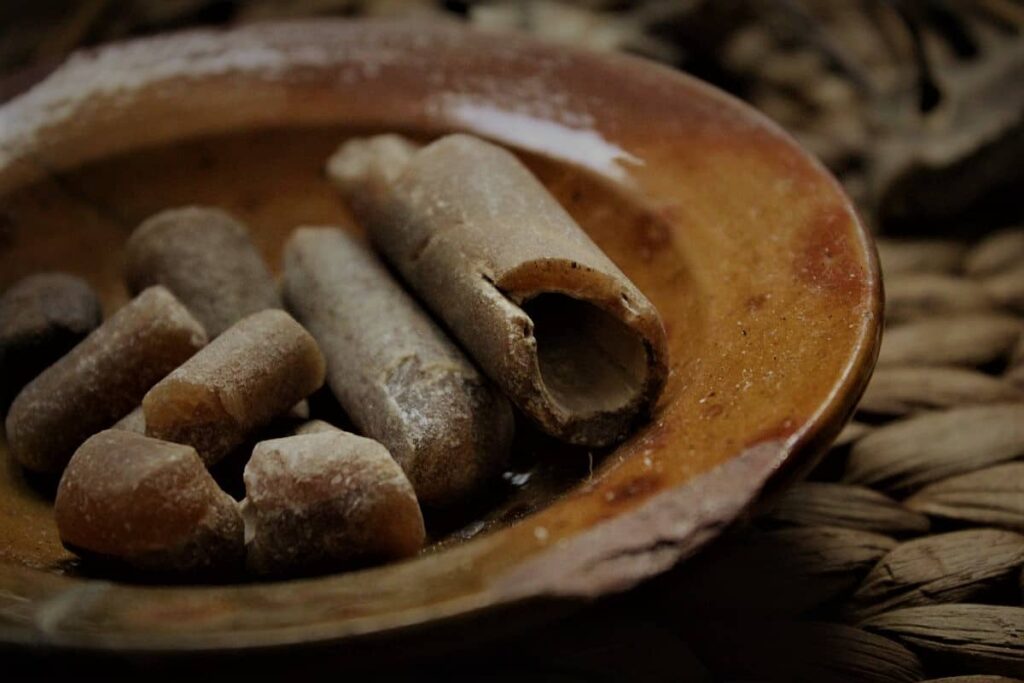
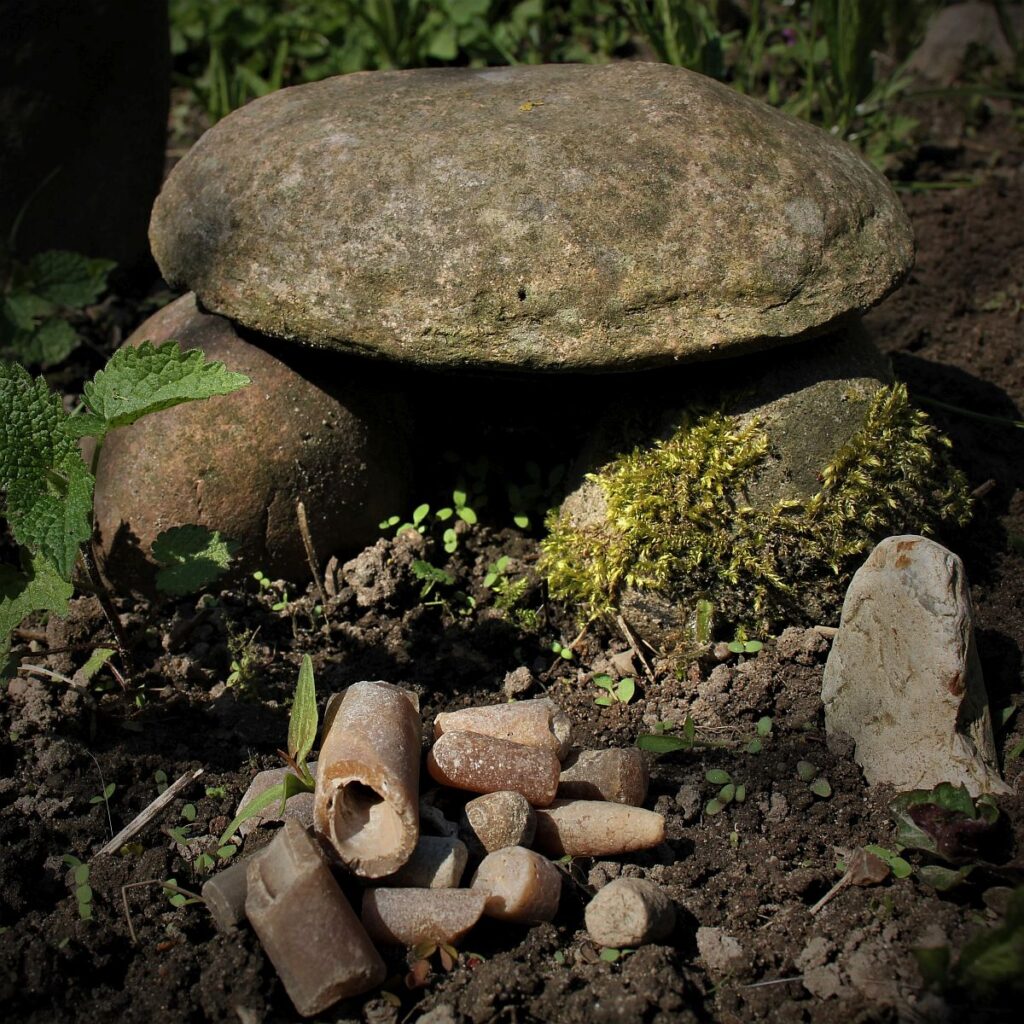
Thunderbolts (Donnerkeile) are the fossilized remains of ancient squids (Belemnites) and were immensely popular among the Germanic tribes. Archaeological finds show that Runes were sometimes carved into them. The ancient belief was that these stone “darts” did not come from the sea, but were hurled from the sky by the gods during thunderstorms, embedding themselves in the earth.
Consecrated to Donar (Thor) As their name suggests, they were dedicated to the thunder god Donar (Thor). Since he threw them, it was believed that they offered protection against his own weapon—lightning.
Folk Names: Lightning Stone, Finger Stone, Albschoss (Elf-Shot), Devil’s Finger, and Arrow Stone.
Usage: They were placed in the roof beams or laid on the dining table during storms to protect the house from being struck.
Folk Medicine & Midwifery
Later, these fossils were ground into powder for medicinal use.
Eyes: Mixed with wine or blown into the eye as a powder, it was used to treat eye ailments. (The powder smells of ammonia/cat urine when rubbed, which burns the eyes—hence the belief in its “clearing” power).
Wounds: The powder was sprinkled directly onto wounds to stop bleeding.
The “Witch’s Shot”: Worn as an amulet, the Thunderbolt protected against Lumbago (Hexenschuss). It was believed that witches shot invisible projectiles causing sudden back pain—the Thunderbolt acted as a shield or counter-magic.
Women & Birth: In the 16th century, pregnant women were given these stones to ensure an easy birth and protection for the child. It was also used to treat inflammation of the breast.
Veterinary: Cows with inflamed udders were treated by rubbing the fossil on the affected area.
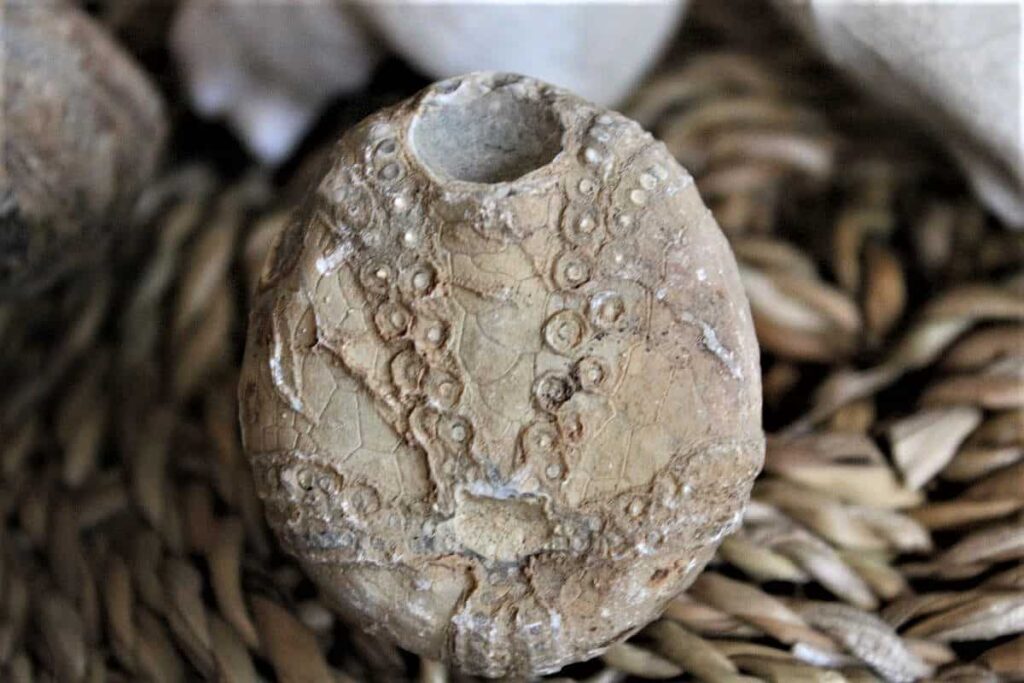
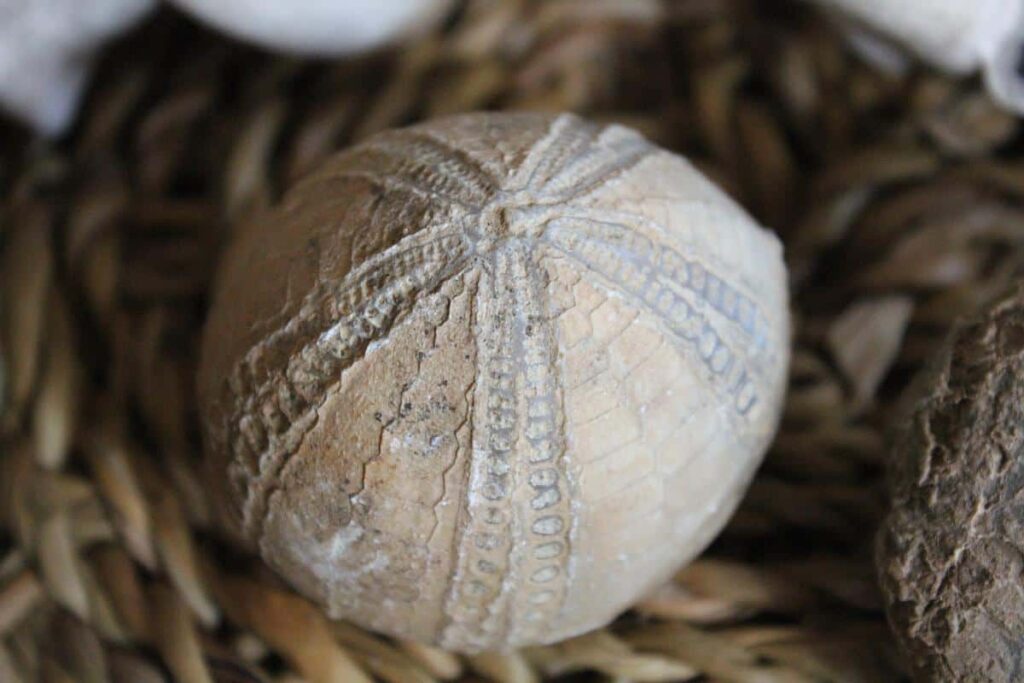
3. Toadstones (Fossilized Sea Urchins)
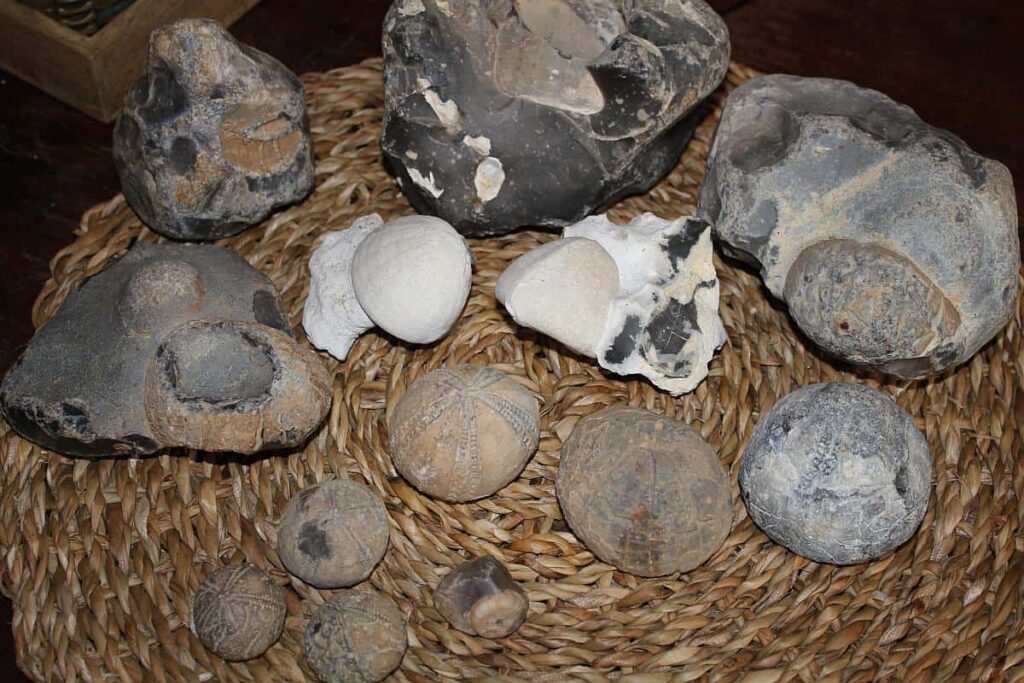
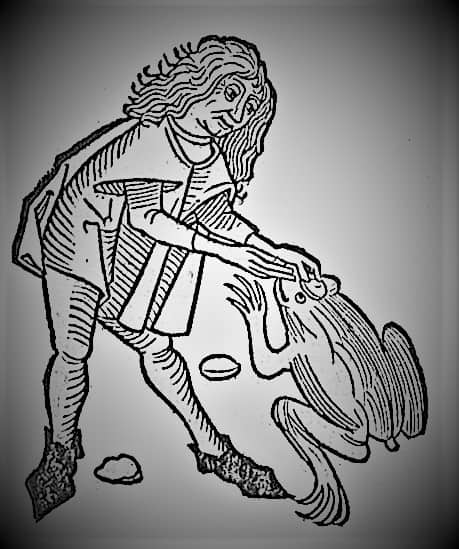
Fossilized sea urchins carry many folk names: Thunder Stone, Toadstone, Giant’s Button, Snake’s Egg, and Grummelstein. Why “Toadstone”? It was believed that this stone grew inside the head of an old toad. To obtain it, one had to place the toad on an anthill until the ants had consumed it, leaving the stone behind. (Of course, we know today it is a fossil, not a toad brain!).
Stone Age & Germanic Rites
We find these fossils in ancient graves, often placed near the head of the deceased.
The Megalith Builders: In Neolithic passage graves (Hünengräber), fossilized sea urchins—both worked and unworked—have been found. They were likely grave goods intended to facilitate the soul’s journey to the Otherworld and prevent the dead from becoming a “Revenant” (Wiedergänger).
The Germanic Tribes: They carved Runes into them for healing purposes. They were also called Druid Stones, sometimes found with a carved Pentagram (Drudenfuß).
Protection & “Victory Stones”
In the Middle Ages, these stones were known as Victory Stones (Siegsteine).
The Sword: They were often set into the pommel of swords (especially the genus Galerites) to grant the warrior luck and victory in battle.
The Home: Like the Thunderbolt, the Sea Urchin was a powerful protection against lightning. It was placed on the windowsill during storms or hung in the attic.
The Child: Placed in a crib, it protected the infant from being “overlooked” or bewitched (Beschreien).
4. St. Boniface Pennies (St. Cuthbert’s Beads)
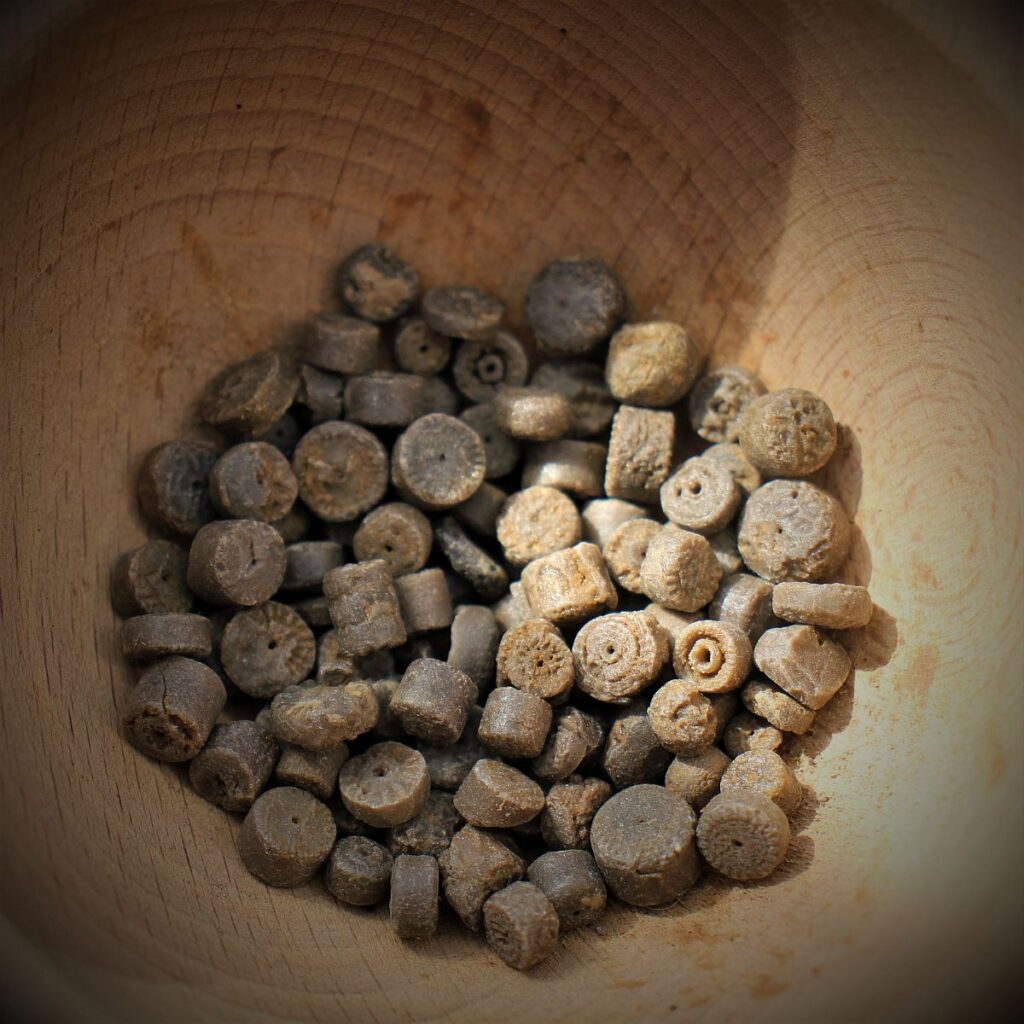
These small, wheel-like stones are the fossilized stem segments of Sea Lilies (Crinoids). In England, they are famously known as St. Cuthbert’s Beads or Fairy Money. In Germany, particularly in Thuringia, they tell a story of religious conflict.
The Legend: St. Boniface tried to convert the heathens of Thuringia. The pagans, stubborn in their Old Faith, refused. It is said they had to pay tributes or taxes in the form of these fossils, which they called Witch’s Money or Sun Stones. After the Christianization, the name shifted to Boniface Pennies (Bonifatiuspfennige).
5. The Operculum: Amulet for Mother & Child
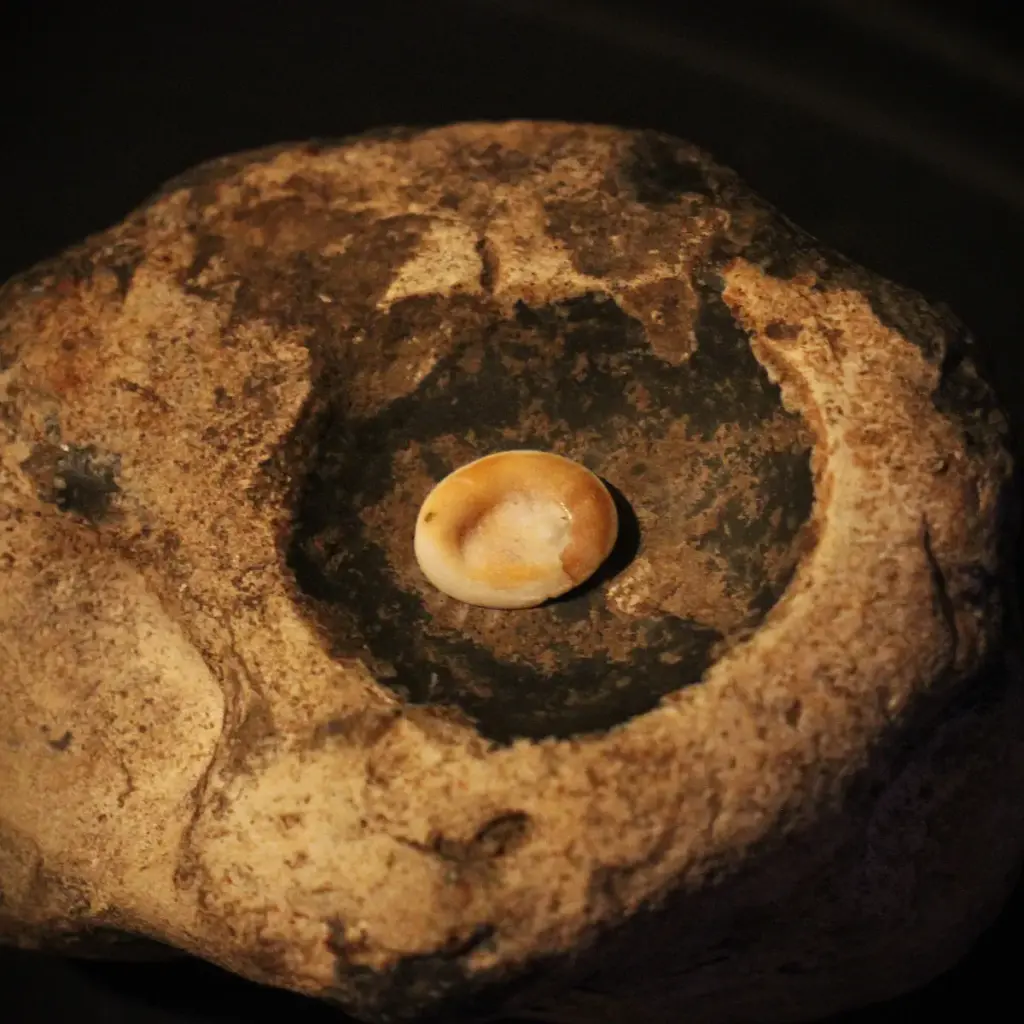
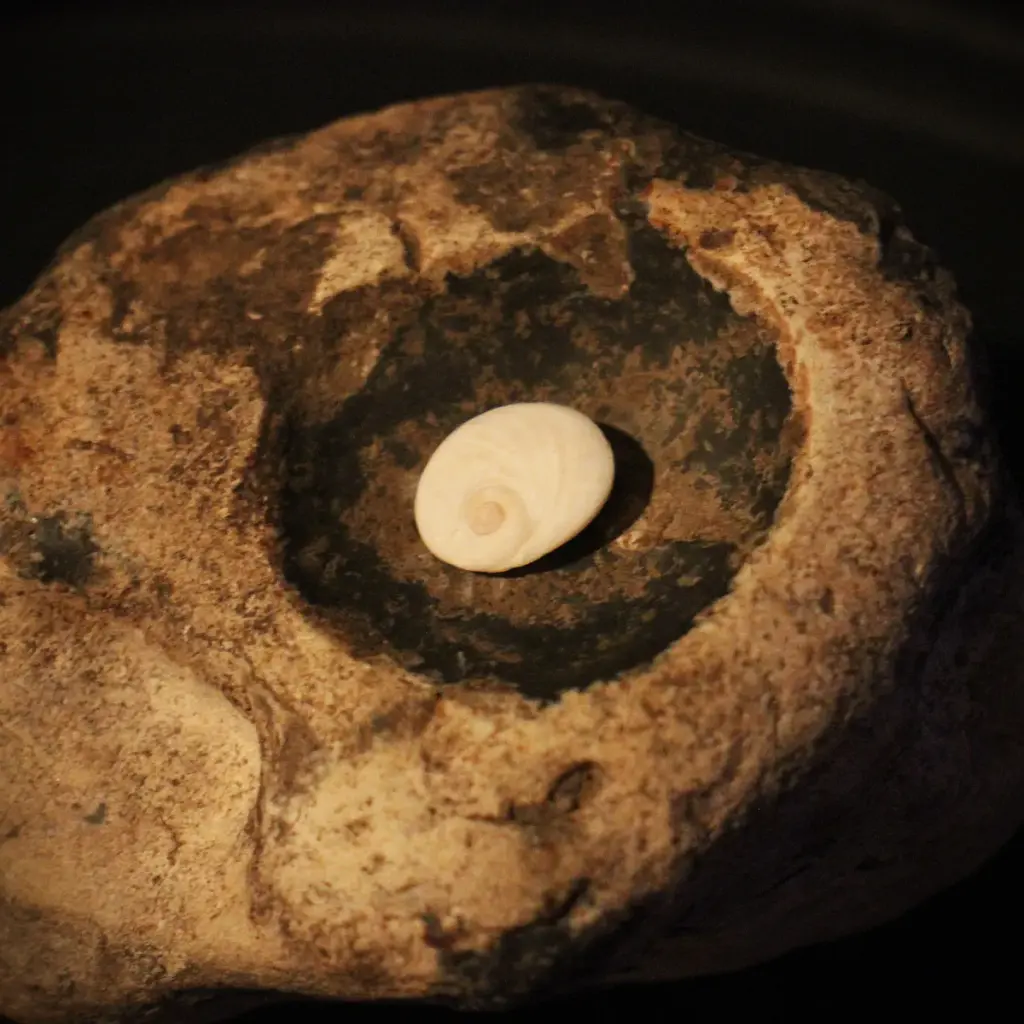
While researching the amulets of our ancestors, I stumbled upon a small, familiar object: the Operculum. This is the calcified “trapdoor” or lid of the Turban Snail. When the snail dies, this lid remains as a hard, stone-like disc, often with a beautiful spiral pattern.
The Fraisen Chain For our ancestors, this was a critical amulet for infants. It was often set in silver and hung on the so-called “Fraisenkette” (a charm chain hung on the crib).
Purpose: To protect the baby from convulsions (Fraisen) and evil influences.
For Women: Pregnant women wore the Operculum to ensure a safe delivery and fertility. It acted as a shield against negativity during this vulnerable time.