Staghorn Sumac: The “Vinegar Tree” & The Secret of Red Lemonade
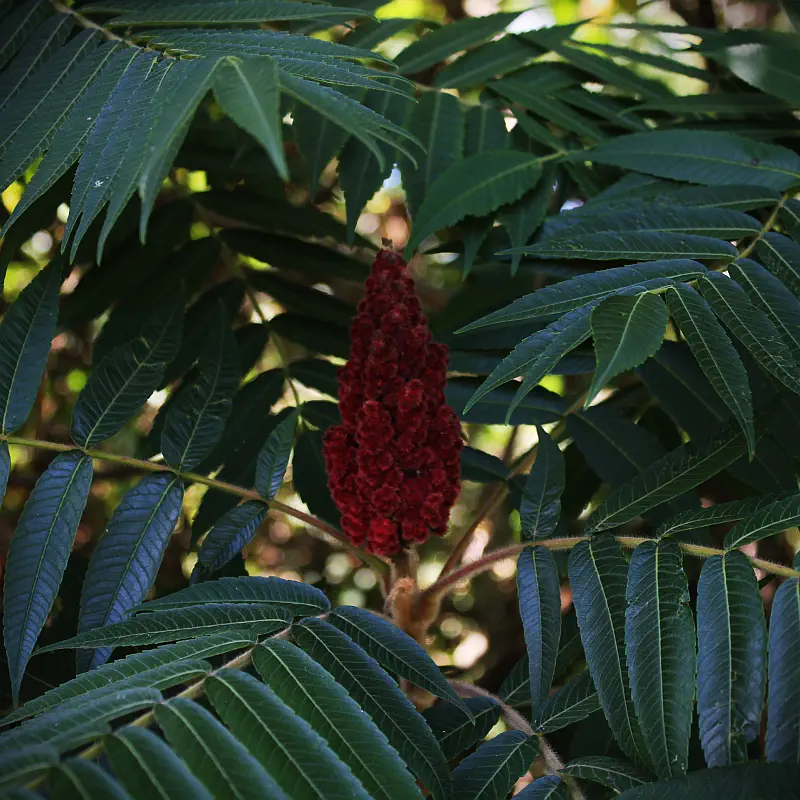
The Staghorn Sumac (Rhus typhina)—known in my German homeland as the Essigbaum (“Vinegar Tree”)—has sadly fallen into disrepute here in Europe. Many believe it to be poisonous. But this is a myth. The Staghorn Sumac is not toxic; only its distant relatives, which are not native to my garden, carry the poison.
Originally, this magnificent tree hails from North America. There, the indigenous peoples have long used its red fruits to craft a refreshing beverage rich in Vitamin C, historically known as “Indian Lemonade” or “Sumacade.” This pink drink has a tart, citrus-like flavor and is incredibly refreshing on a hot day.
Is Sumac Poisonous? The Red vs. White Rule
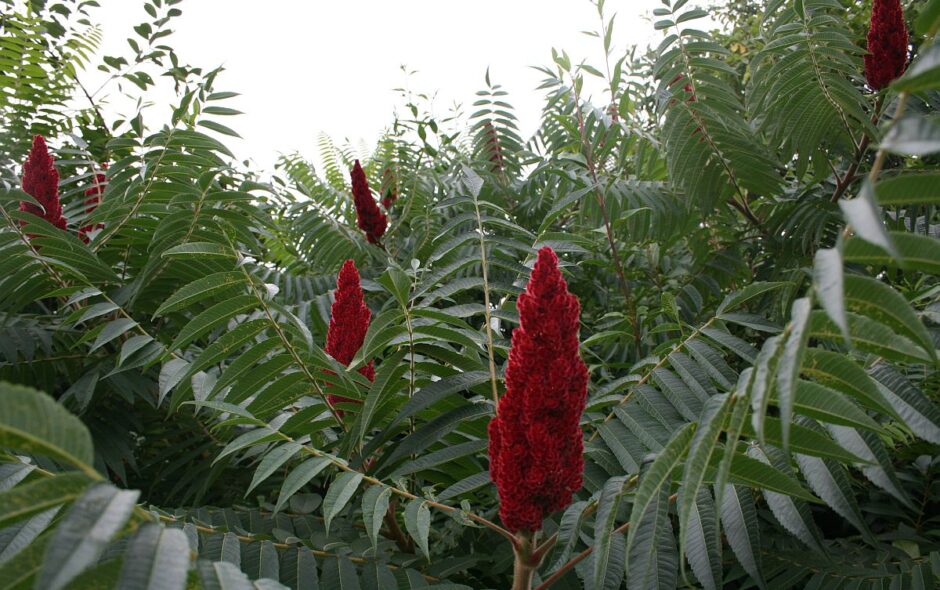
Let us clear up the confusion immediately. The Staghorn Sumac (Rhus typhina) with its fuzzy red cones is safe. The danger lies with its relatives:
Poison Sumac (Toxicodendron vernix): This plant possesses a toxin that causes severe blistering and dermatitis upon mere contact. It causes fever and inflammation. (In homeopathy, it is used as Rhus tox against headaches and eczema).
How to tell the difference: As you can see in the illustrations, Poison Sumac has white/grey berries and smooth leaves. Staghorn Sumac has upright, fuzzy red cones.
The Rhyme: “Berries red, have no dread; berries white, run in fright.”
Tanner’s Sumac (Rhus coriaria): Found mainly in Turkey, Lebanon, and Iran. It is high in tannins and used as a spice.
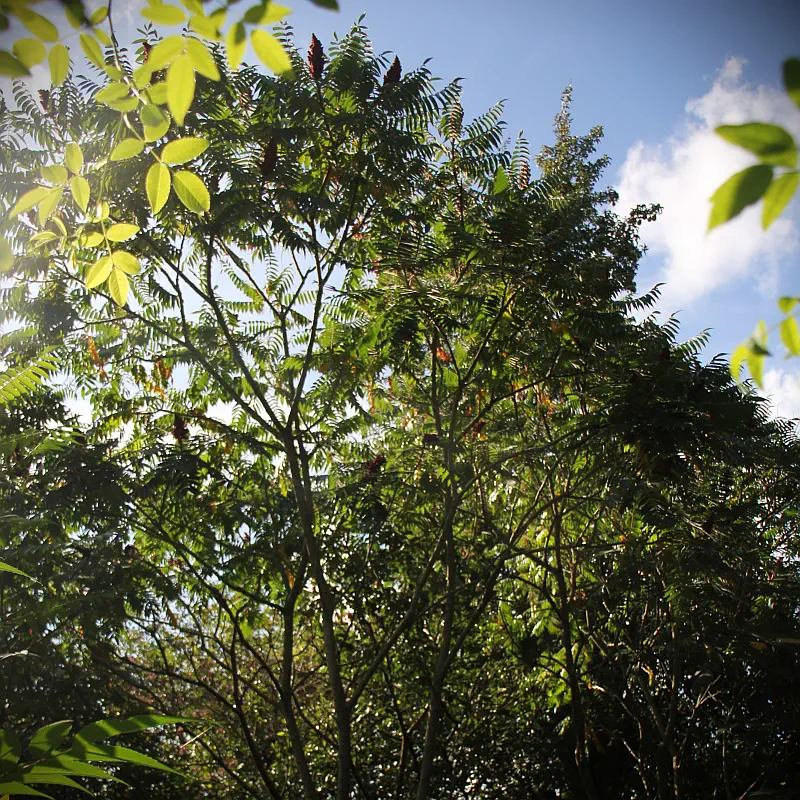
Why is it called the “Vinegar Tree”?
In Germany, we call it Essigbaum. It earned this name for two reasons:
In the past, vinegar was made more acidic by soaking the sumac cones in it.
The fruit itself possesses a naturally sour, acidic taste.
Harvest & Uses
The fruits—those vibrant red “cobs” or cones—can be gathered from early autumn well into winter.
As a Trail Snack: You can simply put the small seeds in your mouth while hiking; they refresh you with their sour taste and stimulate saliva.
Dried: Even when dried, they do not lose their tartness. They can be used in tea, as a spice, or simply kept as a refreshing snack.
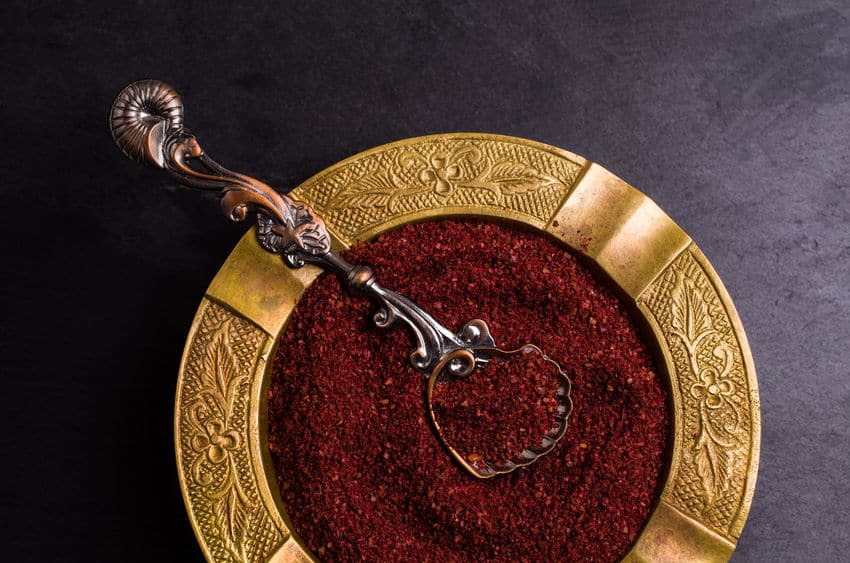
Culinary Use: The Sumac Spice
Both the Tanner’s Sumac and our Staghorn Sumac were and are a beloved spice in the Middle East. If you enjoy Turkish cuisine, you surely know the purple-red powder sprinkled over dishes: Sumac.
Make Your Own Sumac Spice: To make this spice at home:
Harvest the red seeds from the cob.
Dry them until they are a dark red color.
Grind them into a coarse powder.
Tip: You can also leave them whole for a more rustic texture.
In the Kitchen: Use it to season dishes that benefit from a lemony, sour kick. We use it for salads, stews, and meat dishes.
Customize it: Feel free to experiment! Mix your Sumac with Oregano, Thyme, or Rosemary for a delicious rub.
Recipe: Staghorn Sumac Lemonade (Wild “Indian Lemonade”)
This is the classic way to capture the taste of the “Vinegar Tree.”
Preparation:
Harvest & Prep: Pick the red fruit cones from the tree. Spread them out on a table for a moment to allow any insects to escape. Then, separate the individual berries (seeds) from the hard inner stalk. You want about enough berries to fill a 1-liter measuring cup.
Soak: Take a large bowl, fill it with 1 liter of cold water, and add the loose sumac berries. Let it rest for 10 minutes.
Mash: After 10 minutes, use your clean hands or a potato masher to crush and rub the fruit in the water vigorously. You want to wash the sour coating off the seeds. The water will turn pink.
Steep (Cold Brew): I let this mixture steep in the refrigerator for 12 to 24 hours. You can taste it in between to see if the sourness is strong enough for your palate (I personally like it quite sour!).
Filter & Sweeten: This is crucial: Pour the liquid through a coffee filter or very fine cheesecloth. The berries have tiny hairs that can irritate the throat, so you must filter them out. Squeeze the remaining fruit pulp to get every drop of flavor.
Sweetening: If the “vinegar” taste is too strong, sweeten with sugar, honey, or Stevia leaves to taste.
Variations: Experiment by adding Lemon Balm or Mint. Your Vitamin C booster is ready!
The Conqueror in the Garden: Growth Behavior
Does the Sumac tend to be invasive? Oh yes, I can vouch for that! If you don’t keep it under control, after a few years, it will pop up everywhere in your garden. It has a wandering spirit. However, its autumn coloration is breathtaking—a fiery red that earns it the name “Indian Summer” even here in Germany.
Tip for Containment: The Staghorn Sumac does very well in a large pot. Cultivating it in a container is the best way to prevent it from conquering your entire garden.
Warning: Even in a pot, use a saucer! Its roots are so determined they will grow through the drainage holes, into the earth below, and start sending up new shoots (runners) from there.