🔥 The Spring Equinox: Ostara Customs, Sacred Fire & The Altar
Light & Shadow in Balance: The Return of the Sun
The Spring Equinox has traditionally been celebrated between March 20th and 22nd. This ancient festival of the sun embodies the lengthening of the days and marks the magical turning point of the season. On this day, the night and the day are of exactly equal length.
The sun gathers its strength, building toward its zenith just before the Summer Solstice. Green plant spirits emerge from the deep earth, and the trees awaken with fresh buds. The animals of the forest, too, slowly rouse from their deep winter slumber.
🌅 The Goddess of the Dawn: Ostara, Eostra & The Scholars’ Dispute
The festival of the Spring Equinox is often said to be dedicated to the spring goddess Ostara, whose sacred companion is a hare. However, this goddess of spring is heavily debated, as no direct ancient lore of her has been found.
A monk named Bede once wrote of a goddess in the spring. Her name was Eostra. Later, Jacob Grimm took up this spring goddess again in his Teutonic Mythology and named her Ostara. According to Grimm, Ostara is the goddess of the returning spring, the ascending light, and the morning that dawns ever earlier.
In the poetic Edda, no reference has been found that mentions a goddess named Ostara or Eostra. Because of this, the origins of this goddess are rooted in various thoughts:
An Invention: Many are certain she did not exist in the ancient texts and was simply an invention of Bede.
An Epithet: It is also very possible that the name was an epithet for the powerful goddess Freyja.
A Regional Spirit: A goddess of the dawn is known from the ancient Germanic tribes, bearing the name Austro. Perhaps Ostara was derived from her and was a revered goddess only in a specific region or among very few tribes of that time.
My Perspective: In any case, Ostara remains an invention of the early modern period, and personally, I do not find this troubling at all. Even the ancient belief in the Germanic gods must naturally evolve and breathe to survive through the centuries.
💧 Spring Water & Flowers: The Cult of Ostara in Ancestral Knowledge
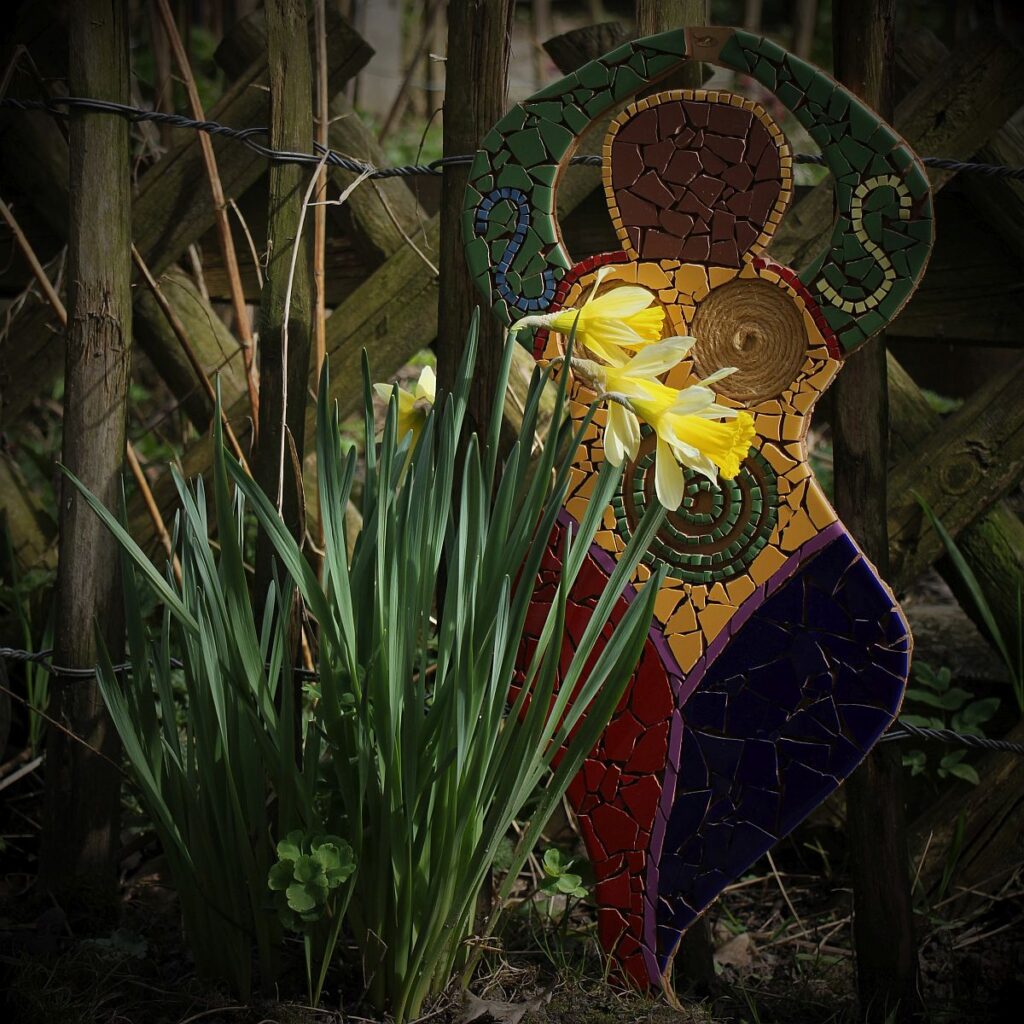
In the early modern period, the old belief in Ostara extended to only a very few parts of Germany, such as Lower Saxony or Bavaria. In these regions, she was honored with spring flowers, eggs, pure spring water, and the offering of a pig; she was also revered as the sister of Donar. This is why her spiritual presence was so deeply felt during the traditional Easter fires.
Regional Customs: In Hesse, there was a beautiful tradition surrounding the Ostara cult: The people would carry freshly picked spring flowers to a natural spring and take some of the sacred water back to their homes.
Sacred Plants: Other plant spirits were also of great importance in the reverence of Ostara. These included many different wild herbs that emerged around this time of year, which would later be gathered for the traditional Nine Herb Soup (Neunkräutersuppe).
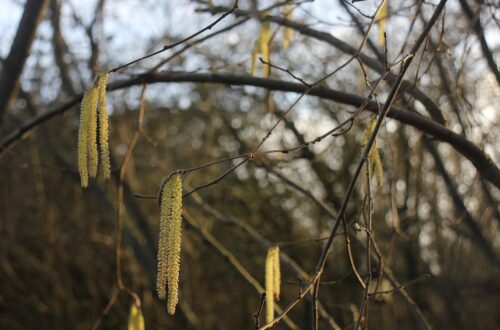
The Birch Tree: Like no other tree, the birch is her most sacred companion, and during this time, everything revolved around its bright spirit. It is the ultimate embodiment of spring, and it has maintained this revered status in our traditions to this very day.
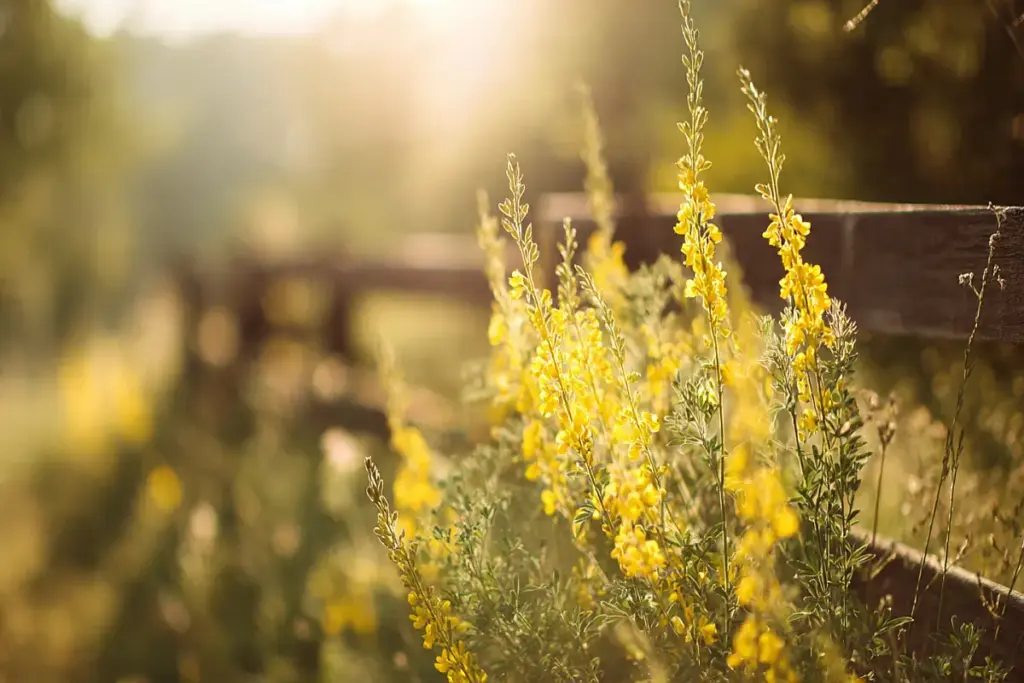
Yellow Melilot: The yellow melilot (Steinklee) was also deeply honored in tribute to Ostara.
Sacred Animals: The animals honored in Ostara’s name were the ladybug, the calf, and, of course, the hare.
Offerings: Hand-woven wreaths can also be offered during this magical time; to do so, they are gently given to the water or the fire. In the old days, these wreaths were mostly bound from daisies and ground ivy (Gundermann).
🌿 Things, Seeds & The Color Yellow: Ancient Customs
During this sacred time, great gatherings known as “Things” were held. Here, the community came together to discuss the newly awakening light of the sun—planning how the fields would be tilled, solemnizing marriages, and deciding upon everything vital for survival and communal life. The rebirth of nature and the resulting fertility were deeply celebrated.
Field & Hearth: The fields were prepared, and the seeds were sown. Sacred field blessings (Feldweihen) were performed to invoke the highest protection for the crops. Houses and wells were beautifully adorned with eggs, as they were a profound symbol of fertility.
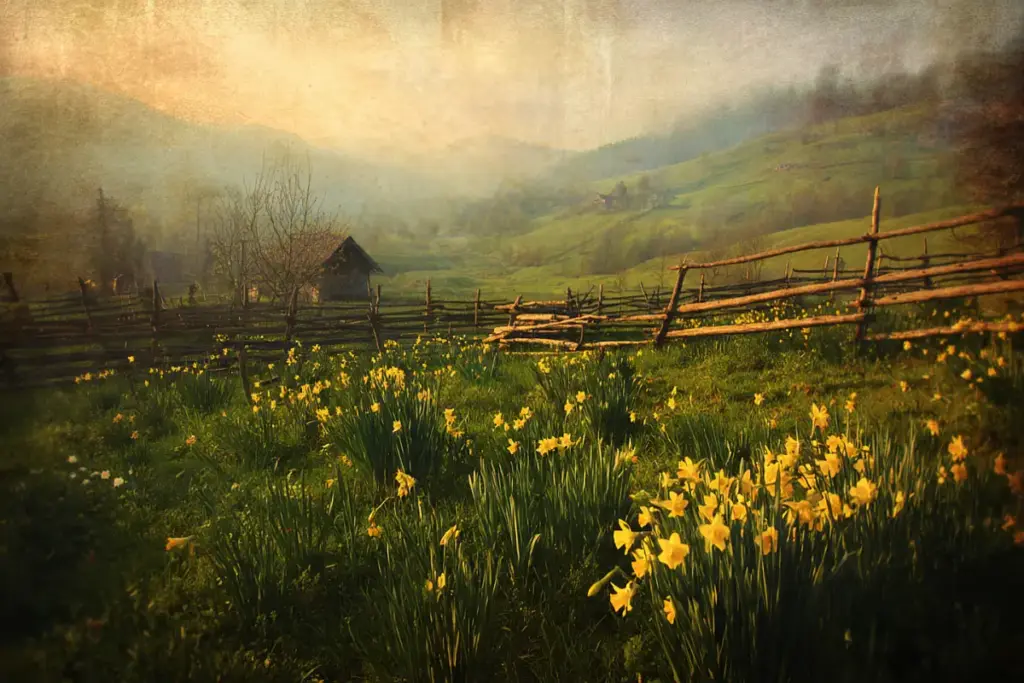
Footsteps of the Goddess: During the Spring Equinox, the color yellow dominates. Therefore, spring flowers with yellow blossoms were traditionally gathered, such as the lesser celandine (Scharbockskraut) and cowslips (Schlüsselblumen). In the old tales, Ostara herself was described wearing a yellow-gold garment and yellow shoes as she wandered across the earth. Thus, every morning, she awakens all the plants, animals, and people of nature, rousing them from their winter sleep. Wherever she floated light-footed across the land, tiny flowers sprouted. Where one saw these little blossoms, Ostara had walked.
Floral Adornments: The house, the front door, or the personal altar are decorated with these yellow-blooming plant spirits. Homes are also adorned with other early spring flowers, such as boxwood, violets, snowdrops, lungwort, crocuses, or tulips.
A Note on Ivy: However, one should be a little cautious with ivy. An ancient tradition warns that if ivy is invited inside the house, someone might pass away or a marriage could break apart.
🔥 The Fire of New Beginnings: Dance & Cleansing
The fire symbolizes the burning away of all that is old—in this case, the deep winter—thereby creating sacred space for the new, the awakening spring. The traditional fires of the Spring Equinox cleared the path for new beginnings. It is a time of making room, a profound and spiritual spring cleaning for the soul.
Rituals at the Fire: In certain parts of Germany, according to old customs, women were not permitted to attend these specific fires; they were reserved entirely for men and boys. They danced and celebrated until the fire had burned down to embers, and afterward, they leaped over the glowing coals to ensure protection from illness throughout the coming year. Everyone took some of the wood ash from these sacred fires back to their homes, as it was considered deeply healing and protective.
🍞 Figural Breads & Tansy Cakes: The Sacred Foods
Offering Breads: Specially baked figural breads, known as offering breads (Gebildbrote), were very present during this magical time. This ancient tradition has beautifully survived to this day in the form of the sweet pastry hares found at our local bakeries.
Traditional Feasts: Ancestral knowledge hands down that the people traditionally ate eggs and fish for this festival. And, of course, this is exactly the time when the vital, life-giving Nine Herb Soup (Neunkräutersuppe) is finally brought to the table.
🌿 Forgotten Rituals: The Sacred Tansy Cake
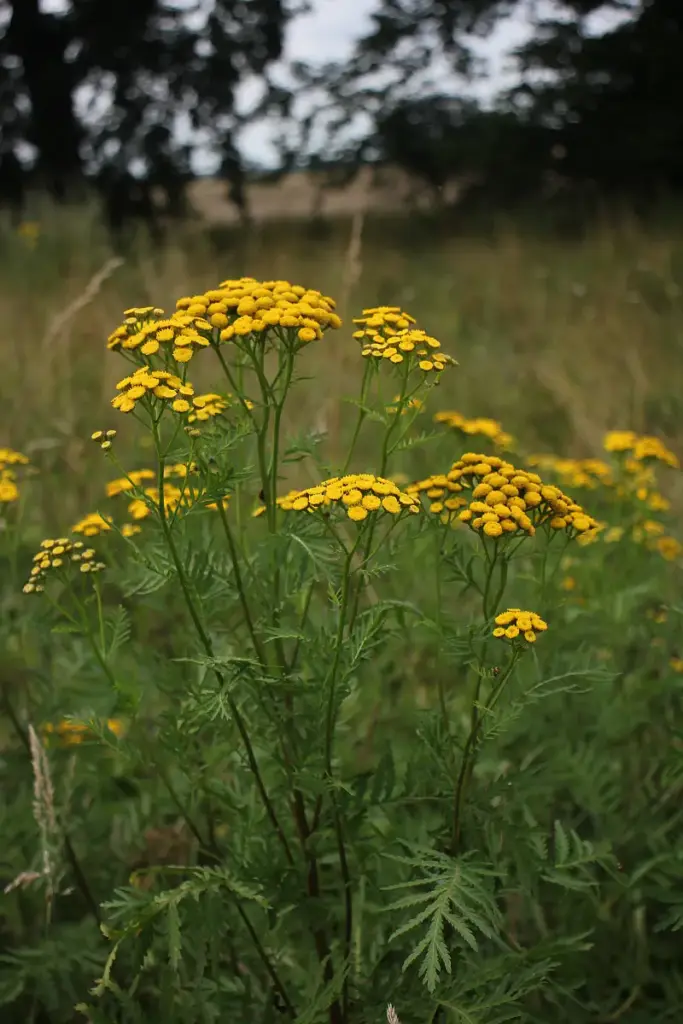
Tansy Cake is an ancient traditional recipe from England. It was primarily prepared during the time of the Spring Equinox, and later in Christianity for Easter. In the English old belief, this cake warded off all evil.
In very ancient times, the Tansy Cake held deep cultic significance. In the spring, especially at Ostara or Easter, it was meant to bestow new strength and fertility. Tansy was considered a profoundly cleansing herb after the end of the fasting period and was also used for expelling worms.
The Dance of Fertility: A round dance was performed around this sacred food. They danced barefoot to honor and show deep respect to the returning fertility of the earth. Finally, the sacred Tansy Cake was eaten.
I find ancient sacred foods deeply fascinating. The nettle cake for January 1st, the caraway cakes during the Winter Solstice, and the nettle cake at the Summer Solstice are also age-old sacred foods passed down from the ancient tribes.
⚠️ Important Safety Note: Tansy contains thujone, and the content can vary greatly. A few grams too many can cause severe poisoning. The dosage for internal use must be kept very low. One truly must be well-versed in the old ways of herbalism. (According to sources, a dose of 3 g must not be exceeded). I am sharing an original English recipe with you here, but preparation is entirely at your own risk.
🥧 Recipe: Traditional Tansy Cake
Ingredients:
1 tablespoon tansy blossoms
2 tablespoons water (boiling)
110 g butter
150 g sugar
90 g flour
90 ml milk
2 eggs
Preparation:
Steeping: The tansy blossoms are scalded with the two tablespoons of boiling water and left to steep. Afterward, the water is poured off.
Mixing: Then the butter is mixed with the sugar and added to the blossoms. Stir everything well.
The Dough: Now the eggs, flour, and milk are gradually added to the mixture.
Baking: Pour this dough into small muffin cups and bake at approx. 180°C for about 20–30 minutes.
Your magical little tansy cakes are ready.
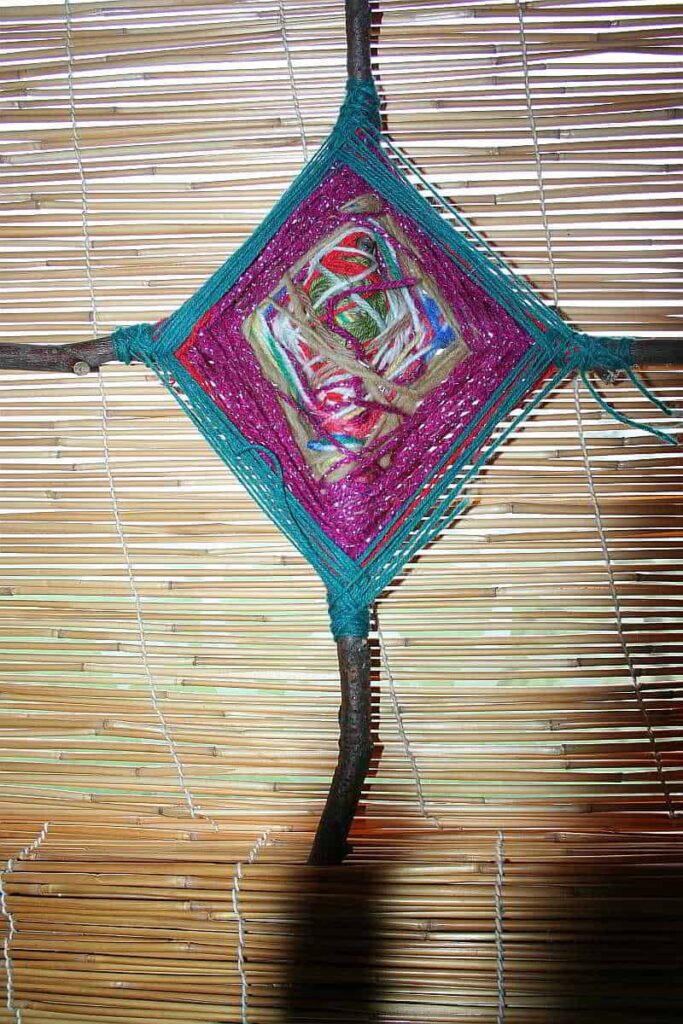
🌿 The Willow Cross: Crafting a Protective Amulet
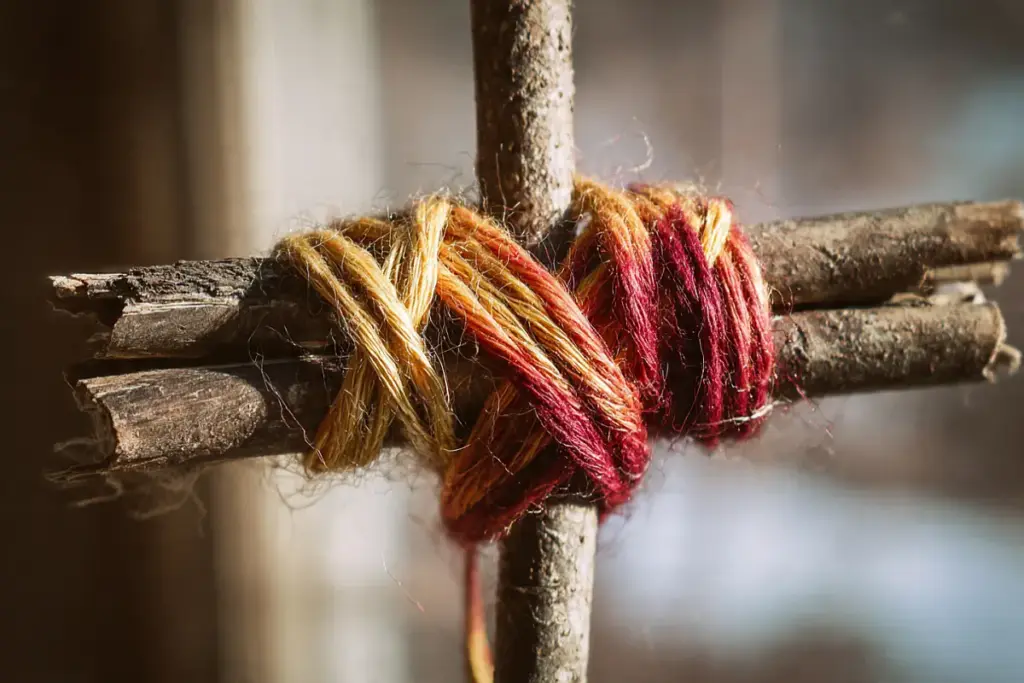
During this sacred time of the year, protective amulets for the home were traditionally crafted—either from nine different sacred woods or simply from pure willow wood.
The Craft: A willow wood protective amulet for your home is very simple to make yourself. You will need two willow branches and colorful ribbons or woolen threads in various colors.
The Shape: First, place the two willow branches across each other to form a cross.
The Binding: Tie them firmly together with a ribbon so that they hold steadily in place.
The Placement: These ancient protective amulets can be hung on a door or in the kitchen window. In the kitchen, according to old belief, they provided the highest protection for the house and its inhabitants.
My son actually crafted such a protective amulet for me (see photo above) at school. He was just 7 years old at the time.
🕯️ Bringing Spring into the Home: The Altar
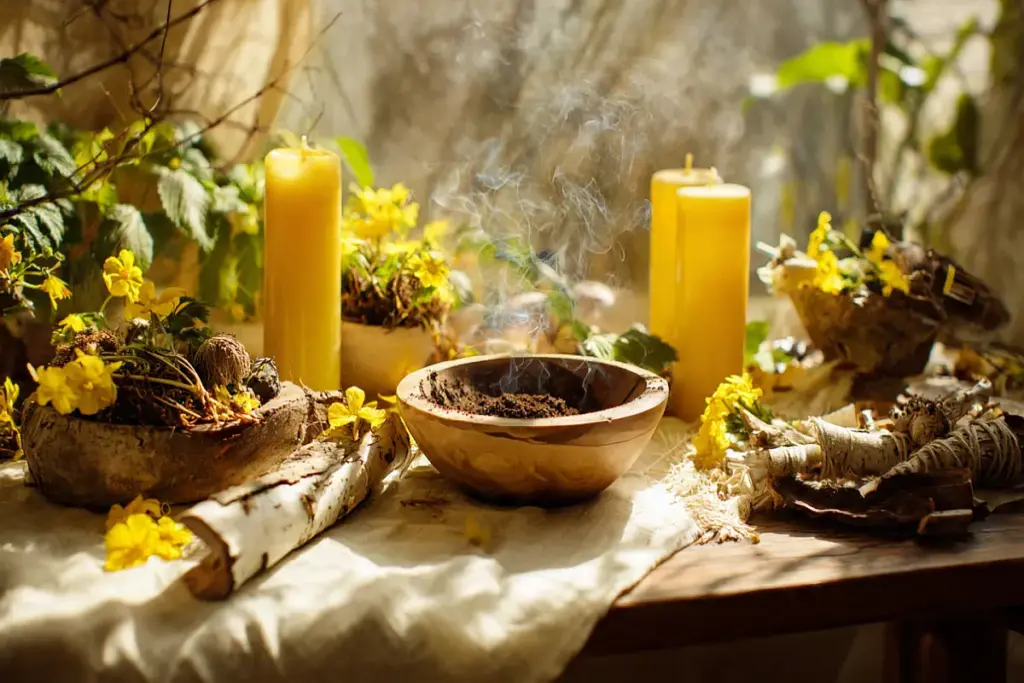
If you had set up a small home altar for the dark days of winter, you can now clear it, cleanse it, and decorate it with beautiful treasures that embody the spring.
Cleansing: Fill a bowl with pure water and place currently blooming flowers inside. You can also mix a few drops of Four Thieves Vinegar (Pest-Essig) into your cleaning water, as it cleanses your space deeply on a spiritual level.
Light & Earth: Yellow candles can be set up, though they should be dyed all the way through—not the ones that are merely yellow on the outside and white on the inside. Only this way will you receive the full light and the true power of the spring.
Decorations: The altar is adorned with many treasures gathered from nature:
Eggs (including blown-out eggshells)
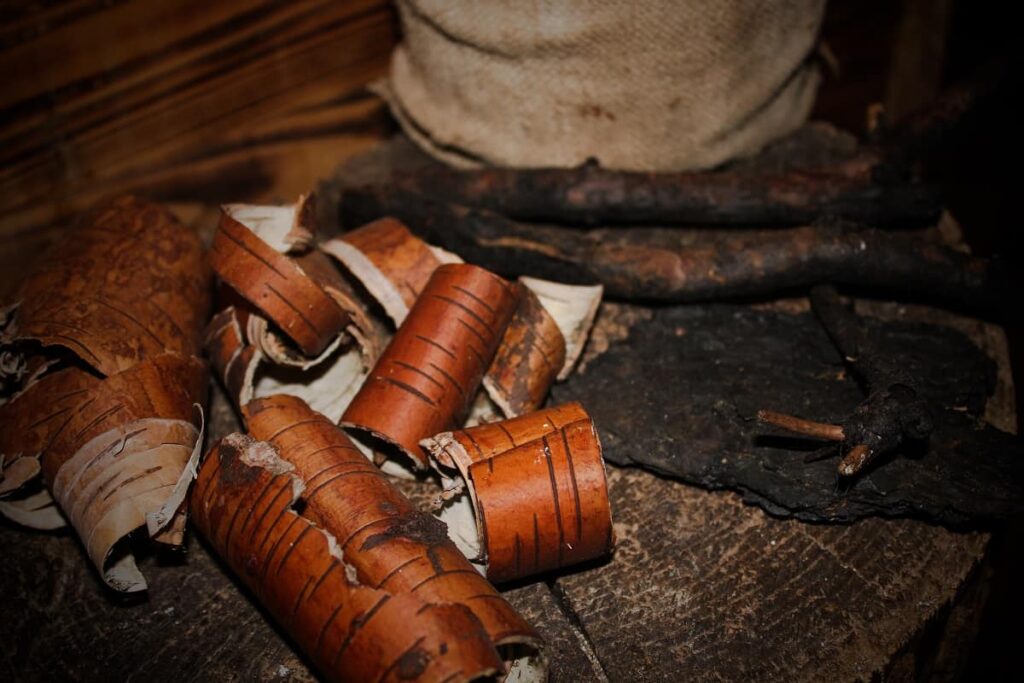
Birch bark
Stones gathered from your first spring walks
A small bowl filled with garden earth (this is very important)
Hares carved from wood or crafted from clay
Freshly picked flowers
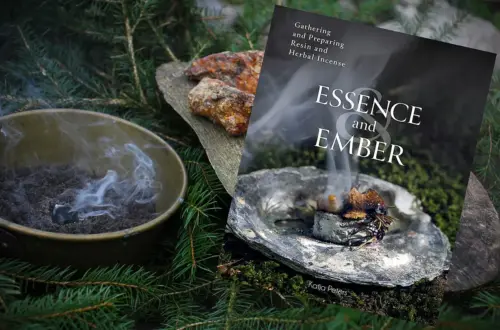
Your incense should, of course, stand in the very middle of the altar, for it forms the sacred center of your space.
A Magical Tip: If you have gathered wood from a tree that was struck by lightning, it absolutely belongs on your spring altar. According to ancestral knowledge, it fiercely protects the wishes and thoughts that you express or hold at your altar.
💨 The Smoke of the Equinox: Sacred Woods & Scents
Incense is profoundly important for this festival. Various blends of sacred smoke can be crafted to honor the season.
The Plants of the Sun Festival: The most significant plants and trees for this solar festival are: sweetruff (Waldmeister), ground ivy (Gundermann), birch bark, yellow melilot, willow wood, tansy, and coltsfoot (Huflattich), which beautifully symbolizes the sun through its bright blossoms. My personal incense blend for the beginning of spring is composed of these very spirits.
The Seven Woods: A very potent incense for this festival is blended from seven sacred woods. These include:
Apple tree
Pear tree
Cherry tree
Alder
Willow
Important: The wood from these trees must not be freshly cut off the branch, but rather gathered from the ground, and it must not be worm-eaten. The bark must also still be present.
Fragrance on the Stove: If you prefer it a bit more “fragrant,” you can mix this incense together. It smells wonderful when sprinkled directly onto a hot wood-burning stove. Naturally, it works perfectly in an incense bowl as well. I am a very big fan of fragrant plant spirits that can be scattered on the wood stove. The scent does not dissipate as quickly and lingers beautifully in the room.
The festivals of the Wheel of the Year are always a beautiful thing to celebrate. Be it alone in quiet reflection or in a large circle of family and friends. Everyone has their own small rituals and traditions, and they absolutely should keep them. Everyone celebrates this festival differently, everyone sees something unique in these turning points of the year, but I think that is exactly the magic and charm of these festivities.
I wish you your very own awakening of the sun, that it shines upon you in the morning, and that you slowly rise from your winter slumber, ready to create something beautifully new.