Samhain: Origins, Soul Bread & The Old Faith
In this article, I wish to introduce you to the origins, customs, and recipes—such as Soul Bread and incense blends—of Samhain. It is celebrated from October 31st to November 1st.
Let us be clear: Samhain really has nothing to do with the romanticism and the “hocus-pocus” we have been told about since childhood. In ancient times, it marked the beginning of the year, and great public assemblies were held. In modern times, we celebrate a private festival focused on themes of letting go and new beginnings. Furthermore, certain plants played—and still play—a major role during this time. I will list these plants at the end of the article.
The Thingstead & The Marriage Bond: The True Background
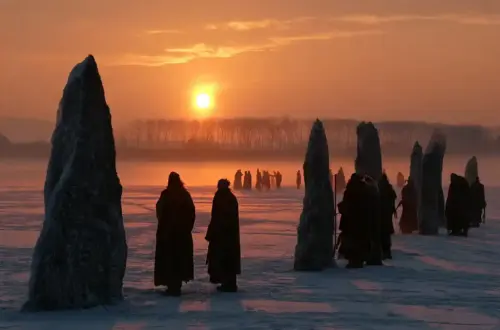
The original purpose of Samhain was more political in character. There were great people’s assemblies featuring harvest feasts, where much was eaten and drunk. There was no talk of a solemn veneration of the dead at these gatherings. Laws were made at these assemblies. One could compare it a bit to the Thingplatz (Thingstead/Assembly Place) of the Germanic tribes.
Decisions for the Winter But let us return to the Celtic Samhain. At these gatherings, our ancestors deliberated on crucial matters:
Whether there were enough supplies for the winter.
Which animals had to be slaughtered because they were too weak to survive the cold season.
Marriages were concluded and prepared.
Legal trials were finalized.
We owe the modern belief in Samhain as the “Festival of the Dead” to a certain James Frazer, who reconstructed Samhain backwards as a festival of the dead.
Samonios & The Moon Festival: The Celtic New Year
For the Celts, Samhain meant a new year. It began exactly during this public assembly at sunset. It is, therefore, the first festival in the Celtic calendar. For the Celts and Germanic peoples, it was a Moon Festival.
Historical Find In 1897, a Celtic calendar made of bronze was excavated in France (the Calendar of Coligny). There, the months of October and November were marked with the name Samonios. The pagan beginning of winter—and thus the beginning of the year—fell sometime between October 31st and November 11th.
Now it gets colder, nature stops its growth, and everything withdraws into hibernation. Here we should note that the ancient peoples certainly did not gather exactly on October 31st according to a Gregorian calendar; rather, they waited for the signs of nature—when the leaves fell from the trees—and for the respective Full Moon.
Of Dying and Becoming: A New Cycle Begins
A new cycle begins, and the “Great Dying” is enacted in nature. Only through letting go can something new arise.
After Samhain, things became quieter:
People began to gather wood.
Houses were cleaned and repaired.
The weak livestock was slaughtered and salted for preservation.
People concentrated on the essential tasks that had been left undone during the busy summer and harvest.
The Gates to the Otherworld: Myth and Moon Time
The Mythological Meaning of Samhain Samhain falls between October 31st and November 11th, depending on the tradition.
Calculation by the Moon If we follow the 11th Full Moon of the year, Samhain in 2019 was not until November 12th. In 2020, the 11th Full Moon stood in the sky directly on October 31st. In 2021, it was on November 19th. Modern calculations often go by the New Moon, but I personally do not believe this, because the Full Moon was “sacred” to the peoples of that time.
Contact and Oracle At Samhain, the gates to the Otherworld are wide open, and we commemorate the deceased who were once very close to us. In the night leading to November 1st, it is therefore easy to make contact with the spirits of the ancestors. This night is wonderfully suited for divination. Oracles were consulted using Yarrow, Hemp, and Henbane.
The Year of Mourning According to the belief of earlier peoples, our ancestors protect their families, and so they were remembered with gifts during this time. However, a deceased person had to be dead for over a year to be commemorated with gifts. According to their belief, the soul requires one year to detach itself from its physical body. If the living do not let go during this year, or if they carry excessive grief, the deceased are held in this world for far too long and have no opportunity to leave in peace.
Goddess Holle & Morrigan: Guardians of the Deep
This festival is also dedicated to the Goddess of the Dead, Holle (Frau Holle). She is an Earth Goddess of the realm of the dead; she watches over the deceased and welcomes them. Lugh, the Celtic God of Light, now returns into the earth, and he is followed by the Goddess Morrigan. In Celtic belief, she stands for the protection of the souls and the seeds of humans, animals, and plants during the dark half of the year.
All Souls & All Saints: The Legacy of Old Feasts
Let us now turn to the Christian festivals of this time. Beforehand, I would like to note that the Slavs also had such a festival (the Mokosh festival), the “Vikings” had the Disablót, and the Anglo-Saxons the Bloth-Monath. So, who stole from whom? The Christians may have copied and destroyed much, but according to my research, other religions did exactly the same.
The Dates:
All Saints’ Day falls on November 1st.
All Souls’ Day falls on November 2nd.
In the beginning, Christians were not agreed on All Saints/All Souls. In Southern Europe, it was celebrated on May 13th; in England and Germany on November 1st; and many other churches celebrated on April 20th. Only much later did the Church, through Pope Gregory, agree on November 1st. Perhaps Samhain and the proximity of the Otherworld influenced the dates of the festival days; one does not know for sure. That is why it is suspected that today’s Samhain was transferred onto this Christian veneration of ancestors.
The Purgatory The actual meaning of All Souls’ Day lies in the belief that all souls of the dead remain in Purgatory (Fegefeuer) until Judgment Day. To get out of there faster, they receive help from the living through their prayers. According to Ancient Knowledge, they climb up from Purgatory to Earth to rest from their torments for a short time. During this time, Soul Breads (Seelenbrote) were baked and placed on the graves for them.
Soul Breads & Lights: Rituals for the Deceased
In the evenings, children built small altars next to the front door on the street, adorned with crosses and pictures of the Madonna. Candles burned in between. Passers-by were begged for small coins for cakes “for the little souls in Purgatory.”
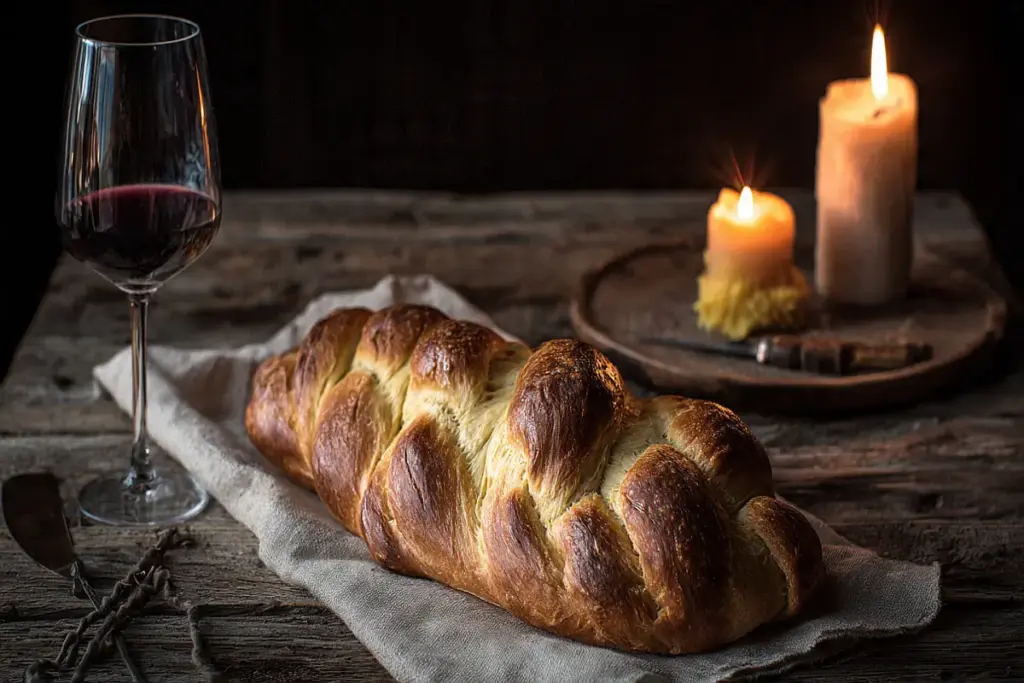
The Soul Bread (Seelenbrot) The next day, it was tradition to bake small buns decorated with a cross, the so-called Seelenbrötchen. They were eaten hot, and a prayer had to be said for each bun. The belief within the prayers said that one redeems as many souls as one can eat buns.
In some parts of the country, yeast breads are baked, which are also called Seelenzöpfe (Soul Braids) or Seelenwecken. During this time, they were baked into small figurines and given to one’s godchildren:
Girls received a Hen.
Boys received a Hare. Both animals stood for fertility and reproduction.
A Place at the Table: Hospitality for the Souls
In the evening after supper, the tables were not cleared. Instead, all the food that was left over was left standing so that the “Poor Souls” would have something to eat during the night. For according to Christian folk belief, these souls are only allowed to come out of Purgatory once a year to rest from their torments.
Caution in the House Therefore, no doors or windows were allowed to be slammed shut, for it could be that a soul might be hurt by it.
Soothing the Pain A pan soaked with clarified butter (lard/Schmalz) was also hung over the fire so that the Poor Souls could grease their burns. The fire in the hearth also remained lit so that the Poor Souls could warm themselves by it. Otherwise, they always suffer the “cold torment” (kalte Pein).
The “Going Forth”: Oracle at the Crossroads
In the old days, there was a custom called “Das Losgehen” (The Going Forth). Marriageable maidens would go to a crossroads at night. There, they would ask the first young man they met for his baptismal name, give him a kiss, and run away quickly. The belief was that the name of this stranger would be the name of their future husband.
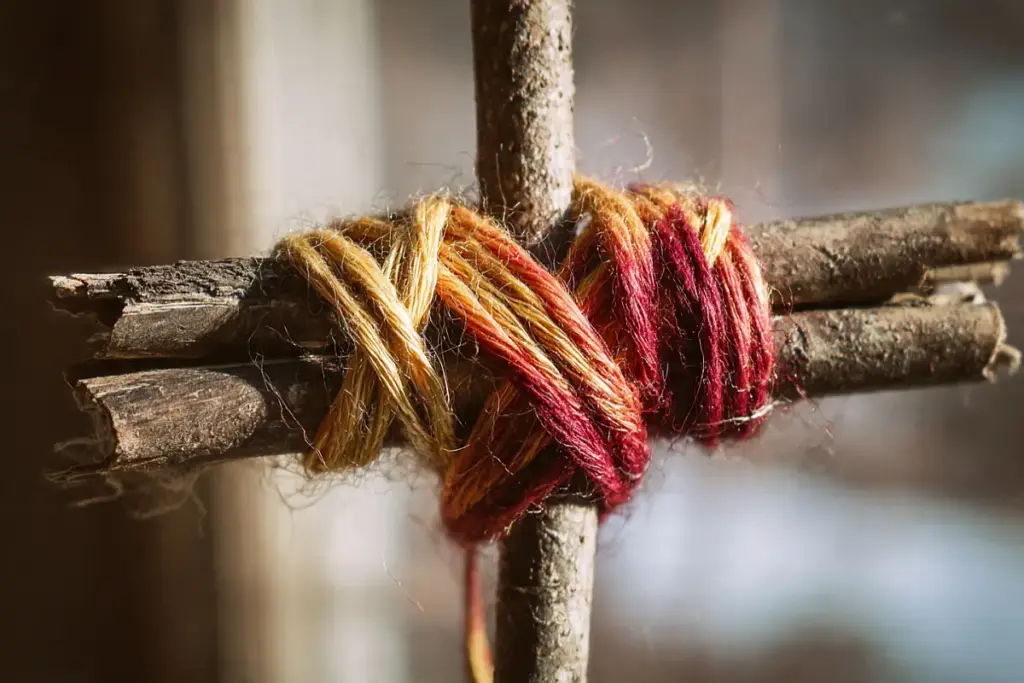
The Walk to the Cemetery People also went to church to pray for their deceased. Afterward, they proceeded to the cemetery to decorate the graves with wreaths, flowers, and candles. A straw cross was laid on the grave, and one returned after midnight to light it.
Halloween and the Turnip Ghost: The Modern Shift
The festival of Halloween was brought to America by Irish immigrants. One custom was for children to go from house to house, begging for items or selling small things. They asked for “Trick or Treat.” If people gave nothing, they had to endure all sorts of pranks. Originally, this was done by adults, a custom that later passed on to the children.
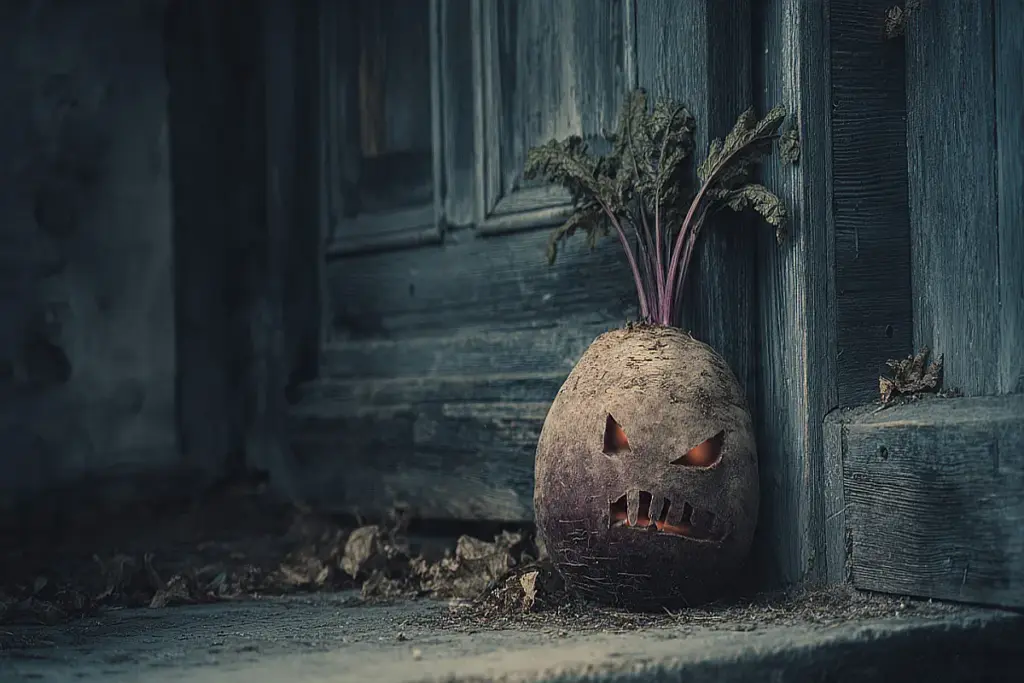
Of Pumpkins and Turnips Jack O’Lanterns are the famous pumpkin faces carved with grimaces. In earlier times in Europe, they were carved from fodder beets (turnips) or sugar beets. The more natural bumps and deformities such a turnip had, the spookier it was. Since the custom became firmly anchored in America (where pumpkins are plentiful), the pumpkin became the medium for these funny and scary faces.
The Rule: Only one turnip face was allowed per child to ensure protection from spirits and demons.
Reformation Day: Faith and Luther Bread
We must not forget this day, for it also falls on October 31st. The monk Martin Luther nailed his 95 Theses to the church door in Wittenberg (or so the story goes). He condemned the sale of indulgences—the idea that one could buy freedom from sin with money. Today, it is suspected that he may not have nailed them to the wall but sent them to acquaintances and nobles, thus spreading the word. A courageous act in the time of witch hunts and heresy trials. For Lutheran Christians, this is a high holiday.
His three main theses were:
Man finds God not through good works, but through faith alone (Sola Fide).
Man owes his justification solely to God’s grace, not human effort (Sola Gratia).
Not the tradition of the Church, but the Holy Scripture alone is the source of faith (Sola Scriptura).
Traditions Today: Unfortunately, I found little about old folk customs for Reformation Day. However, an attentive reader sent me this information: “In some Protestant regions of Bavaria, it is tradition to hold a procession through the town with the pastor, the brass band, and the choir to draw attention to this day. In some areas, the so-called Luther Bread is baked, or ‘Luther Bonbons’ are distributed to children collecting for Halloween, so that the Reformation is not forgotten amidst the spookiness.”
Samhain Recipe: Soul Bread (All Souls’ Bread)
Ingredients:
1 kg Flour (All-Purpose / Type 405)
500 ml Milk
30 g Fresh Yeast
100 g Sugar
200 g Butter
A pinch of Salt
Preparation:
Pre-dough: Sift flour into a bowl. Crumble the yeast into a hollow in the center, mix with a little lukewarm milk and 1 tsp sugar. Let it rise in a warm place for about 10–15 minutes.
Dough: Add the remaining sugar and milk. Once mixed, add the salt and melted butter. Beat the dough until it forms bubbles. Let it rise in a warm place until doubled in size.
Shaping: Roll out the dough and cut into 3 or 4 strands. Braid these strands into a loaf.
Special Feature: The strands are only braided at the ends; in the middle, they run parallel (symbolizing the separation and connection of worlds?). The loaves are approx. 30 cm long.
Baking: Bake at approx. 220°C (430°F) for 30 minutes.
Yew and Belladonna: The Dark Plants of the Ancestors
For our ancestors, autumn and winter were full of magic and great awe. The days grew shorter, and people feared the darkness—naturally, as this was the season when most deaths occurred. The Yew, Ivy, and Belladonna (Deadly Nightshade) played a huge role in autumn. From this time on, no more herbs were allowed to be gathered, except for Mugwort and Mistletoe.
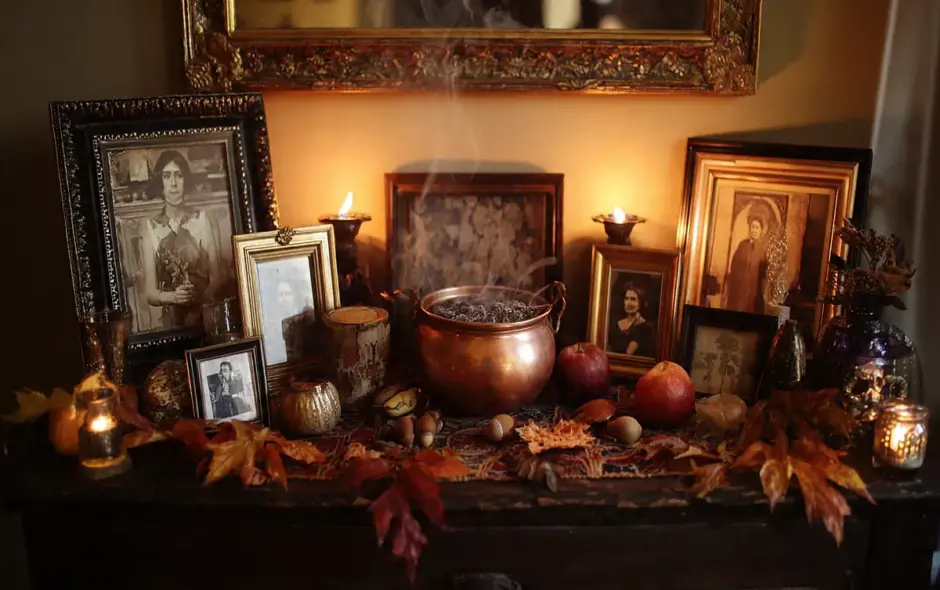
The Samhain Altar If you wish to set up a small altar, you can decorate it with your incense tools, salt, bread, hay, pumpkins, mushrooms, nuts, apples, colorful leaves, honey, and turnips.
Smoke of Letting Go: Blends for the Spirit Night
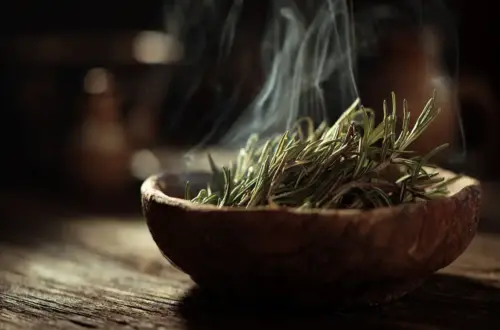
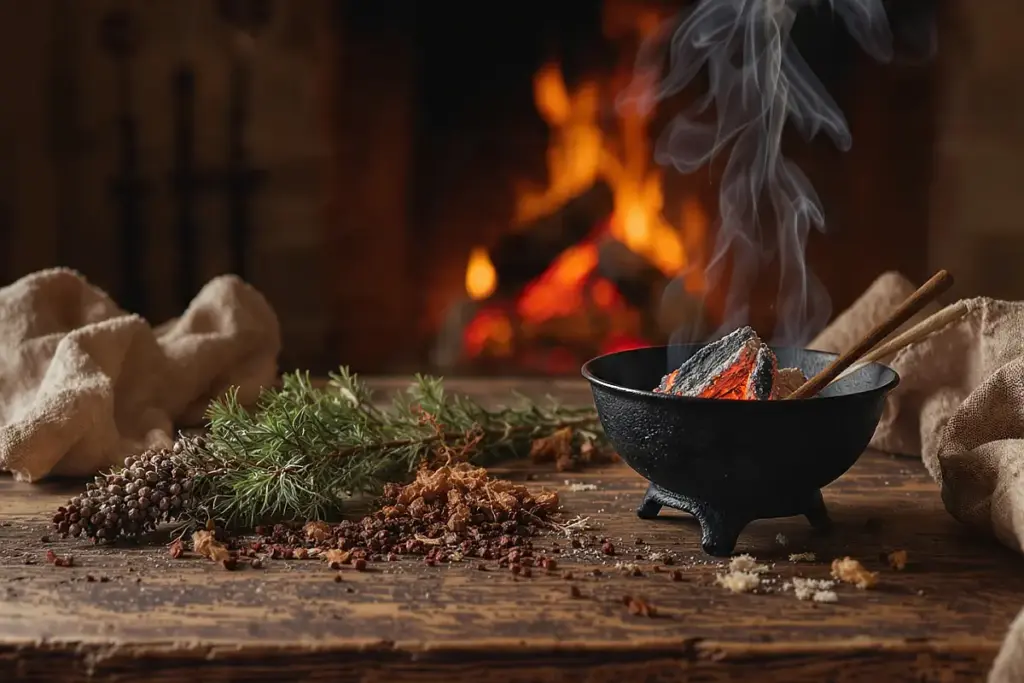
At this mystical time of year, you can smoke with the following herbs, woods, and resins: Juniper, Yew, Elderflowers, Mugwort, Spruce Resin, Angelica, Pine Wood, Vervain, Birch, Ground Ivy, Mistletoe, Willow, and Wormwood. Even the Fly Agaric was a great representative in autumn customs. The Apple also played a major role.
The Theme: The theme of these Samhain fumigations is always dying and letting go. Through this, we can solve our problems, give up old views, and gradually let the New approach us.
My Personal Blends:
Soul Soother: Rosemary, Arborvitae (Thuja), Pine Wood, and dried Orange Peels. This blend flatters the soul and awakens our spirits. Spiritual fatigue disappears.
Protection: Juniper berries, Earth Smoke (Fumitory), and Mugwort.
Fear of the Future: Arborvitae, Mugwort, and Oak Moss help take away worry about what is to come.
Ancestor Contact: Yew and Elder Wood (which has a very strong plant spirit) pave the way to contact our ancestors.
House Cleansing: A fumigation with the “Nine Woods” is highly protective.
Fire in the Hearth A small ritual fire in the house protects against demons and gossip. If you have a fireplace, light it and offer small gifts like nuts, apples, and pine cones to the flames.
Small Rituals for the Night:
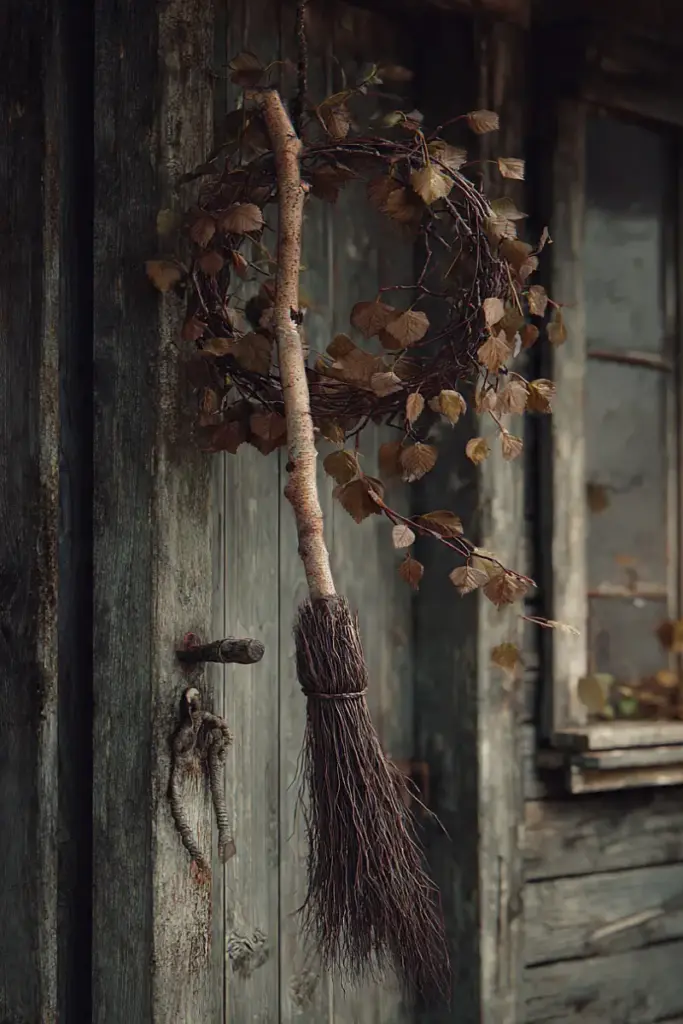
Broom: A witch’s broom placed outside the door drives away all evil spirits.
Light: A burning candle or tea light on the windowsill ensures that your ancestors find their way home.
Offering: Food, such as fruit, tea, or sweets, should always be left on the kitchen table so that your ancestors can feast on it during the night.
For us, this time means coming to inner introspection. Letting go of the Old to create the New. The quiet season begins. Make yourself comfortable with a cup of herbal tea and perhaps a cozy fire. Smoke a little incense, rethink your patterns, and let go of what makes you unhappy. Even if our great-grandparents spent this time differently, we have arrived in a modern age.
Happy Halloween!