Mugwort: The Mother of Herbs & Guardian Against Shadows
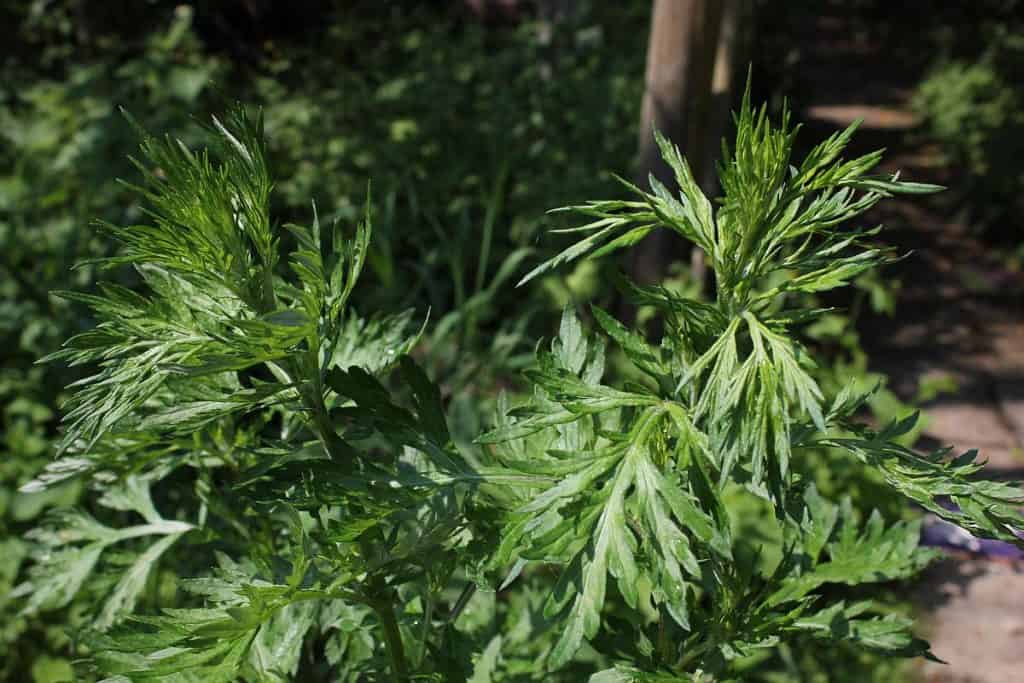
Mugwort (Artemisia vulgaris) is an ancient magical plant. Because of its intense, aromatic scent, it was considered a powerful herb to ward off spells and enchantment. According to an herbal book from the 4th century AD, Mugwort hung in the home wards off demons and the “Evil Eye.” Furthermore, it was used to cure illnesses caused by witchcraft.
Protection for House & Farm
Hung from the roof ridge (the highest point of the house), it protected against plagues and lightning strikes. It was also commonly hung over the front door to keep the home safe from harm.
The Root: When placed over the door, the root prevented evil entities from slipping inside and even guarded against fire. Buried under the threshold, it kept away malicious gossip and witches.
In Folklore: In Denmark, it was used specifically to drive away the Devil.
The Magic of the Solstice Herb
Mugwort was counted among the “St. John’s Herbs” (Johanniskräuter) or Solstice Herbs.
The Belt of St. John: People wove belts of Mugwort around their waists and jumped through the St. John’s Fire (Midsummer Bonfire). Afterward, the belt was thrown into the flames. Old belief held that this ritual protected against illness and misfortune for the coming year.
Lovers: Couples also leaped through the fire together and later spent their night of love on a bed strewn with Mugwort.
An Omen of Life In former East Prussia (mid-19th century), a folk belief was recorded: If one tied the tips of two Mugwort plants growing side-by-side loosely together, and the tips continued to grow without the knot opening, it signified a long life for the binder.
Sacred Smoke & Rituals
Mugwort is one of the oldest ritual plants in all of Europe. Its use as incense dates back to the Germanic tribes and the Celts. (Even in the Americas, indigenous peoples knew Mugwort—specifically White Sagebrush/Mugwort—as a smudge plant).
A Mugwort fumigation drives away evil spirits—which, in modern terms, can be compared to banishing negative thoughts. Negative thought patterns dissipate very quickly in the smoke of Mugwort.
Support in Change & Grief This powerful incense lends us support when unforeseeable changes enter our lives. It also aids in the process of letting go—whether at the end of a relationship or the death of a loved one. Mugwort smoke provides protection and stability, helping us navigate the grieving process, much like Sage. The plant spirit of Mugwort generates warmth and protection within us.
Effect, Scent & Application
When burned, Mugwort releases a strong, spicy, and tart herbal scent, which is said to enhance clairvoyance and divination abilities. Due to its relaxing and calming effect, it is well-suited for evening rituals. Mugwort belongs in every incense blend intended for house cleansing.
Blends & Smudge Bundles Mugwort blends wonderfully with:
Juniper Wood
Spruce Resin
Elderflowers
This mixture gives the smoke a very warm and delicate aroma. Using Mugwort in a smudge bundle (stick) is also an excellent option.
The Holy Nights During the Summer and Winter Solstices, and especially during the Rauhnächte (The 12 Holy Nights), the belief in its magic flourished. To ward off any negative energies or evil spirits in the house and farm, everything was smoked out with Mugwort—a pagan belief still practiced in some rural regions today.
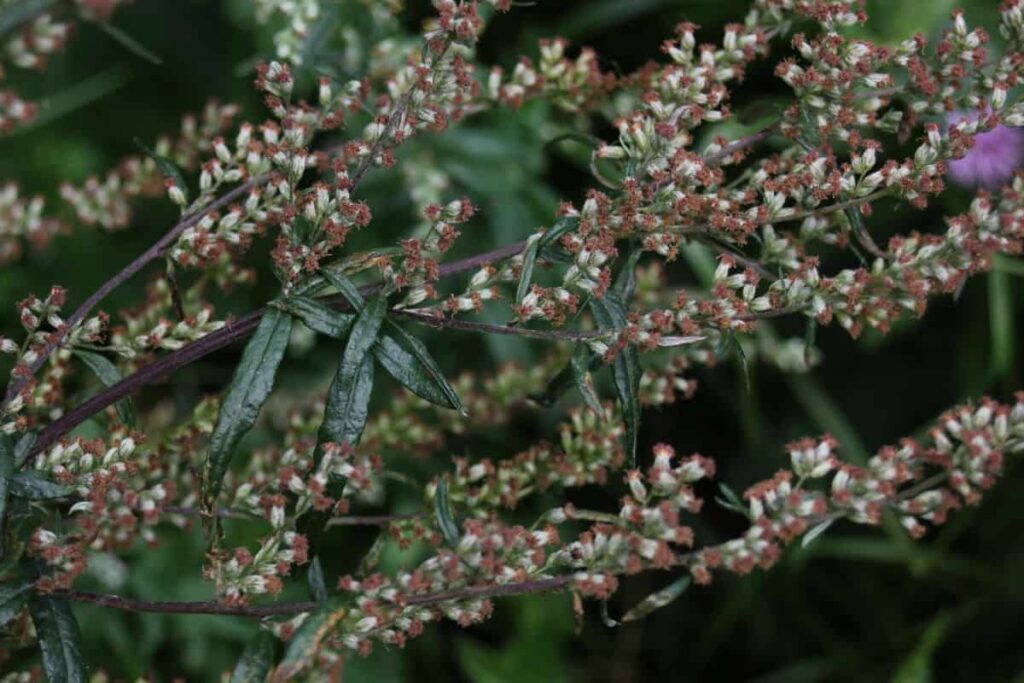
Amulet, Strength & Love Magic
In the “Nine Herb Charm” tradition, Mugwort was essential. It was always included in the sacred herbal bouquet (Kräuterbuschen), a widespread custom throughout Germany.
Against the Devil: In the Middle Ages, it was used against devilish hauntings. Even in the 19th century, many rural folk believed that carrying a Mugwort root rendered them invulnerable to harm.
The Talisman: As an amulet, Mugwort offered protection against bewitched illnesses, hexes, and the Evil Eye.
Milk Magic: Mugwort stalks were used to beat milk if it was suspected of being bewitched (not churning butter).
Soul Travel: To aid in shamanic journeys or soul travel, Mugwort was laid beside the sleeping place.
The Herb of Strength Mugwort juice grants great strength. In Swabia, it was believed that rubbing one’s arms with Mugwort juice gave “Giant’s Strength.”
The Traveler’s Herb: Its German name Beifuß is often folk-etymologically linked to “Foot” (Fuß). It was believed that tying Mugwort to one’s feet prevented fatigue. Thus, travelers always carried it. If one carried Mugwort and Vervain together when the sun was in the sign of Virgo, one would never tire.
Love & Divination Mugwort also played a role in love magic. It was believed to attract friendship and love. Marriage-minded women always carried Mugwort with them. In divination, girls used it to see their future husbands. At that time, it was considered a supreme magical plant capable of miracles and healing.
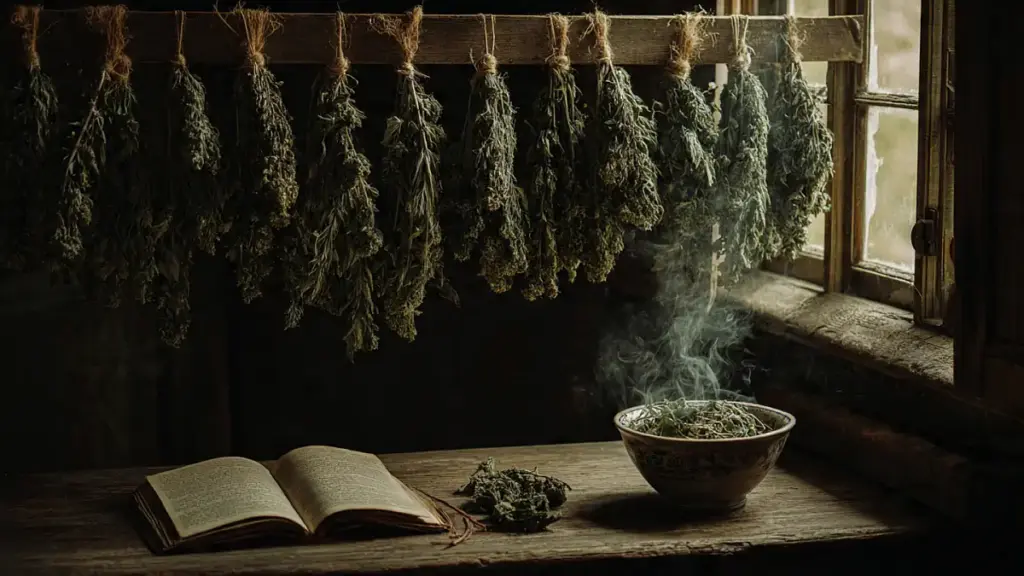
Mugwort in Old Herbal Medicine
Mugwort was sworn upon as a cure for illness.
Toothache: Mugwort roots were placed under the pillow.
The Life or Death Test: Secretly placing Mugwort under a sick person’s pillow was a form of oracle. If they fell asleep immediately, they would recover. If they could not sleep, they would die. (In other regions, it was simply placed there to speed recovery).
Childbirth: Birthing women were given a bouquet of Mugwort in their bed to ensure a quick and safe delivery.
The Dead: The deceased were sometimes burned with Mugwort, as the plant helps the soul pass into the Afterlife.
Customs from Old Bohemia
From Old Bohemia (modern-day Czech Republic), the following folklore is recorded:
The Ghost Belt: On the eve of St. John’s Day, one girds oneself with Mugwort. This “St. John’s Belt” protects against ghosts, magic, accidents, and illness for the year.
The Wreath: While lighting the Midsummer Bonfire, wreaths of Mugwort were woven. One looked through the wreath into the fire and then placed it on one’s head. This prevented eye and head pain for the year.
The Cow Cure: A decoction made from the St. John’s Belt was used to wash a cow three times if she held back her milk due to witchcraft.
St. Rosalia: On the day of St. Rosalia, Mugwort roots were gathered and wrapped in a sachet. Whoever wore this on their head would not be plagued by toothache.
Folk Names
Broom Herb (Besenkraut)
Women’s Herb (Weiberkraut)
Goose Herb (Gänsekraut)
Spice Mugwort (Gewürzbeifuß)
Wild Wormwood (Wilder Wermut)
Fly Herb (Fliegenkraut)
Solstice Herb (Sonnenwendkraut)
The “Mugwort Coal” Legend
In Mecklenburg, a curious belief existed: If one dug up a Mugwort plant on St. John’s Day exactly at noon (12:00 PM), one would find “burning coals” at the roots. One had to be fast! As soon as the church bells finished striking the hour, the coals would vanish. These “burning coal pieces” (which were actually black, dead root nodules) were effective against all kinds of illnesses. In Northern Germany, people wore this “coal” around their necks as a protection against fever.
Mugwort in the Spiritual Garden
Because this plant played such a huge role in the culture of our ancestors, we, too, feel deeply rooted with it. If you wish to give this beautiful and magical plant spirit a home, Mugwort is easily grown from seed. It germinates quickly and abundantly. This wonderful plant soul loves full sun and dry conditions. Mugwort can reach a height of about 2 meters (6 feet), so it should always be placed in the background of a bed, as it casts a shadow.
Sowing: Direct sow outdoors from April to June. Simply press the seeds into the soil (light germinator).
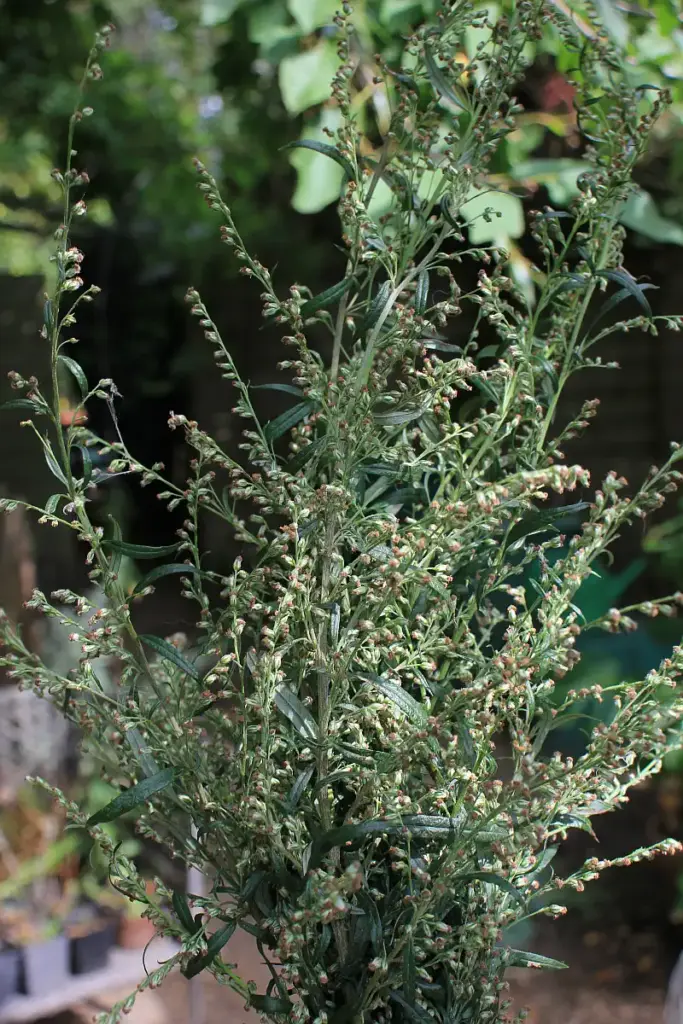
Bloom: It flowers from August to September, releasing its lovely, mystical scent.