🌿 Mandragora: The Queen of Magical Plants
In this article, I wish to introduce you to the Mandrake (Alraune). There is no other plant in the world about which so much has been written and whispered. She is, without doubt, the most famous of all magical plants.
The Secret of the Name The German name Alraune carries a deep, ancient echo. It is suspected that it derives from the Old Germanic alaruna (referring to female house spirits or kobolds) or from runa (secret) and raunen (to whisper secretly). While we cannot be entirely certain, the mystery of the name suits her nature perfectly.
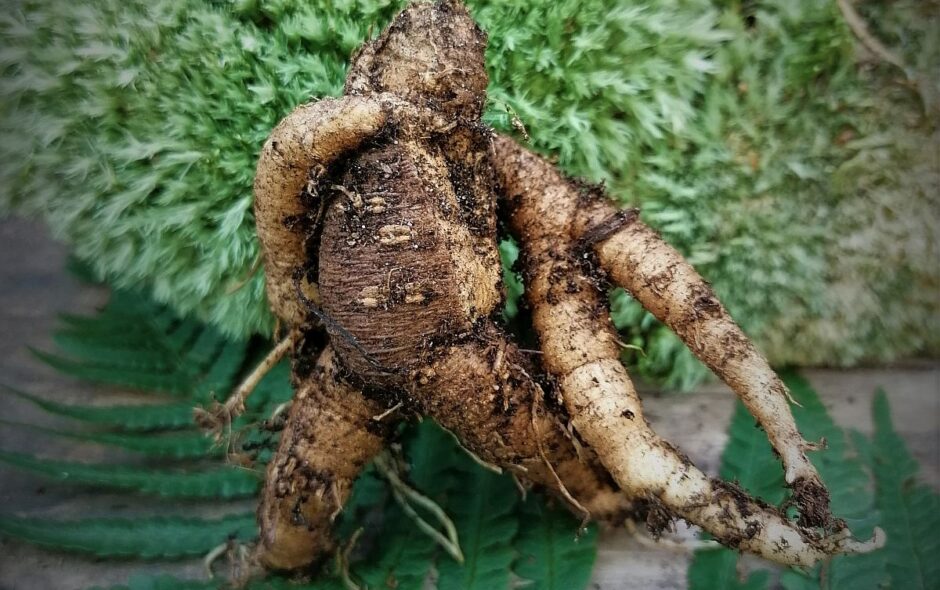
Roots of Human Shape Mandrakes possess fleshy roots that sometimes bear an uncanny resemblance to the human form—a feature that has always been used for magical purposes.
Habitat: They are native to the Mediterranean region, found especially on Crete, Cyprus, and Sicily.
Conditions: They thrive in sunny and very dry places, preferring rocky ground. Their roots can reach a depth of up to one meter.
In Germany: Here in the north, Mandrakes do not grow wild.
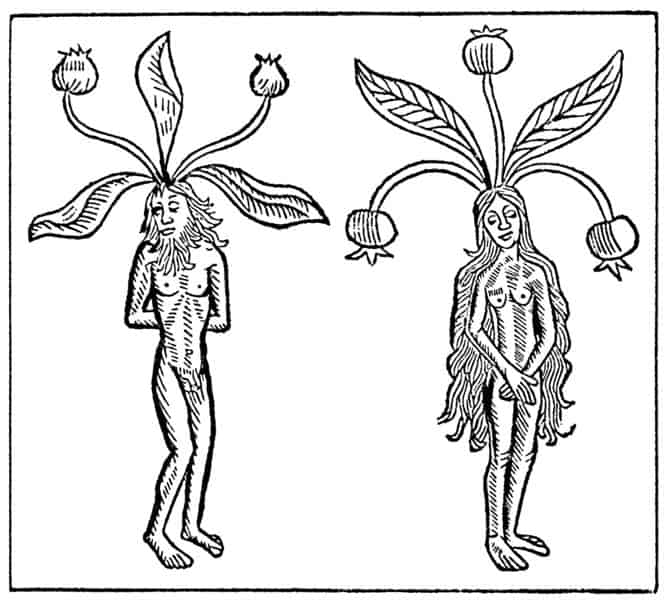
Male & Female: The Varieties In the old lore, we distinguish between two main types:
The Male Mandrake: Mandragora officinarum (the most common variety).
The Female Mandrake: Mandragora autumnalis.
⚠️ Warning: All Mandrakes are poisonous. They can cause restlessness, dizziness, frenzy, and delirium. Please approach with caution and respect.
🎭 The Mandrake as a Magical Plant: Fakes & Gallows Men
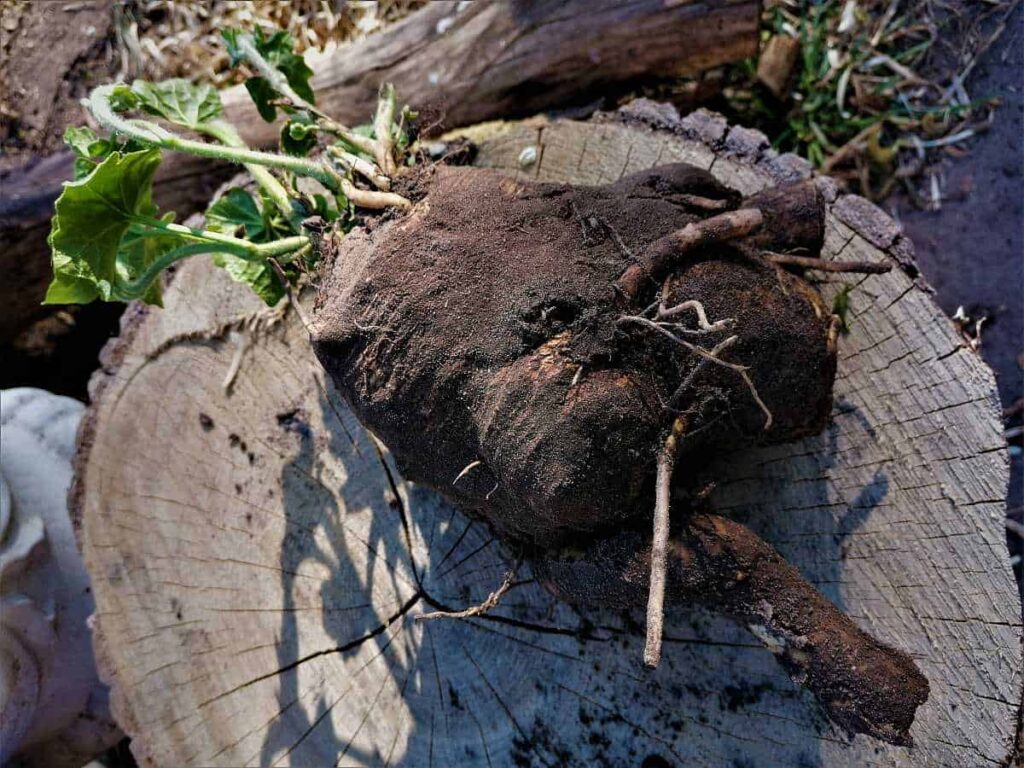
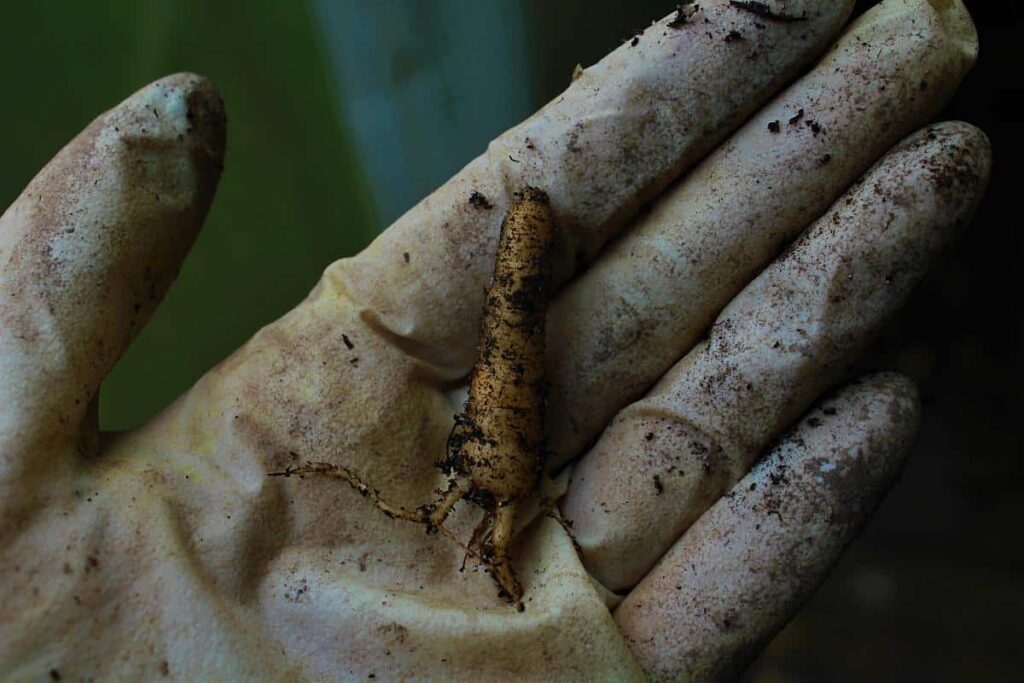
The Poor Man’s Mandrake & Deceptions Because the true root was rare and precious, substitutes were common. Plants like Bryony (Zaunrübe), Yellow Carrots, Victory Onion (Allermannsharnisch), and Celery were often passed off as the real thing.
The Poor Man’s Root: The roots of the Bryony were known as the “Mandrake of the poor people.”
Historical Fraud: In the Middle Ages, swindlers made a fortune selling these carved roots. But the law was harsh: In the year 1570, three Mandrake dealers were hanged for selling yellow carrots as magical roots.
Modern Echoes: As recently as 1955, women of the Sinti & Roma community were arrested in Munich for selling counterfeit Mandrake roots.
Ancient Roots The Mandrake was already known in Ancient Egypt, as proven by depictions on tomb walls. It is even mentioned in the Bible under the name Dudaim (Love Apples).
🐕 The Death Scream & The Black Dog
Many myths surround the perilous task of harvesting this plant. It was believed that the Mandrake would try to hide when found, becoming visible only if sprinkled with liquids of the body.
Rituals of the Harvest
The Sword: One legend says to dig it up, one must circle it three times with a sword and lift it while facing West.
The Dance: Another custom suggests dancing wildly around the plant, speaking constantly of love and affection to coax it out.
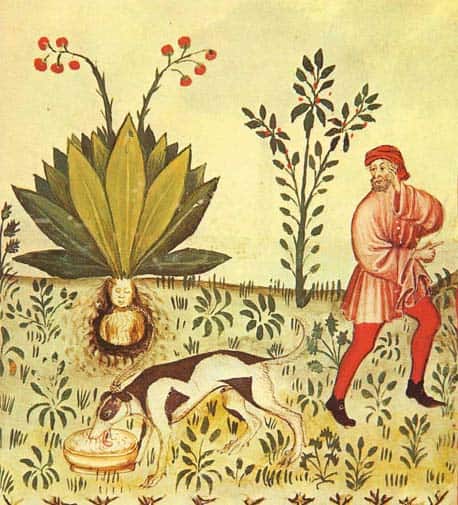
The Ritual of the Black Dog The most famous legend warns that the Mandrake utters a fatal scream when pulled from the earth. To harvest it unharmed, a specific trick was used:
Digging: A trench was dug around the plant until only a small part of the root remained covered. The harvester must never touch the root with their hands.
The Bond: A cord was tied to the plant and the other end to the tail of a black dog.
The Sacrifice: The harvester would then step away and call the dog. As the animal ran to its master, it pulled the Mandrake from the earth.
The Scream: The plant would shriek, and the dog would drop dead on the spot—a vicarious sacrifice for the human who sought the plant’s power. Once the root was out, the danger had passed.
💰 Luck, Money & Devil’s Work: The Magical Properties
All the peril and effort of the harvest were undertaken for one reason: the Mandrake’s immense power. In the Old Belief, it was said to multiply money, banish evil spirits and demons, and grant fertility, protection, and luck to its owner.
The Devil in the Root Because of its human-like shape, people whispered that the Devil himself dwelt within the root. Therefore, immediately after the harvest, the Mandrake root had to be soaked in water to draw out any lingering evil before it could be used.
Rituals for Love & Inner Peace
Breaking a Love Spell: If a man had fallen under a love spell against his will, he was advised to wear a female Mandrake on his body, placed between his chest and navel.
Against Lethargy: If a person was naturally sluggish or too lost in dreams, they were to take a washed Mandrake (or young Beech shoots, if no root was available) and lay it in their bed until it became warm from their body heat. Then, they would speak these words:
“God, you who created man from earth without pain, I now lay this earth, which has never sinned, beside me, so that my earthly body may feel the peace as you created it.”
The Great Deception: Roots of the North Although genuine Mandrake roots were imported from the Orient to medieval Germany at exorbitant prices, most roots in circulation were forgeries made from native plants. As mentioned before, the roots of Bryony, Gentian, Tormentil, and even Plantain were carved and sold as the magical Alraune.
Echoes in Modern Berlin The belief remained strong well into modern times. Even at the beginning of the 20th century, a department store in Berlin sold fake Mandrake roots for 2.25 Marks.
The Product: These were actually roots of the Victory Onion (Allermannsharnisch), cast in a locket.
The Promise: They came with a small note promising that this root would bring wealth and health, help find treasures, and protect against the spirits of the night. Roots of the Yellow Iris were also sold in this manner and found eager buyers.
💀 Gallows Men & Witch Trials: Customs of the Root
The Midnight Harvest Another tradition whispers that the Mandrake should be harvested exactly at midnight on St. John’s Eve. At this hour, though she still utters her cry, her effect is said to be less harmful to the human soul.
The Gallows Man: The root was often called the “Gallows Man” (Galgenmännchen). Legend held that it grew beneath the gallows, sprung from the seed of innocent men who had been hanged.
Shadows of the Witch Trials In the dark times of the witch trials, the Mandrake played a tragic role. It was incredibly dangerous to keep such a root in one’s home. Yet, it is said that many women who faced the stake drank a Mandrake wine beforehand to numb their senses against the pain.
💰 Prosperity, Birth & The Glass Case
Wealth & Life
Multiplying Gold: If one placed money beside a Mandrake root, it was believed to double. Thus, the root became a bringer of prosperity.
Midwifery: In childbirth, the Mandrake was a powerful ally. It eased labor if worn around the neck or if its juice was rubbed onto the belly.
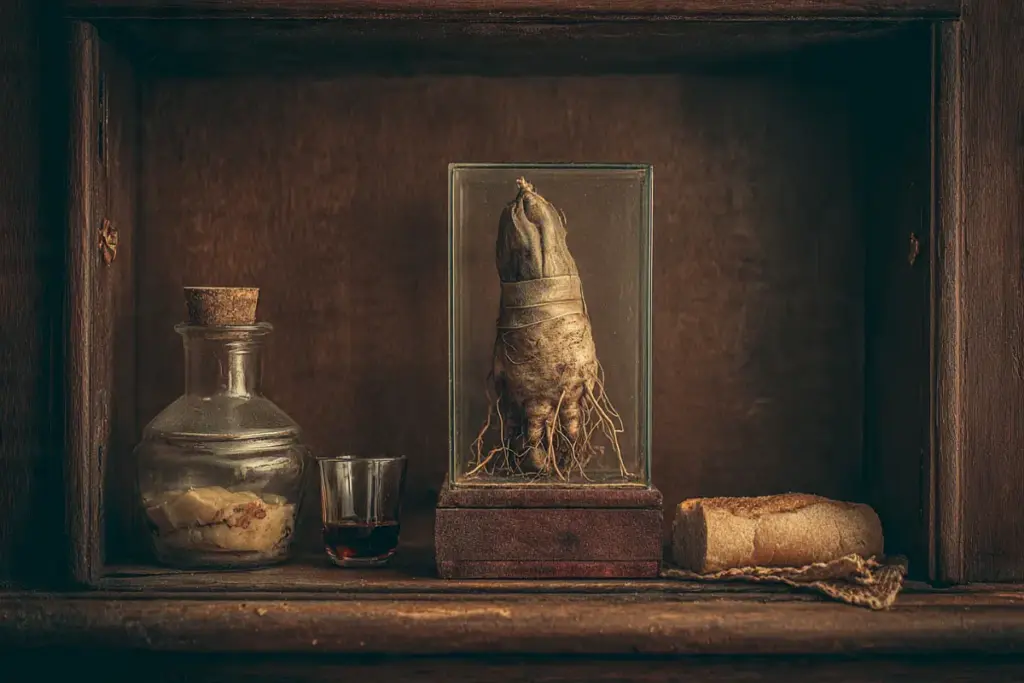
The Spirit in the Glass Case (Old Hesse) There is a tale of a noble family in Old Hesse who kept a Mandrake manikin in a glass case.
The Mirror of Fate: It was observed closely every day, for whatever was about to happen to the family would first manifest in the appearance of the little root man.
The Final Journey: When the owner died, the Mandrake had to be buried with them. Otherwise, the deceased would find no peace and fall to the Devil.
The Rule of Ownership: It could be gifted shortly before death, but never passed to a “third hand”—if so, the Mandrake would always magically return to its original master.
🕯️ Spirits of the East & Household Care
Beliefs from Russia & The Orient In Russian lore, it is believed that the Mandrake arises from unbaptized or murdered children. Woe to him who tears it out—he risks paralysis and madness. However, the plant spirit can be reconciled through offerings of bread, butter, and a crucifix.
The House Spirit Often, the Mandrake manikin was hung in house entrances or pantries as a benevolent House Spirit, bestowing protection and luck upon the inhabitants. As a “Lucky Manikin,” it served as an oracle, answering questions and prophesying the future.
Caring for the Spirit To ensure it continued to bring luck, health, and wealth, the Mandrake required care:
The Bath: Once a week, it was bathed in wine.
The Robe: It was then dried and dressed in fine silk.
The Home: Finally, it was kept safe in a special casket within the house.
⚕️ Medicine & Magic: The Mandrake in Healing
In the Middle Ages, the Mandrake was a highly prized medicine. Mandrake wine was administered for insomnia and given to patients suffering from a multitude of ailments, such as:
Eye inflammations
Oppression & Anxiety
Joint pain & Ulcers
Liver pain & Snakebites
Infertility
As an anesthetic during surgeries (the “Sleep Sponge”)
It was also ground into powder and taken for toothaches. Applied as a poultice, the juice was even used to expel dead fetuses from the womb.
⚠️ Safety Warning: I will consciously refrain from providing any recipes here. The line between healing and poison is too thin, and it is simply too dangerous to publish such instructions.
🌿 The Mandrake in Plant Magic
In the realm of green magic, the Mandrake stands as a pillar of Fertility, Wealth, Luck, Health, and Love.
Forms of Protection
The Amulet: The dried root is worn as a pendant around the neck or added to a “Fraisenkette” (a traditional chain of multiple protective charms/amulets worn in the Alpine regions).
Sleep: Hung over the bed, she guards the sleeper against nightmares and the “Mare.”
Home Protection: If the Mandrake root is hung within the house, it is said that no demon can cross the threshold.
🌱 A Test of Patience in the Shadows: Growing Mandrakes from Seed
I often read about the struggles people have when trying to grow Mandrakes from seed. In the beginning, it was exactly the same for me. Therefore, I experimented for a long time until I finally found a way that worked.
A Personal Recommendation For me personally, the nursery Syringa (available online) offers the best seeds. I order from them occasionally, and using my method, they always germinate.
Note: This is a heartfelt recommendation from my garden to yours, not paid advertising.
My Method: The Cycle of Water & Shadow
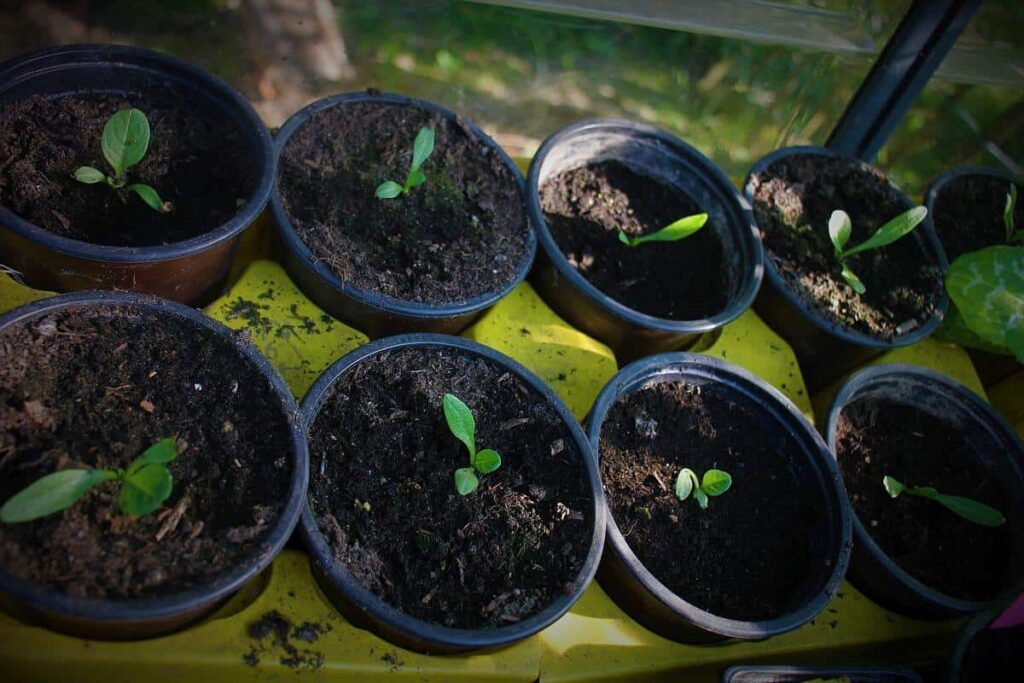
Sowing: I use a simple plastic tray filled with seeding compost. The seeds are covered with soil and watered thoroughly.
The Shadow Realm: This tray is placed in complete shade. No direct sunlight touches it.
The Wet & Dry Cycle:
Week 1: I water the seeds regularly so that the soil is always well-moistened.
The Pause: After the first week, I stop watering for a few days, allowing the soil to dry out completely.
The Return: Only then do I water again, but sparingly.
The Three Weeks: I play this game with the seeds—drying out and re-watering—for about three weeks. After this time, the first Mandrake usually sprouts. Once one breaks the surface, the others follow quickly.
Care & Cultivation: The Deep Root
The Pot: For further cultivation, I highly recommend using Rose Pots. These are narrow but very deep, allowing the taproot to develop fully and perhaps even take on that legendary human shape.
Watering Warning: You must be extremely careful with watering, as the root is prone to rot. I compare them to Cacti: The less water, the better.
Rule of Thumb: A small glass of water once a week is usually sufficient.
💨 Respecting the Spirit: Mandrake Incense & Fumigation
If the Mandrake is to be used at all, it should be strictly limited to fumigation (incense burning). While this method reduces the risk of direct poisoning compared to ingestion, great caution and deep respect for this powerful plant soul are still absolutely essential.
Blends & Combinations Dried Mandrake leaves or small pieces of the root blend well with:
Lovage (Liebstöckel)
Hawthorn (Weißdorn)
Mullein flowers (Königskerzenblüten)
☠️ Life-Saving Warning: Do not take this lightly. Misuse or overdose of the Mandrake leads inevitably to death. Treat this plant with the fear and reverence it demands.
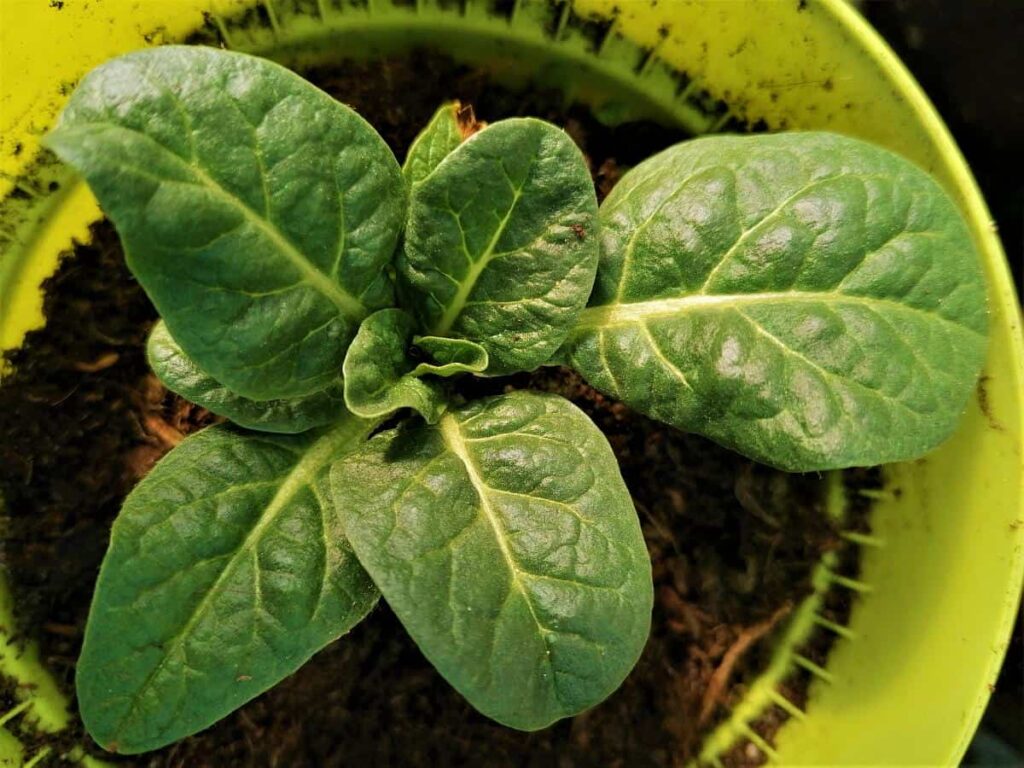
🌑 A Personal Encounter: The Vanishing Mandrake
As a closing word, I wish to share a story of what happened to us with a Mandrake. Since this experience, I have become very cautious regarding this spirit.
The Arrival (2013) In 2013, I bought a young Mandrake. Full of pride and happiness, I brought her into the garden and, together with my partner, planted her beneath a young Oak tree. No sooner said than done.
The Phantom Cries After planting, we sat down under our pavilion. After a while, we began to hear sounds from far away—like the crying of children or the bleating of sheep.
The Setting: Note that there are no sheep in our vicinity, nor were there children nearby. We live quite deep in nature.
The Whisper: The sound was so quiet and delicate that I jokingly said to my husband with a wink: “That can only be the Mandrake.” Perhaps she did not like her new home? We heard this faint crying well into the evening.
Vanished into Thin Air The next day, I went to check on her, and I was terrified. She was gone. I still get goosebumps today when I think about it. I immediately fetched a spade from the shed to see if the root was still in the soil.
The Shock: But she was gone, too. Everything of the Mandrake had vanished—as if she had never been planted. No hole in the earth, no leaves, no root. Far and wide, no trace of her.
A Final Warning Since that day, I know that the Mandrake possesses a very powerful and great plant soul. Since that day, I see her with different eyes. Please be careful when dealing with the Mandrake! She is a being who knows exactly what she wants, and she is willful beyond measure.