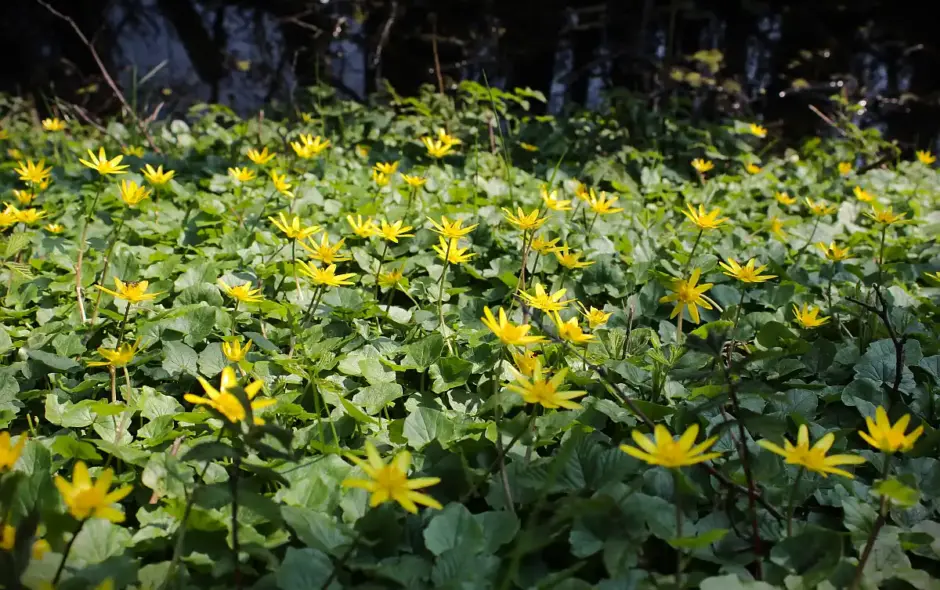
🌿 A Note for my American Readers: I know that Lesser Celandine (Ficaria verna) is considered an invasive guest in many parts of North America, often crowding out native wildflowers. Please do not plant this in your gardens if you live in the US! However, I invite you to read its story to understand why your European ancestors honored this plant so deeply. For them, it was not a weed, but a life-saver that brought the first Vitamin C after the long, hungry winter. Let us look at its soul through their eyes.
☀️ The First Light of the Earth
The Lesser Celandine is one of the very first herbs to rise from the soil in spring. Its German name, Scharbockskraut, tells a story of survival: “Scharbock” is the old word for scurvy, a disease caused by a severe lack of Vitamin C.
The Botanical Name: Ficaria verna
Ficaria: Derived from the Latin word for “Fig,” referring to the shape of its small root tubers.
Verna: Meaning “of Spring.”
📜 A Breath of History: Why This Herb Saved Lives
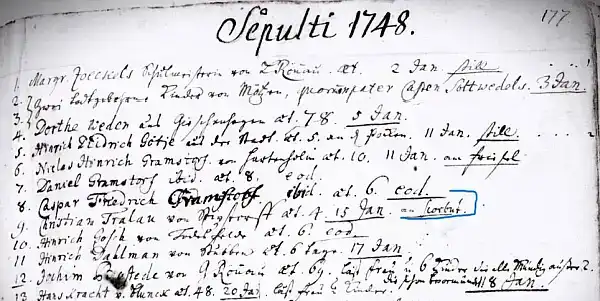
Before we look at its effects, let me take you back to the year 1748. In my old family records, deep within the yellowed pages of the church books, I found an entry that made me pause. The cause of death “scurvy” is rarely read in old books of that region.
A relative from a side branch of my family died in that year—and the cause of death is noted in curved old script as “Scorbut” (scurvy).
The Winter Test For us today, it is hard to imagine, but back then, winter was not just a season; it was a true trial. When supplies ran low and fresh greens were absent, strength faded. This entry reminds me every year why our ancestors welcomed the first golden flash of the Lesser Celandine like a miracle. It was not just a “weed.” It was the first green hope. It was the first medicine. The Lesser Celandine brought vital Vitamin C back into exhausted bodies.
🥗 Ancestral Knowledge for the Kitchen
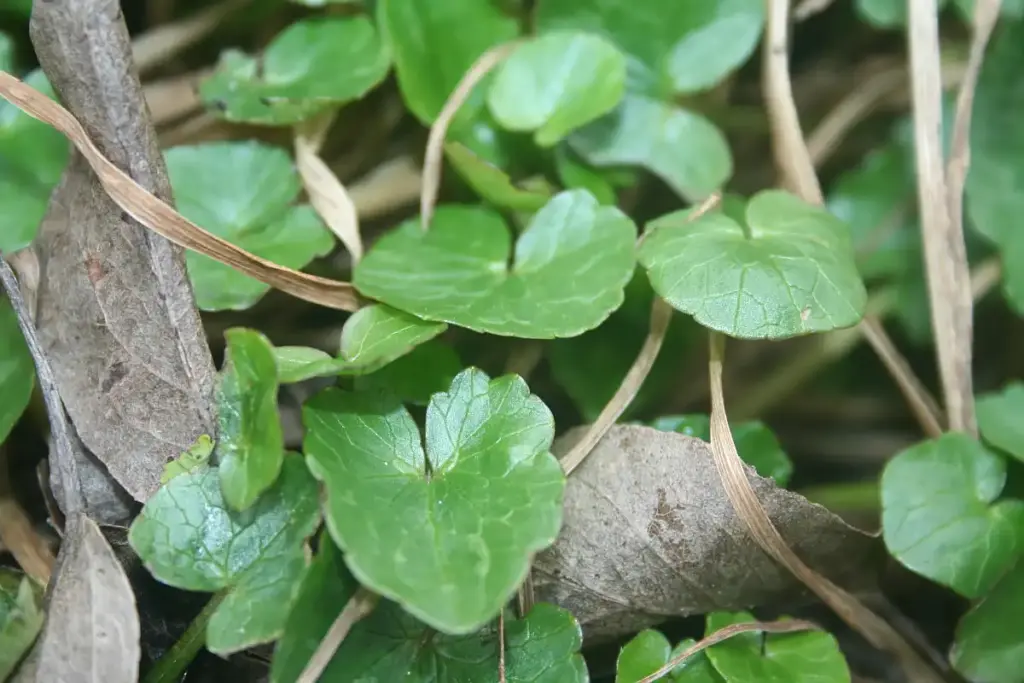
For our forefathers, Lesser Celandine was one of the first healthy herbs available after the long, hard winter. It was used in many ways:
Greens: The leaves were eaten in soups and fresh salads.
Herb Butter: A butter mixed with salt and finely chopped leaves was a delicacy.
Color Magic: In earlier times, the yellow petals were used to give butter a rich, golden color.
⚠️ Important Safety Note: The toxicity of Lesser Celandine should not be overstated, but neither should it be forgotten. Those who use it moderately will experience no symptoms of poisoning. The Rule of Thumb: Up to 10 leaves in a spring salad are considered safe and sufficient. Stop! As soon as the plant begins to bloom, the content of Protoanemonin rises sharply. From that moment on, you should no longer eat it.
🌿 A Place in the Cycle & Garden
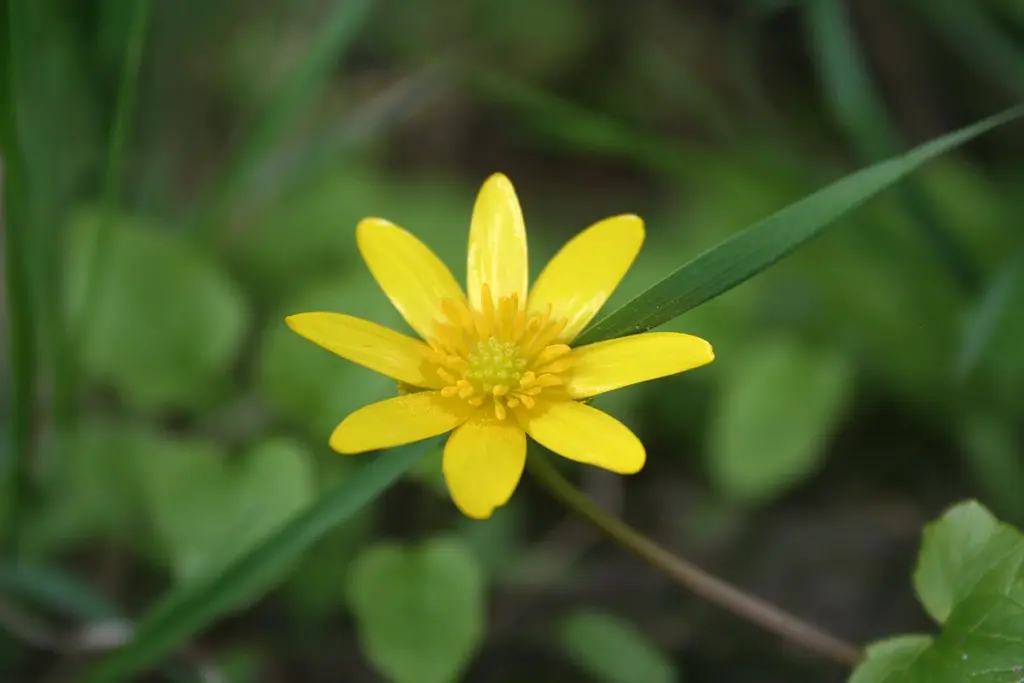
This charming plant belongs to the indicator plants of the 10 phenological seasons, heralding the “Early Spring.” Its pretty little flowers, glowing like miniature suns, appear from March to April.
Sun & Shadow It loves sunny locations but tolerates shade well. In my Wild Garden here in Germany, it has chosen its own spots:
Under the shrub corner, where the Forsythia and Flowering Currant grow.
In the place where we have our campfire in summer.
Occasionally in pots.
It acts as a beautiful spring ground cover. However, by the end of April, it retreats back into the earth to gather strength for next year. It is a purely ephemeral guest—a fleeting bringer of spring.
🌾 Ancient Knowledge & Customs: Of Warding & Sky Bread
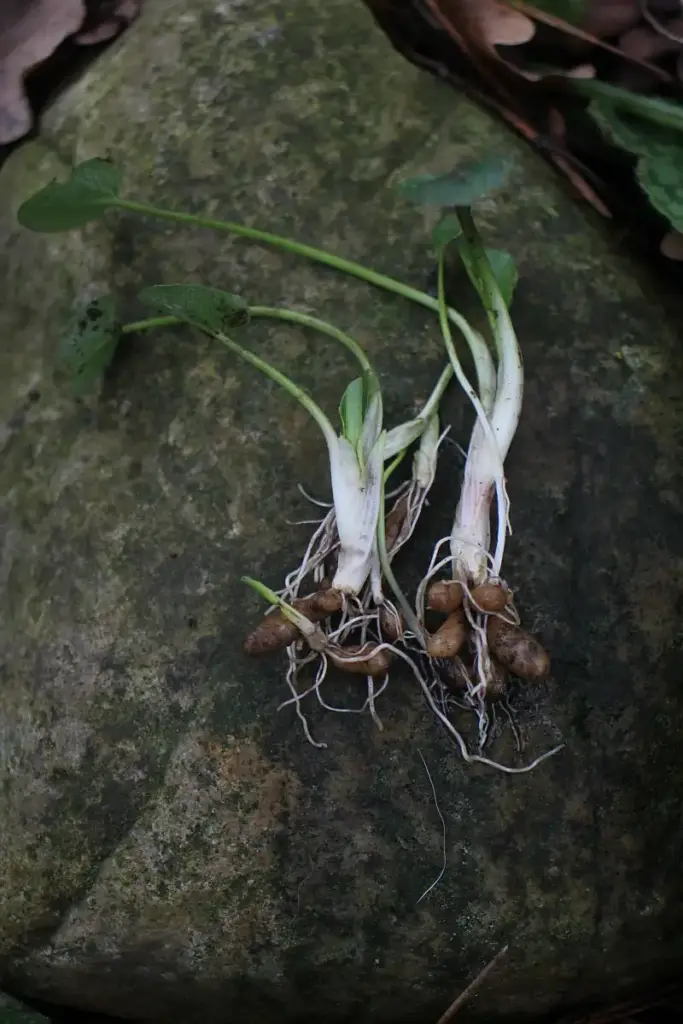
In the old days, Lesser Celandine was used as a fumigation for children who had fallen victim to the Evil Eye. But most fascinating is the history surrounding its so-called bulbils (small tubers that form in the leaf axils).
The Legend of the Sky Grain From these bulbils, which often fall off and are washed free by rain, people used to predict the grain and potato harvest. These tiny tubers were the source of the famous legend of the “Grain Rain” or “Earth Barley.”
1550 (Thuringia) & 1580 (Brandenburg): After heavy rainfalls, the fields were covered with “grain kernels,” and people believed they had fallen from heaven.
1857: When this phenomenon occurred again, people gathered the “grains” to bake bread from them. An old botaniker asked for samples of this bread.
The Revelation: His investigation revealed that the “grains” were actually the bulbils of the Lesser Celandine.
The heavy rains had washed them out from the field edges and scattered them across the land, where they were mistaken for Manna from Heaven.