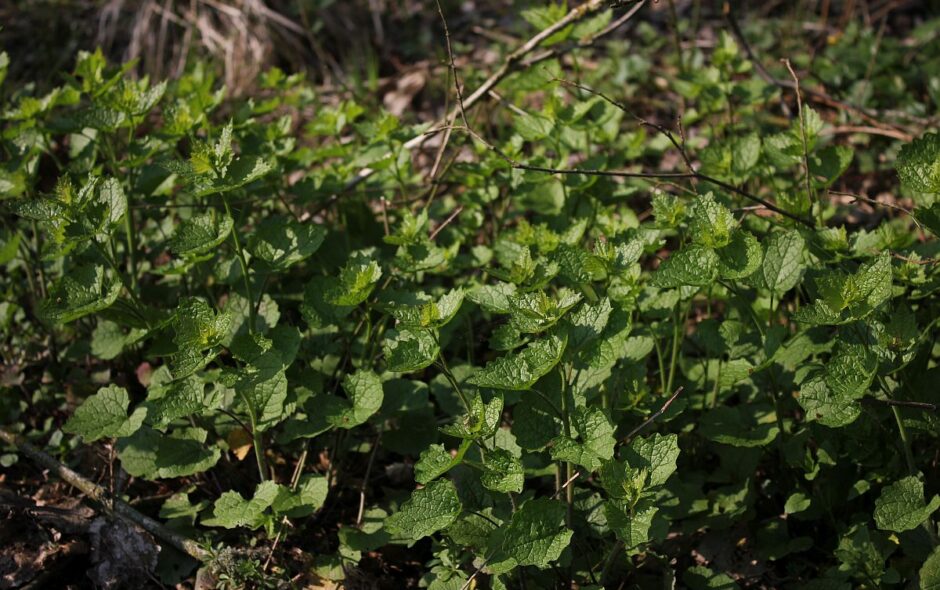
🌿 The Old World Herb: Garlic Mustard & Settler’s Roots
I know that Garlic Mustard is not well-regarded on the American continent today. Yet, this wild plant was once carried across the ocean by the very first European settlers, cherished as a vital vegetable and medicinal spice. In former times, Garlic Mustard was an absolute must in every peasant or kitchen garden. In fact, it is one of the oldest spices ever discovered here in Germany.
✨ Ancestral Knowledge: Pepper, Roots & Butterflies
Our forebears knew exactly how to utilize every part of this powerful plant:
The Forgotten Pepper: Our ancestors used the seeds of the Garlic Mustard as a substitute for pepper—a practice that has sadly faded into oblivion today. The seeds are wonderfully sharp and peppery.
Healing Leaves: A soothing poultice was crafted from its crushed leaves to alleviate insect bites.
The Hidden Spice: The root of the Garlic Mustard can be dried and used just like horseradish or as a potent spice.
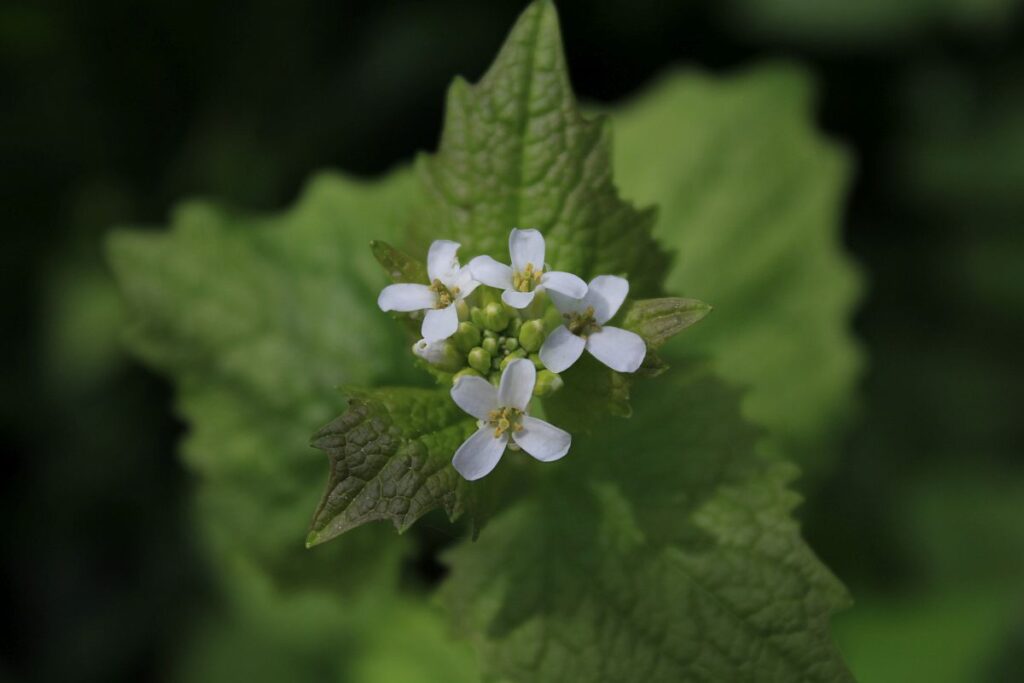
Edible Blooms: The delicate flowers are entirely edible and serve as a beautiful, wild decoration for spring dishes.
Nectar of the Old World: Here in the Old World, it is a vital honey plant for the bees, and many a butterfly depends entirely upon its nectar.
🍃 Alliaria petiolata: The First Green of Spring
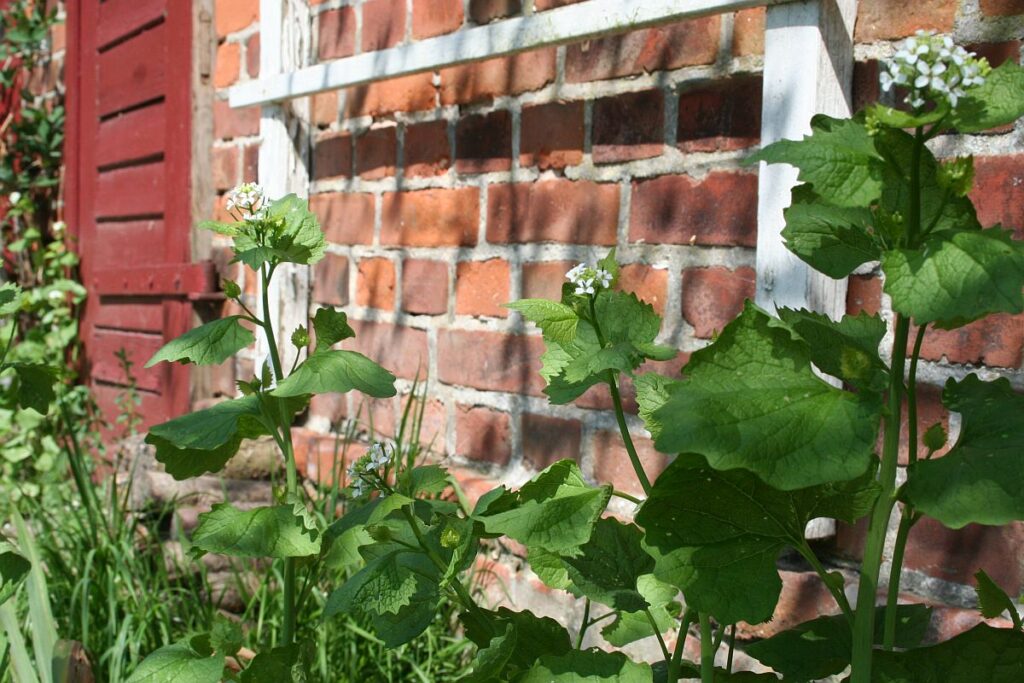
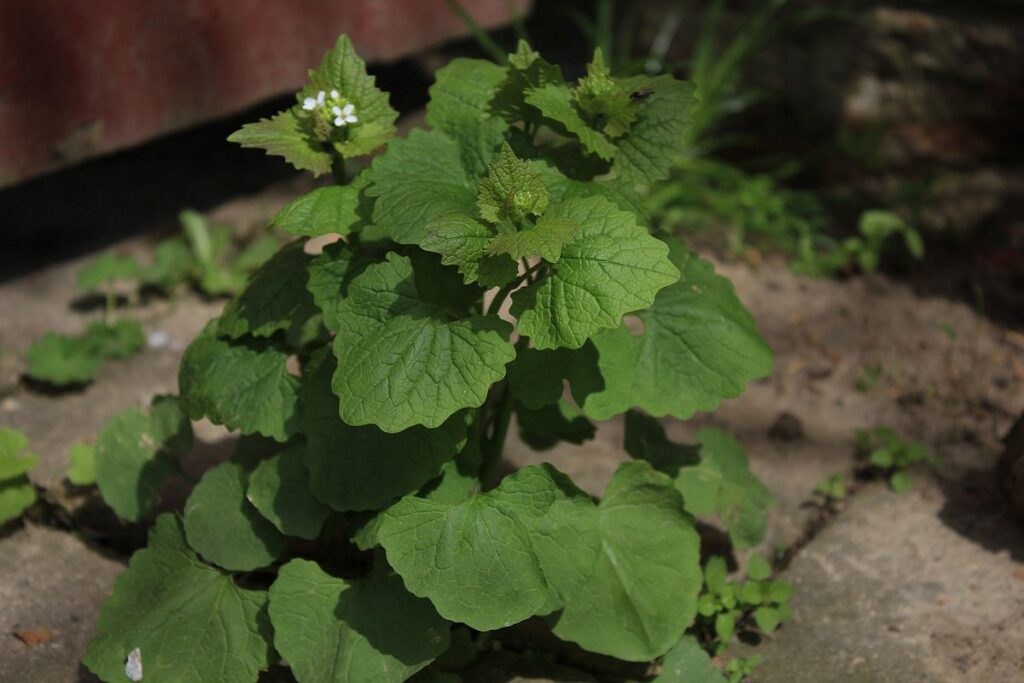
The botanical name of this plant is Alliaria petiolata. The word petiolata stems from the Latin petiolatus, meaning “stalked,” which points to the shape of its leaves. If you rub these leaves gently between your fingers, the plant releases a subtle, enchanting scent of garlic.
It is one of the very first plants that can be foraged here in the Old World after the long winter. Often, it is even preferred over Wild Garlic (Bärlauch). Its flavor is wonderfully delicate, leaving no heavy garlic aftertaste once the meal is finished.
🍲 The Spring Kitchen: Potions & The Nine-Herb Soup
From the beginning of spring, it grows abundantly in our landscapes. Because of its versatility, it should never be missing from a true spring kitchen. Therefore, I would like to write down a few interesting recipes using Garlic Mustard for you.
The most famous preparation is probably a wild pesto. However, you can also add it to herb quark, soups, salads, and sauces. Notably, it was an essential ingredient in the famous Nine-Herb Soup—a traditional European soup prepared in spring to strengthen the body and immune system after a long, harsh winter.
A vital rule for the hearth: Since the taste and scent of Garlic Mustard vanish when cooked, it should always be added at the very end of your preparation.
🌿 Garlic Mustard Powder: The Green Dust
For this simple spice, the leaves of the Garlic Mustard are dried and ground into a fine powder.
It can be stirred into morning smoothies or sprinkled over fresh bread.
It serves as a wonderful, highly unique spice for your daily meals.
🥣 Wild Pesto: The Essence of Spring
2 handfuls of Garlic Mustard leaves
Approx. 100 ml of cooking oil
Walnuts or pine nuts
Parmesan cheese
Sun-dried tomatoes
Sheep’s cheese (Feta)
Preparation: Place all ingredients into a blender and mix thoroughly.
Always prepare this pesto fresh, as its shelf life is short due to the raw ingredients.
You can, of course, omit the sun-dried tomatoes and sheep’s cheese, but they give the pesto a truly special and deep flavor.

🏺 Garlic Mustard Oil: A Mild Infusion
For a mild salad oil made from Garlic Mustard, you can use all parts of the plant, including the seeds, but excluding the root.
Chop about a handful of Garlic Mustard and pour enough cooking oil over it until everything is completely covered.
Seal the jar and let it steep for exactly one week.
It is best to use safflower oil (thistle oil) for the preparation, as it is neutral in taste.
You can also use this wild oil to marinate your meat for a summer barbecue.
🍯 Ancestral Mustard: The Seed’s Fire
Approx. 100 g Garlic Mustard seeds
80 ml water
20 g honey
10 g salt
50 ml wine vinegar
Preparation: * First, grind the seeds finely in a mill.
Then, place all remaining ingredients, along with the ground seeds, into a blender and mix well.
Transfer the mixture into suitable, sterilized jars and let them rest for 10 to 14 days. This waiting period allows the full, deep aroma to unfold.
🍞 Spring Spread: Creamy Wild Greens
1/2 handful of Garlic Mustard leaves
125 g cream cheese or cottage cheese
2 tablespoons of natural yogurt
Mustard and salt to taste
Preparation: * Cut the leaves very finely and mix them well with the natural yogurt and the cream or cottage cheese.
Season with salt and mustard to your liking.
Place it in the refrigerator for a few hours so the aroma can fully develop.
🧈 Herb Butter: The Golden Spread
250 g butter (softened at room temperature)
1 to 2 handfuls of Garlic Mustard leaves
A little salt
Preparation: * Cut the Garlic Mustard leaves very finely.
The butter must be soft—room temperature is best—so that you can easily mash it with a fork.
Now, fold the finely chopped leaves and the salt into the butter.
Note: This wild herb butter also freezes exceptionally well for later use.
🍵 Spring Cure Tea: The Gentle Brew
Pour a large cup of boiling water over four teaspoons of fresh (or two teaspoons of dried) Garlic Mustard herb.
Cover and let it steep for about 10 minutes, then strain.
Sweeten with a little honey if needed.
This herbal tea can be drunk in the morning with breakfast as part of a traditional spring cleanse.
🥗 Wild Spring Salad: Fresh & Simple
1 handful of Garlic Mustard leaves
2 tomatoes
Oil and vinegar
Salt and a little pepper
Preparation: * Chop the Garlic Mustard leaves and the tomatoes, then mix them together.
Season with salt and a touch of pepper, and add the vinegar and oil.
Mozzarella or sheep’s cheese tastes absolutely wonderful with this fresh spring dish.