Fern Magic: The Legend of the Fern Bloom, St. John’s Hand & Fern Oil
The significance of Ferns in the Old Faith and ancestral lore is immense. Their favored haunts are the shadowy, damp, and dark corners of the forest. Perhaps it is this preference for the twilight that has caused so many legends to wind around this ancient plant.
Its folk names bear witness to the plant magic believed in by our forefathers: St. John’s Flower (Johannisblume), Stray Herb (Irrkraut), Adder’s Herb (Otternkraut), and even Walpurgis Herb. Ferns were intrinsically linked to the Summer Solstice (St. John’s Days), thunderstorms, and the sun.
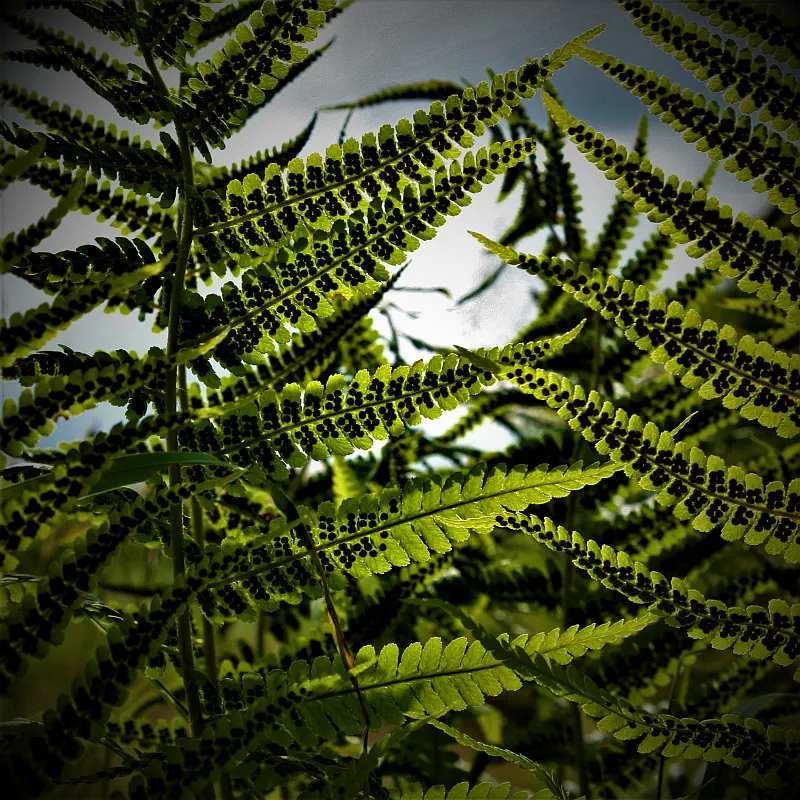
I believe the striking green color—and the fact that this plant never blooms—ignited the imagination of the people of that time. The old belief in its magic came from its brown spores; these were thought to be the magical and “invisibility-granting fern seeds.” The Fern belonged to the most potent magical plants, ranking alongside the Mandrake.
The peculiar way ferns grow has always commanded human admiration. They possess neither flowers nor seeds like other plants, yet they multiply. Since our ancestors had no knowledge of spores or how the plant reproduced, superstition found fertile ground here. They associated the plant with spirits, and later, under Christianity, with the Devil. The most miraculous powers were attributed to this enigmatic “seed.”
Protection against Witchcraft & Weather
The secret, miraculous properties of these ferns were extraordinarily numerous.
Personal Protection: Worn on the bare body, they were considered an infallible protection against all curses, witchcraft, and evil spirits.
House & Farm: They guarded the house against lightning and the fields against hail.
The Devil’s Bane: In general, they were thoroughly hated by the Devil. He shunned their proximity and never performed his dark works where they grew.
Travelers: Wagoners in the mountains would tie bunches of ferns to the front of their carts when driving down steep paths for safety.
The Envy Herb: In the Alps, the Wall-rue (Asplenium ruta-muraria) was known as the “Neidkraut” (Envy Herb). It was part of the “Mouth Gift” (Maulgabe)—a daily fodder portion given to stable animals to protect them from the “Evil Eye” of envy.

The Hunter’s Lore: The “Irrwurz” (Stray Root)
The hunters of old believed in the Irrwurz. This lore comes directly from the forests. It was said that whoever steps on a fern (specifically the “Stray Root”) will lose their way in the woods and be hunted by the Devil. In regions like Thuringia, Bavaria, the Upper Palatinate, Styria, Tyrol, and Bohemia, the belief was strong: Whoever treads upon the Irrwurz can no longer find their way in the forest or mountains. They are doomed to wander for days until they meet another human being, or until the next sun rises—only then would the spell be broken.
Fern Magic: Of Witch’s Shot, St. John’s Hand & Raptors
In earlier times, sacks and mattresses were stuffed with fern fronds to sleep on as a cure for rheumatism and aching limbs. Today, we can fill smaller pillowcases with dried ferns and place them on the painful areas. One can also sleep on them directly by filling larger pillowcases. For these applications, the Male Fern (Dryopteris filix-mas / Wurmfarn) is typically used.
The Fern Oil against the “Witch’s Shot”
Muscle tension, calf cramps, and that sudden, stabbing pain in the lower back—what we call Lumbago today—was known to our ancestors as the “Hexenschuss” (The Witch’s Shot). They believed that invisible entities shot projectiles into the body to cause pain. Our ancestors believed that Fern Oil had the power to “pull the shot” back out of the body and strengthen the limbs after hard labor.
Recipe: How to make your own Fern Oil To prepare a Fern Oil yourself, you need a handful of young, still-curled fern fronds (fiddleheads) and an oil of your choice.
Step-by-Step Instructions:
Preparation: Chop the fern fronds into small pieces and place them in a jar.
Infusion: Add enough oil to cover the plant material completely. It is crucial that no plant parts poke out of the oil.
Preventing Mold: If fern pieces float to the top, you can weigh them down with a clean, suitable stone to keep them submerged. This is important to prevent mold from forming.
Steeping: Do not seal the jar tightly. Instead, cover it with a dish towel or a piece of linen cloth (secured with a rubber band). Let it steep in a dark and cool place for three weeks. Check it every two days and give it a gentle shake.
Bottling: After the steeping time, filter the oil and bottle it. Fern oil should be stored in a cool place.
Historical Oil Recipe (Anno 1863)
An oil for all kinds of ruptures and against calf cramps. This recipe dates back to the year 1863. Therefore, it is NOT suitable for replication, but remains historically interesting:
Take 500 ml of Olive Oil.
Two fresh Sanicle roots (Sanicula europaea).
A handful of Sword Fern roots (Polystichum), growing in the forests.
Chop everything finely.
Let it steep for 5 or 6 days.
Filter it, press it through a cloth, return it to a jar, place it in the sun, and add fresh chopped Sword Fern roots again.
The Timing: If one wishes to use this fern oil, the application must happen during the waning moon. Apply it warm in the morning and evening, followed by a warm cloth placed over the area.
⚠️ Important Note on Historical Use The recipes and applications presented here are historical records of our ancestors and serve the documentation of old herbal lore. They do not replace a visit to a doctor or pharmacist. Please note that wild plants can interact with medications or trigger allergic reactions. Application is always at your own risk. Caution: When gathering ferns, one must be careful not to confuse them and accidentally pick a toxic variety. Fern preparations are for external use only.
Which Ferns Played a Role? The Green Spirits
Not all ferns are alike. In the eyes of our ancestors, each species held a specific spirit and purpose.
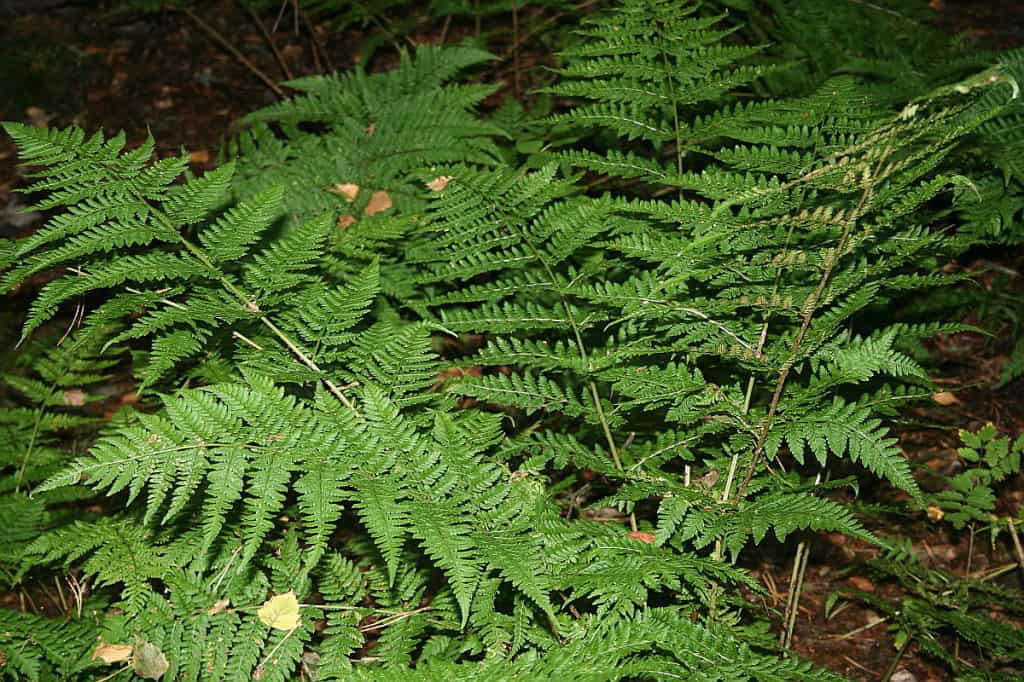
Common Polypody (Polypodium vulgare)
German Name: Engelsüß (“Angel’s Sweet”) This fern bears the beautiful folk name “Angel’s Sweet” because, according to lore, it was gifted by angels as a remedy against strokes. The name “sweet” refers to the distinct licorice-like taste of its root. Magical Use: Sleeping on or near this fern was said to bring wonderful, vivid dreams.
Maidenhair Fern (Adiantum capillus-veneris)
Love Magic & Rejuvenation This delicate fern was a staple in love magic, believed to possess the power of rejuvenation and the gift of a long life.
The Solstice Ritual: Marriage-minded maidens would run through patches of fern on the night of the Summer Solstice, hoping the magical “invisible fern seed” would fall into their shoes. Upon returning home, they emptied their shoes into pots—only then, it was believed, would their future beloved appear.
The Amulet: Girls protected themselves from enchantment by sewing a specific amulet: they placed this fern, along with a drop of their menstrual blood, into a small cloth and wore it around their necks.
Travel: Placed inside a shoe as an insole, the fern prevented fatigue during long journeys.
Wall-rue (Asplenium ruta-muraria)
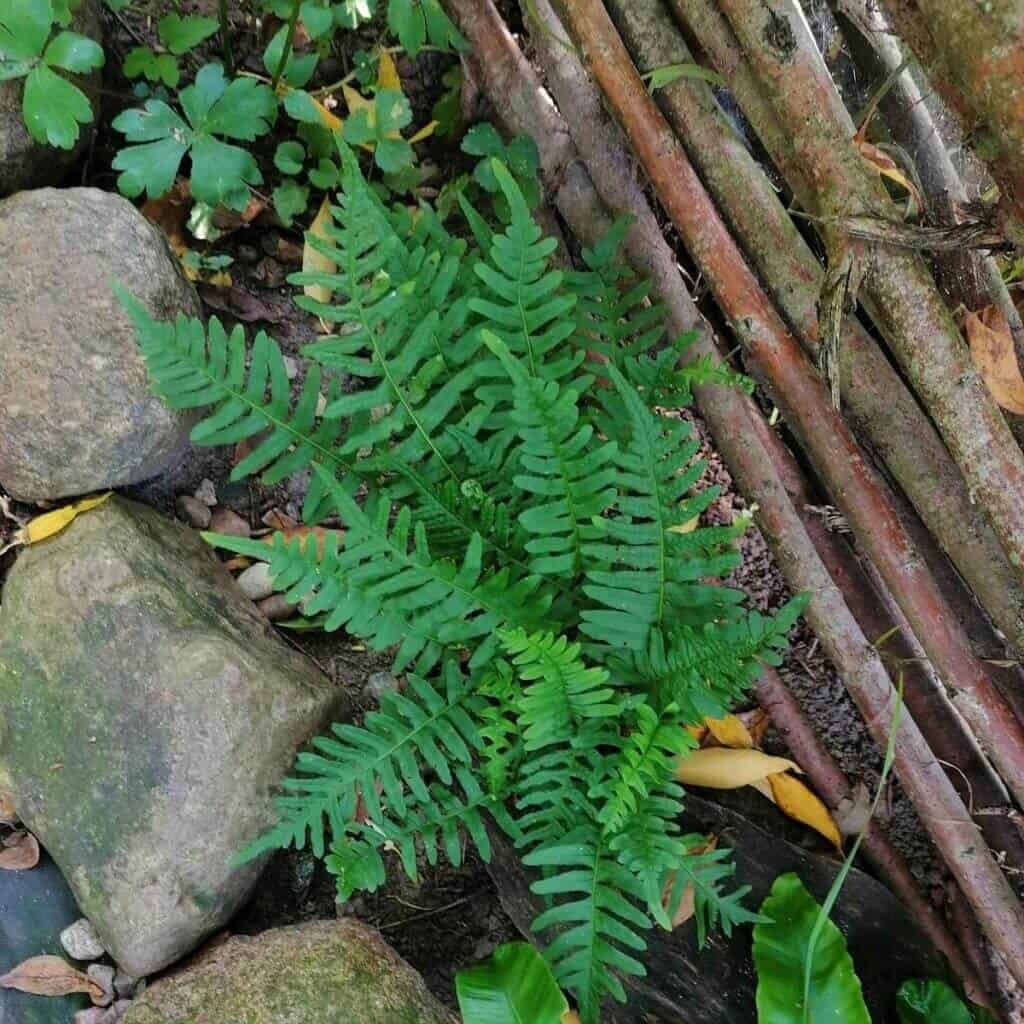
The Guardian of the Wall A small, resilient fern that loves to grow on old masonry. In folk magic, this was the primary herb used to protect stable animals from the “Evil Eye” of envy (Verneiden). Before cows were driven out to pasture for the first time in spring, they were fed three leaves of Wall-rue. It was considered a powerful ward against witches.
Male Fern (Dryopteris filix-mas)
The Poisonous Guardian Classified as toxic today, this fern was the source of the legendary “Wishing Seed” and the carved root amulet known as “St. John’s Hand.” Medical History: Ancient physicians used it as a remedy for worms, though patients often suffered blindness from overdoses. Externally, it was processed into the oil mentioned in Part 1 to treat rheumatism and cramps.
Hart’s Tongue Fern (Asplenium scolopendrium)
Herba Celtica The ancient Romans knew this plant through the Celts, naming it Herba celtica. The stag was a sacred animal to the Celtic gods, and Christianity later transferred this symbolism to Jesus Christ. Monks cultivated Hart’s Tongue in their cloister gardens and used the leaves to treat bleeding wounds.

Maidenhair Spleenwort (Asplenium trichomanes)
German Name: Widerton (“Counter-Magic”) Growing on damp, old walls, this fern carries the German folk name Widerton (lit. “Against-Spell” or “Counter-Tone”). It was a notorious remedy against hexes. Historically, apothecaries stocked it as a healing agent for chest ailments, using the fronds for infusions.
Royal Fern (Osmunda regalis)
The King of Ferns The largest fern species growing in our lands. It produces a spore-bearing panicle that looks like a flower, which our ancestors likely mistook for the legendary “Fern Flower” that could only be gathered at midnight. Sacred to the ancient Celts (often growing under oaks), it was believed to break open walls and reveal hidden treasures.
Bracken / Eagle Fern (Pteridium aquilinum)
The Christ Root Its name comes from the image revealed when you cut the lower stem crosswise: the veins form a figure resembling a Double Eagle (an X shape). Christian interpretation read these lines as the letters “J” and “C” (Jesus Christ), earning it the name “Jesus Christ Root.” The magical “St. John’s Hand” root was often carved from this fern. Note: Today considered toxic. Historically used to stuff bedding, though farmers disliked seeing it on their pastures. In Christian lore, it was only allowed to be pulled out on a specific holy day; otherwise, misfortune threatened.

 Further Uses of the Magical Ferns
The lore of ferns is contradictory and vast, varying from village to village.
House & Barn
The Ban: In some regions, one was forbidden to bring ferns into the house, as they were thought to attract arguments and strife.
The Protection: Elsewhere, large fronds were laid out in stables to protect animals from witchcraft, or mixed into fodder to ward off envy. Carrying a piece of fern on one’s person was a universal shield against enchantment, spells, and devilry.
Cradle & Grave Ferns accompanied humans from birth to death.
Birth: Ferns were placed in cradles so the Devil could not harm the infant. Pillowcases stuffed with fronds were used to ease teething pain.
Death: Early Christians bedded their deceased on fern fronds, a custom likely intended to protect the soul on its journey.
Love: Slovakian girls carried Wall-rue and placed pieces of it in their clothes chests to make themselves beloved by boys. It was woven into the bridal wreath and placed in the groom’s buttonhole.
The Solstice Night (Midsummer)
The Belt: People wove belts of fern fronds to wear during the Solstice fires, believing it protected against internal diseases for the whole year.
The Sachet: A small bag of fern, hung upside down in the home, kept sickness at bay. Hung over the door, it warded off lightning.
Male & Female Just like with the Mandrake, our ancestors distinguished between “Male” (Dryopteris filix-mas) and “Female” (Athyrium filix-femina / Lady Fern) ferns, attributing different energies to them.
Household & Practical Uses
Industry: Dried fronds, rich in alkali, were used in glassmaking and soap boiling.
Pest Control: Used as litter in stables, it drove away vermin. In beds, it repelled bedbugs.
Food & Packaging: The young, curled fiddleheads were eaten like asparagus (caution: species dependent!). In England, fresh fronds were used to wrap fruit and vegetables due to their preservative and rot-preventing properties. The starchy rootstock was even baked into bread flour in times of need, or grown as a staple crop on the Canary Islands.
In Old Herbal Medicine
Rickets: Children suffering from rickets were bedded on ferns.
Worms: Processed extensively in old pharmacies as a vermifuge.
Women’s Health: The root was believed to prevent conception or cause miscarriages (historical contraceptive).
Wounds: Young leaves act as a laxative; applied externally, they helped heal stubborn wounds.
Cough: The root of the Polypody (Engelsüß) was boiled with mallow or dried and sprinkled into honey mead to help expectorate mucus.
The Magical Fern Seed (Wishing Seed)
When and how was the magical “Fern Seed” collected? First, a botanical truth: Ferns do not bloom, nor do they produce true seeds, for they are spore-bearing plants. Yet, in folklore, this “seed” was the counterpart to the dowsing rod. It was believed to possess immense power. Whoever carried it would see all their wishes fulfilled. Thus, in the Middle Ages, these “seeds” (spores) were known as Wishing Seeds. The lucky possessor enjoyed unending youth and great strength for their labors.
The Legend of the Peasant
A tale is told of a man who walked through a meadow on Solstice Night searching for his lost horse. As he walked, “fern seed” fell into his shoes unnoticed. When he returned home, his family ignored him completely. He cried out, “I have not found the horse!” His family was terrified, for they heard his voice but saw no one. Only when he took off his shoes did he become visible again.
Gathering the Invisible Seed
Collecting this seed was a laborious task, traditionally done on Summer Solstice Night (St. John’s Eve). Whoever possessed it gained protection and the power of invisibility. Of course, there was an easier way: one could simply sell one’s soul to the Devil, receiving a small bag of seeds in return. But the Fern Seed was more than a cloak of invisibility; it was a Luck Herb. It enabled its owner to find crystals and gold, granting infallible luck in enterprises, gambling, and love.

Ferns in Witch Trials
In the grim history of witch trials, fern seeds played a significant role. A document from the 16th century recounts such a case. A man was accused of sorcery. Under severe torture, he confessed that he never fetched the seed from the forest himself, but he knew the ritual:
The Ritual of the Hazel Wand One must take a hazel wand and draw a circle at a crossroads. Inside this circle, one places an animal pelt, and upon it, a white-blooming Chicory plant (Wegwarte). This must be done at night between 11:00 PM and midnight. Not a word may be spoken, for all manner of apparitions will appear to test one’s courage. Precisely at midnight, the Chicory is removed. Beneath the pelt, a stalk would grow, and simultaneously, the Fern Seed would fall to the earth.
Sadly, the man’s open confession did not save him; he was beheaded months later.
Women accused as witches told of other methods: The seed was more potent if gathered under a Juniper bush, allowing one to commune with the dead. It granted invisibility and the ability to understand the language of animals. The famous alchemist Paracelsus suggested placing the woolly leaves of the Mullein (Königskerze) beneath the fern to catch the falling seed.
This belief became so intense that in the 17th century, a law was passed forbidding the gathering of fern seed. Anyone claiming the seed could subdue the Devil was fined two pounds.

The Hand of St. John (Johannishand) & The Springwurzel
The Hand of St. John
The “Johannishand” (St. John’s Hand) is a root amulet carved from the rootstock of the Male Fern or Bracken. It looks like a skeletal, clawed hand. Uses: It was crucial for protecting stable animals from disease, warding off thunderstorms, and attracting wealth.
In Bohemia: Troughs were rubbed with it before sunrise or three days before the New Moon to ward off evil magic.
In Pomerania: It was buried under the threshold of the stable door.
The Harvest: It had to be dug up on St. John’s Day at noon. It was air-dried, but not a single ray of sunlight was allowed to touch it during the process. This root was used to touch burn wounds for quick healing. Carrying it brought great luck.
The Springwurzel (Blasting Root)
The mysterious Springwurzel is likely also the root of a fern. This legend seems to have transitioned from pure magic into lived folklore. Even Pliny the Elder mentioned it. Powers: If one touches a locked door or padlock with it, they spring open miraculously. Carried in the right pocket, it makes one invulnerable to stab and bullet wounds and reveals all hidden treasures of the earth.
The Woodpecker Legend: One cannot find the Springwurzel oneself; only the Woodpecker (Green Woodpecker or Black Woodpecker) knows it. To obtain it, one must wait until the bird has flown, then block its nest hole with a wooden wedge or nail a board over it. The bird will return with the magical root to blast the blockage open. To steal the root from the bird, one must place a bowl of water, light a fire, or spread out a red cloth nearby. The bird, thinking the red cloth is fire (or startled by the real fire/water), will drop the root in fright. The woodpecker is a “Thunder Bird,” linked to the lightning that shatters trees—hence the fire symbolism.
The Legend of the Fern Bloom
As we know, ferns are flowerless. Yet, our ancestors firmly believed that they possessed a bloom—and precisely because it is never seen by human eyes, it was considered exceptionally magical. Lore tells us that the Fern blooms only at midnight. If one approaches it, the blossom vanishes instantly. But should a brave soul manage to find and pluck this glowing flower, the earth opens up, hellish flames circle the seeker, and ominous laughter echoes through the woods. The reward? The flower of a fern opens every lock and every closed door in existence.
Fern Incense for Protection
Ferns were also used to fumigate stables and homes. This smoke protected against “Milk Magic” (stealing a cow’s milk yield via sorcery) and general hexes. Harvesting for Incense: The fern root intended for this incense had to be gathered during the Autumn Equinox. It was carefully cleaned and dried. This stock had to be renewed every year; otherwise, the root would lose its magic.
A Charm Against Fever
To cure a fever, a Christianized charm was written in Latin upon three fern leaves. (I have translated the Latin meaning for you):
On the first leaf: Dextera domini fecit virtutem (“The right hand of the Lord has done valiantly/made strength”)
On the second leaf: Dextera domini exaltavit me (“The right hand of the Lord has exalted me”)
On the third leaf: Dextera domini exaltavit virtutem (“The right hand of the Lord has exalted his power”)
My Chickens and the Primeval World
All in all, ferns were considered particularly potent and effective magical plants in the natural magic of the past. Books from 200 years ago still recommend digging them up from the forest for maximum potency.
A Note on Conservation: Today, many fern species are on the Red List. We cannot simply gather their spores or dig them up. Therefore, we should turn to “commercial” ferns from nurseries. Native ferns are now widely available for purchase. They can be a bit tricky to establish, but once they take root, they are grateful, beautiful plant souls that conjure a piece of the primeval world into our gardens.
The Raptors in the Garden: Even my chickens—the “velociraptors” of my magic garden—cannot resist the ferns. They love to lay their eggs in the fern thickets. Unfortunately, I have to protect the plants well, or they would be flattened. Perhaps it is a primal instinct from their ancient past? After all, birds are the descendants of dinosaurs. I plan to buy a large number of native ferns this year specifically to plant for the chickens. I don’t know for sure, but I feel it makes them happy—and “my” decorative ferns will finally have some peace!