🕯️ The Light of the Ancestors: Heathen Candles from Birch Bark
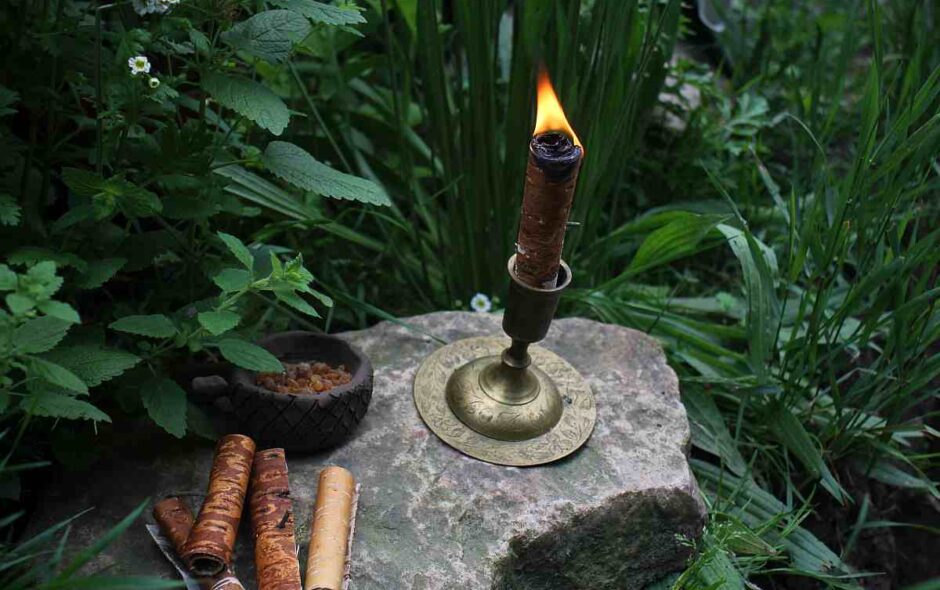
Heathen candles (Heidenkerzen) are made from birch bark and were widespread throughout ancient Europe. Where the name “heathen candles” truly comes from can only be guessed. I believe that these heathen candles later evolved into the candles that were carried into the church at specific times of the year to be blessed, just as it had been done with the birch candles in the old days.
At the end of the 19th century, in a certain region of Switzerland, people still carried such birch candles to the church on Holy Saturday for a sacred blessing. In the Alpine regions, even into the mid-20th century, they were used to light the sacred fires on the days of the solstices, and also to illuminate the Christmas tree. There, they are a deeply rooted cultural heritage. In some places, sacred need-fires (Notfeuer) were kindled with them.
In Italian Switzerland, according to an old essay by a historian, one could see plenty of birch trees from which strips of bark had been respectfully taken at that time. It is said that they were used to illuminate the deep caves as far back as the Stone Age.
Unfortunately, very little can be found about these specific candles to form a more precise picture, but I have uncovered a few fragments of this ancestral knowledge, and I would love to share them with you here.
A Light for Everyone: These candles were used in old customs as well as in the daily household. Back then, only the higher classes could afford real stone lamps, so the people made use of these magical birch candles.
The Magic of the Bark: Birch bark is known for peeling easily from the trunk and immediately rolling itself up. It can be lit when fresh or even when damp; the bark always ignites, and the birch produces the brightest of all fires. Even the wind cannot easily harm its flame.
Protective Fire: These remarkable properties of the birch bark impressed our very early ancestors so deeply that this birch fire was considered truly magical. For the birch and its brushwood have always belonged to the most powerful fire protection amulets.
🐺 Protection from the Wolf & Escort for the Dead
In Switzerland, three heathen candles were traditionally lit for the deceased. Two were placed at the head and one at the feet. Only when they had completely burned out was the deceased carried to their grave.
The Wodan Ban: In some of those regions, one had to light a heathen candle in the old days and recite this phrase three times: “Wodi, Wodi, wehr dem Wörgwolf!” (Wodan, Wodan, ward off the Fenris wolf). Then the witches and the devil could no longer cause any harm. In the ancient Germanic belief, witches were said to ride on wolves.
🔥 Solstice Fires & Paths of Love
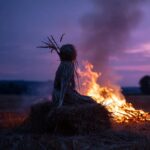
On the days of the Summer and Winter Solstice, the sacred wood was kindled with them. This deep custom shows just how important and magical the heathen candles were to the people.
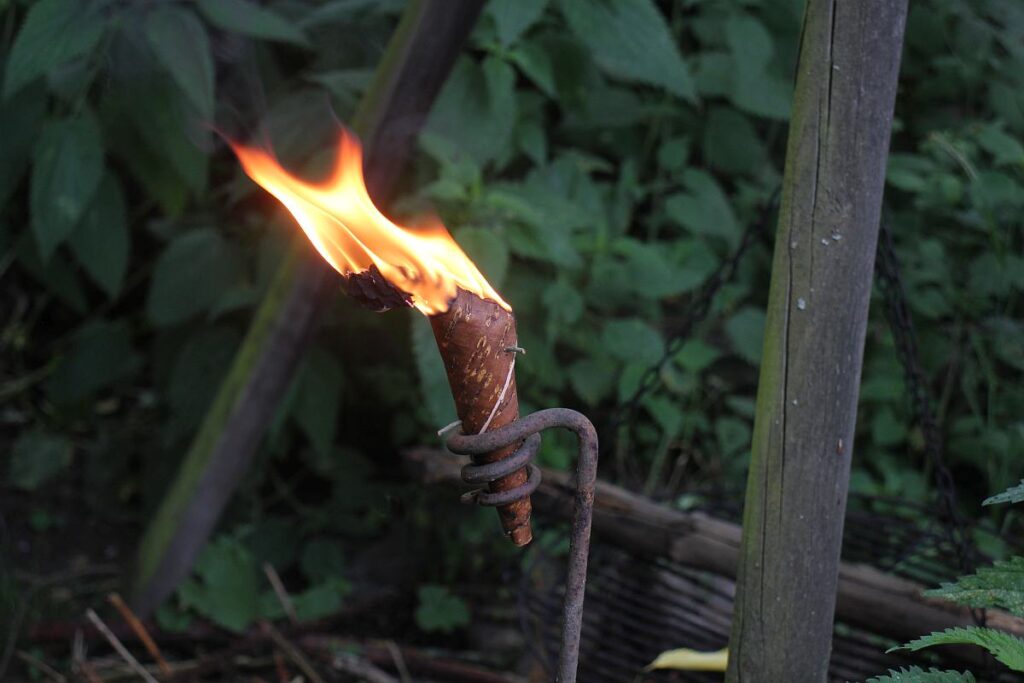
Shepherds’ Torches: In Austria, it was a profound tradition on St. John’s Day (Johannistag) for shepherds to light torches made of birch bark. They walked through the stables with them and afterward burned these torches during traditional shepherd games.
Through the Rain & Wild: Larger heathen candles, acting as a kind of torch, were used in the old days to scare away wild animals. They were also used when working in the rain, especially deep in the forest, because the weather cannot harm their resilient flame.
The Path to the Beloved: Around 1820, young boys carried these bright torches through the dark nights to visit their girls high up in the Alps.
🌌 Light in the Darkness: From Finland to Spain
Guiding Lights: In Finland, these torches were attached to the outside of the house to illuminate the dark surroundings. In remote valleys of Spain, birch candles were still seen in use well into the 20th century. They were gathered and tied into bundles to always have them close at hand.
Dipped in Tallow: Some farmers near Odolanów (Poland) used these rolls of birch bark as a vital light source. For this purpose, they were carefully dipped in tallow or linseed oil.
The Light of the Mill: They were especially used during the winter months when grinding grain with hand mills. These hand mills were kept in small chambers that received very little daylight. The grain had to be thrown by hand into a specific hole in the millstone, and to see this in the dark, the magical birch candles burned brightly in these rooms.
🔮 Oracles & The Blessing of Children: The Magic of the Flame
The flame of the birch candle was traditionally used as an oracle, and only the truly knowledgeable could question and interpret it. In some places, these candles were deeply healing for the inhabitants of the house.
In the then-reformed Wartau in Switzerland (my 7x great-grandfather Hans Heinrich Adank, born in 1668, comes from there), the power of the burning birch candle against childlessness was well known. It is comparable to the Catholic faith’s tradition of lighting a consecrated candle before an image of grace in Einsiedeln (Switzerland) to pray for the blessing of children.
🌿 The Craft of the Ancestors: Making Your Own Heathen Candles
I have tried crafting such candles myself. They burned for quite a long time, and you can wonderfully burn sacred resins with them.
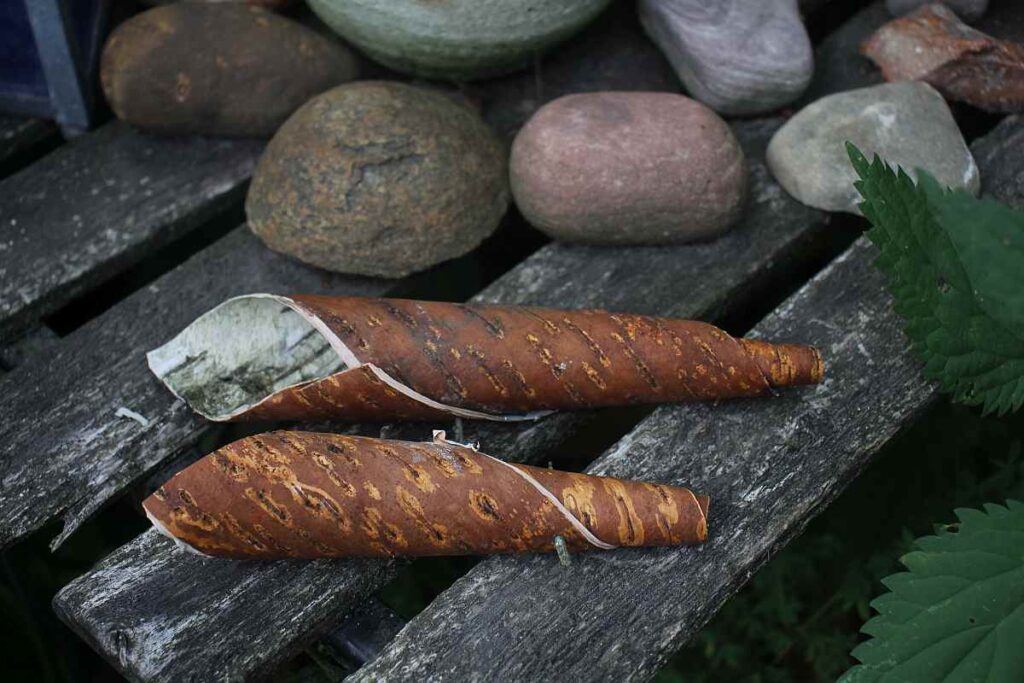
Preparation: To craft your own heathen candle, you will need three strips of birch bark. How wide the strips should be depends entirely on how large you want your candle to be. Generally, they were about 8 to 10 cm long.
The Ancestral Methods: There are several old methods for rolling them:
Switzerland: In Switzerland, these three strips were rolled into a cone, and then these cones were fitted tightly together.
Northern Germany: In Northern Germany, they were mostly rolled to the thickness of a finger, shaped like a cigar.
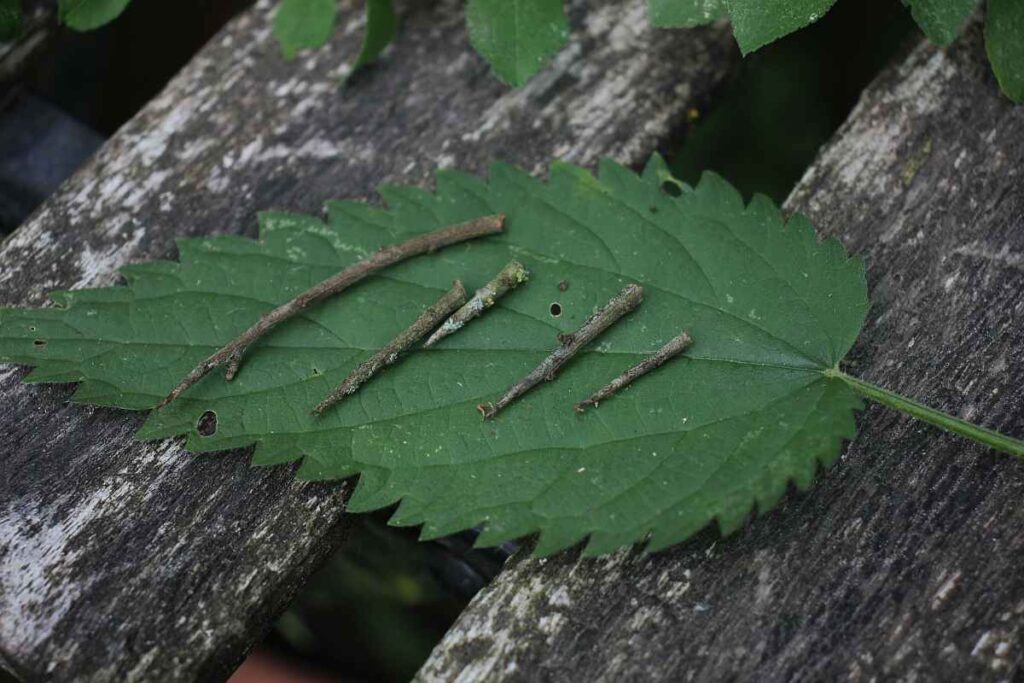
Fastening: However, they were all fastened by piercing them with thorns from the blackthorn to firmly hold the individual pieces together. And when you wish to extinguish them, they were simply pushed into sand or earth. This way, you can easily rekindle your magical birch candle the very next time.
📜 A Historical Account: The Art of Peeling
An old historian recounted observing a woman climbing a birch tree and, using her knife, carefully loosening only the outermost white layer of bark for about 20 cm.
Rolling: She then rolled this peeled square piece of bark on her knee, starting at one corner—specifically in such a way that the white layer of the bark faced inward and the detached brown inner side faced outward.
Pinning: Finally, a short piece of twig equipped with small barbs was pushed straight through this candle with her knife to beautiful prevent it from unrolling.
Drying: After three days of drying, it is said to be perfectly ready for use.
🌿 The Magic of Thorns & Resin
The blackthorn (sloe) has always been known in ancient customs to ward off dark magic. Its very long and, above all, sharp thorns beautifully symbolized this fierce defense. Today, we would speak of “warding off all evil.”
Sacred Resins: Sometimes, small pieces of resin were placed inside the candle so that it would burn longer and produce a pleasant scent. I personally believe, however, that this resin held a profound warding function within these old beliefs.
The Torch: If you wish to use them like a torch, they must naturally be rolled up with larger strips and fitted deeply into one another.
🕯️ A Light of Safety & Warmth
It is always so fascinating to see how our great-grandparents lived. Especially since such objects were not merely regional, but widespread throughout all of Europe.
The Hearth Fire: Thus, we can be certain that they too lit these heathen candles—whether for deep protection or simply to kindle the hearth fire—this beautiful light gave them safety and warmth.
Fading Traditions: One must always note that customs and everyday objects, which slowly faded into oblivion in the old days, often lived on as children’s toys or precisely as sacred cult objects, such as the blessing of the candle. Today, unfortunately, we have almost none of this ancestral magic left in our daily lives.
Foraging Tip: If you wish to gather birch bark, look for freshly fallen trees. This happens quite frequently with the birch. Please do not harm any living trees.