🔥 The Need-Fire: Wild Fire, Plague Bane & Ancient Rituals
The Wild Fire: An Ancient Custom of Cleansing
While researching and reading for the article on birch candles, I came across the profound custom of the need-fire (Notfeuer). The need-fire is incredibly old and was formerly kindled in every village throughout Germany whenever there were plagues among animals or humans, or when these were on the verge of breaking out.
For our forebears, the fire held a deeply cleansing power. I would like to delve deeper into this in this article, because according to old historians, this need-fire was widely practiced until the end of the 20th century, especially regarding the Alpine regions. In these areas, Ancestral Knowledge and beautiful customs remained vibrantly alive for a very long time anyway.
The Germanic Cult: The need-fire was a profound fire cult in Germanic tradition, which was kindled with special rites whenever a plague had broken out among humans or animals. The need-fire was already mentioned as Niedfyr or Nodfyr in the 8th century.
The Christian Transformation: Because these sacred fires mostly burned in the summer, and the church had forbidden them in the year 742, the custom was shifted to St. John’s Day in many regions. From this arose the St. John’s fires (Johannisfeuer), which brightly burn on the 24th of June.
A Call in Need: This need-fire, which echoed through all Germanic tribes (and also in England, Scotland, Sweden)—later connected to the St. John’s fire in Christianity and certainly referring to the sun cult, as the wheel already indicates—got its name from the fact that it was a profound help in times of need.
The Wild Fire: It is also affectionately called the wild fire, in direct contrast to the ordinary, domestic hearth fire. But other magical fires were also created purely by friction, and only more rarely by striking metal or stone.
🪵 Friction Instead of Spark: How a Need-Fire Was Kindled
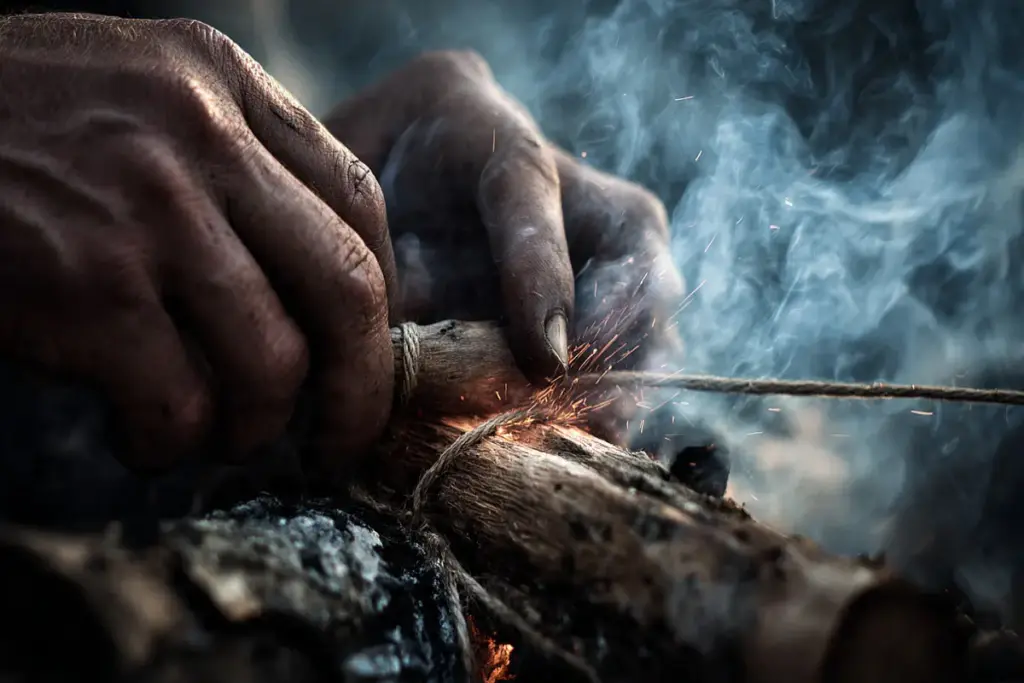
In the Old Belief of our forebears, humanity is the direct descendant of the ash tree. The ash provided the wood for the necessary fire drill for the need-fire, which was strictly forbidden by the church as ignis fricatus de ligno (fire rubbed from wood) and contrasted with the church’s approved ignis de lapide excussus (fire struck from stone).
The Church’s Ban: A synod held in the year 742 under the chairmanship of Boniface, as Archbishop of Mainz, in which the bishops of Cologne, Würzburg, Eichstätt, and Strasbourg participated, commanded the bishops and counts to carefully prevent all heathen customs (paganias). It was stated that death offerings and animal sacrifices had been presented to the saints according to heathen rites.
The Cult Fire: This need-fire, created after the domestic hearth fire (which was preserved under the wood ashes of the elder) had been entirely extinguished, was formerly produced as a cult fire by boys through the mere rubbing of woods. Every house contributed wood for this need-fire so that the flax would grow well, to forcefully drive away diseases, and for the deep cleansing of the air.
The Blessing for the Home: Every household also carried a small piece of this sacred fire back home with them to kindle their own hearth anew.

🔥 Of Solstice Fires & The Waning Wood
These Easter, St. John’s, or Solstice fires are beautifully preserved customs of this very ancient cult.
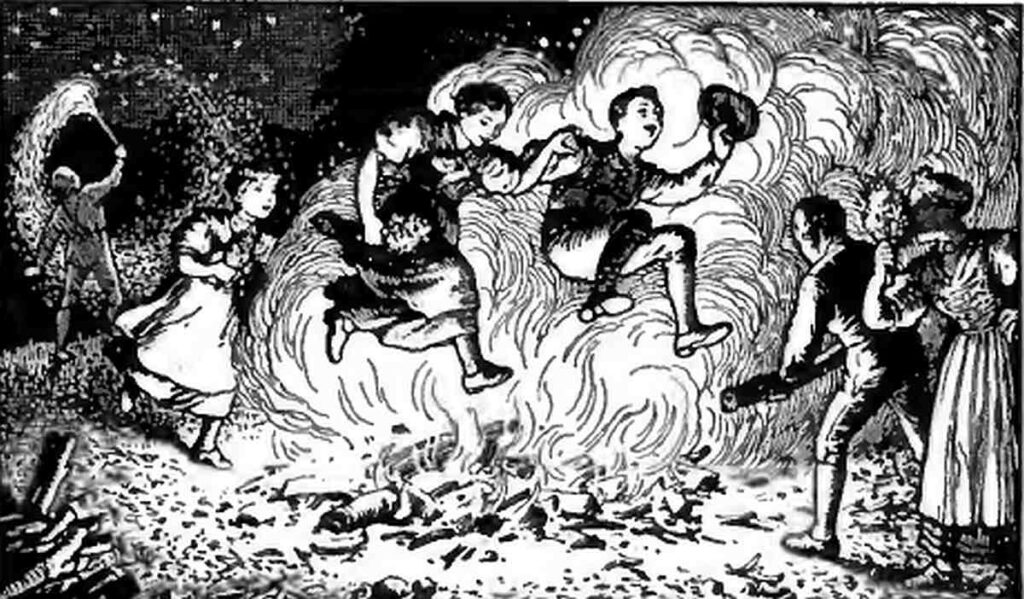
The Leap of Health: As we already know from these fires, people back then leaped over the flames to attain deep health and luck. Whoever leaped unburned through the Solstice fire remained spared from illnesses.
The Community’s Fire: For the Solstice fire, every house in the village had to give its share of firewood, which the young boys respectfully gathered. They danced in a circle around this fire and occasionally leaped over it; it shielded them from misfortune for the entire year.
The Magic of the Ash: The ash wood was the so-called waning wood (Schwindholz). According to Ancestral Knowledge, it could only be broken naked, strictly with wood and never with iron, without ever touching the earth, and only in the mid-air. The ash was also known as wound wood (Wundholz), and from its branches, the Walpurgis Maypole (Walpernmai) was cut, which was peeled, decorated, and placed in front of the girls’ windows, or used to beautifully adorn the houses.
🌿 Ninefold Wood & Sacred Ashes
The Celtic peoples burned their need-fires—which Charlemagne had already attempted to suppress—likely at the beginning of May and at the beginning of November. Need-fire meant any fire created purely by the friction of two pieces of wood.
The Law of Silence: At the very time it was kindled, absolutely no other fire was allowed to burn anywhere in the house.
Ninefold Wood: In Sweden, ninefold wood (Neunerlei Holz) was used for this, and the fruit and nut trees were deeply smoke-cleansed with it so that they would become more bountiful.
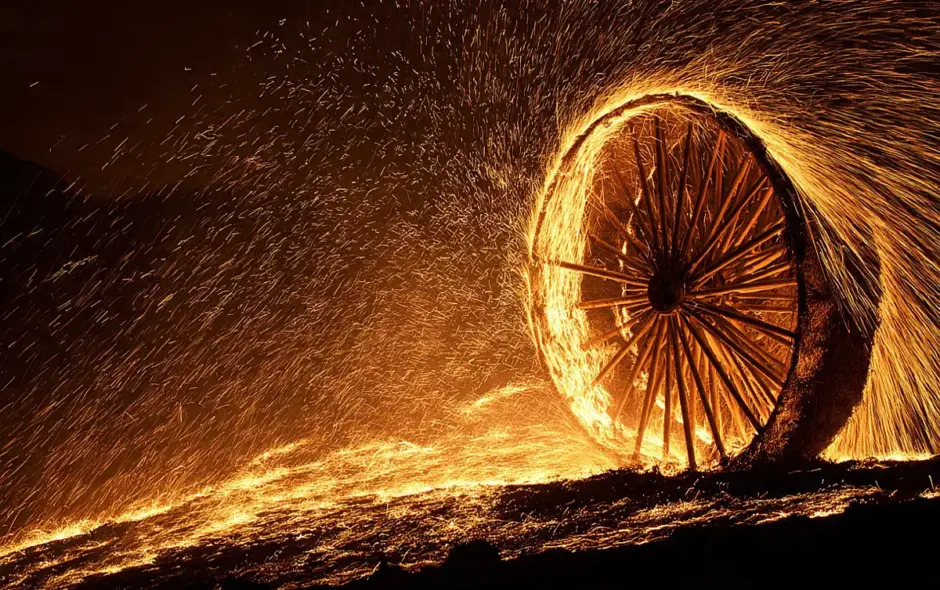
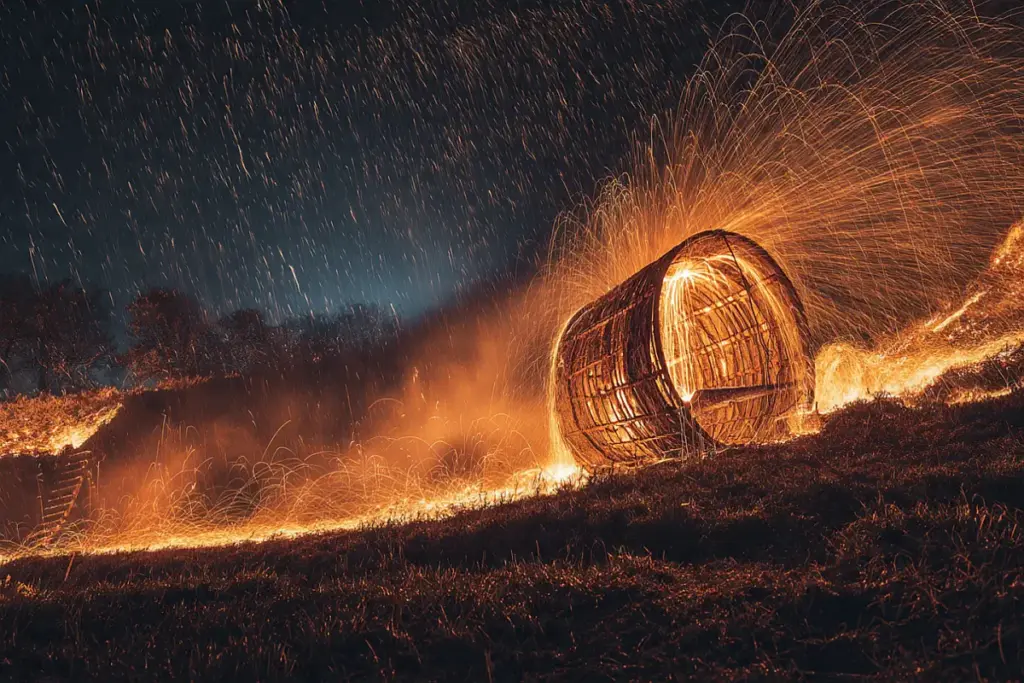
The Wooden Wheel: In the former region of Hesse, such sacred fire was obtained by the turning of an as-yet unused wooden wheel on an axle.
✨ Cleansing of Animal & Field
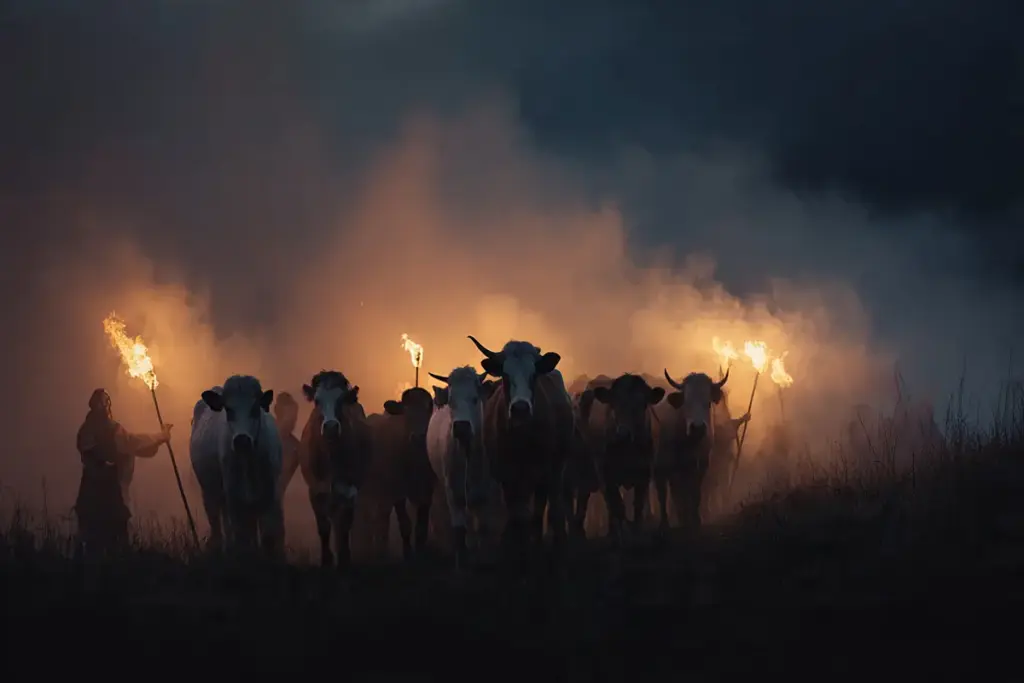
Warding off the Plague: Once the need-fire was kindled, all animals were driven through the fire to powerfully ward off plagues and illness.
The Threefold Leap: Sometimes three fires were made, or, as is well known, people leaped three times over these flames themselves to remain deeply healthy.
The Blessing of the Ashes: The ashes were respectfully scattered into the gardens and over the fields to make them more fertile and to shield them from caterpillars and insects.
Sacred Counterparts: Historians believed that the need-fires were the elemental counterpart to the holy water wells. As heathen Ancestral Knowledge, this beautiful custom was strictly forbidden by the church. Yet, it found its sacred meaning beautifully preserved within the Christian Easter and St. John’s fires.
🔥 The Cleansing Flame: Plague Bane & Walpurgis
The fire contained a profound magical power, which is why it powerfully banished witches and dark magic on Walpurgis Night. Old historians even count the later pyres among these ancient need-fires.
The Cholera Fires of Marseille: In Marseille (France), many people sadly passed away from cholera in September 1865. As a result, huge fires were kindled, burning brightly in the streets and alleys. Every street had at least three, one even 57 fires. In front of the church, the fire brigade of that time erected a massive pile of wood. Young girls and boys danced around these fires, just as they did in Toulon.
The Effigy: In several places, a doll with a black face was burned; it was deeply believed that this was an image of the cholera itself. This is how the newspapers reported it back then.
✨ Coals & Sparks: Healing in the Old Belief
Burning lights provided fierce protection against dark magic, and glowing coals played a massive role in Ancestral Knowledge.
In the Harz Mountains: In the Harz region, sick chickens, ducks, or geese were swung back and forth over a coal fire in a sieve.
Lightning Coals: Coals from a fire ignited directly by a lightning strike were considered especially magical and potent.
Erysipelas (Wundrose): Fire sparks, struck with metal and stone directly onto the affected body part, drove away the erysipelas in the region of Brandenburg.
Healing Ashes: Ashes from the Easter fires were highly healing for stable diseases in the Altmark and during sowing in Bavaria; the ashes of the need-fire from the Twelve Nights (Zwölfnächte / Smoke Nights) possessed an incredibly great magical power.
The Law of the Extinguished Hearth: If the stable animals were gripped by a disease, the domestic hearth fire was completely extinguished in absolutely all houses in the affected villages, and a new one was kindled purely by rubbing two woods together. If this sacred procedure did not help, the people were deeply convinced that someone in the village had failed to extinguish their hearth fire, which then often led to fierce and bitter disputes.
🌿 Gods, Demons & Straw Men: The Figures in the Fire
The flame exerted a profound influence on the growth and health of the plants, the animals, and the human children; it actively did this through an inherent, procreative power.
In all of this, we see a beautiful parallel to humans, animals, and plants, which we also observe with the Maypole. The sacred sunlight is transferred to a higher being:
The Easter fires to the Goddess Ostara,
the Spring fires to the God Donar,
and finally, the Need-fires and St. John’s fires to the heathen God Freyr.
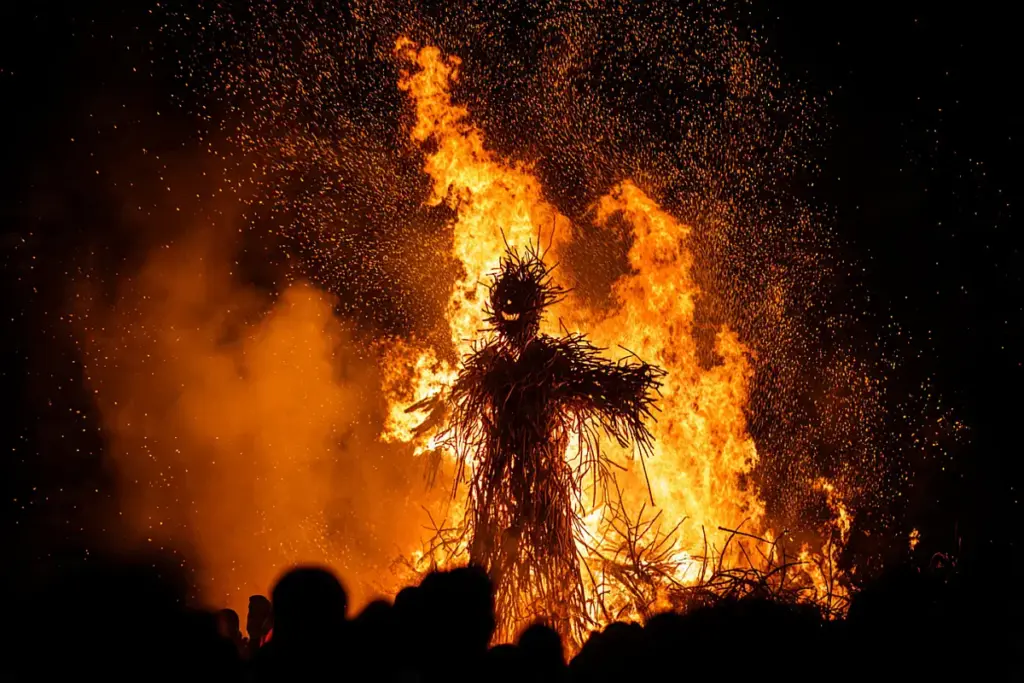
The Offering in the Fire: In each of the discussed fires, a human figure is sometimes still burned, evidently according to ancient lore. The Judas of the Easter fires must also be seen as a Christian counterpart to the heathenism that was to be banished. The burning is to be understood as sheer destruction, and therefore the burned figure points to an entity hostile to humans, animals, and plants (Death, Winter, Witch, Plague, Cholera, etc.).
Spirits of Nature: Yet, as it seems, individual traces still point to the older conception: the burning of the pea-bear (Erbsenbär), who is a deep vegetation demon, as well as the figure of the angel-man (Engelmann), crafted from unthreshed grain and completely enveloped in flowers—thus representing a summery being—or the straw man securely fastened to the tree.
🌲 The Forest Man in Austria & Ancient Processions
The Boy in Green: In Wolfegg (Austria), on Solstice day, an approximately twelve-year-old boy, completely wrapped in green fir branches, went from house to house accompanied by a large, noisy crowd and collected the logs for the fire with the words:
“Forest trees I desire, Drink sour milk by the fire, Beer and wine so fine, So the forest man can be merry and shine.”
The Spruce Spirit: In Bavaria, before kindling the need-fire, the wood gatherers led one of their friends, muffled from head to toe in spruce branches, on a rope through the entire village.
Trampling the Flames: In Moosheim (Baden-Württemberg), on the second Sunday after St. John’s, the sacred blessing fire was actively extinguished by a boy coming from the forest, enveloped in leaves and brushwood, by trampling it out with his feet. This trampling out of the fire is a clear remnant of the former walking through or over the glowing coals.
🌍 Regional Customs: Kindling the Need-Fire
Mecklenburg’s Stubborn Lamp: According to a report from Mecklenburg, the need-fire was to be kindled by order of the village headman (Dorfschulze); but they rubbed for two full hours in vain because an old woman, defying the headman’s order and the pleading requests of the peasantry, absolutely refused to extinguish her night lamp. Only when she finally consented did the heightened courage of the farmers bring forth the fire; yet, it did not help anyway.
The Alpine Regions:
Switzerland: In Switzerland, straw fires were kindled directly beneath the bellies of sick animals to heal them.
Tyrol: In Tyrol, ignited bundles of brushwood or straw were rolled over the seed fields to powerfully awaken the grain; the exact same thing happens in Oldenburg with the Easter fire.
Bavaria: The wheat seeds are allowed to run straight through the straw fire, so the wheat does not become blighted (brandig).
Hollow Ways & Tinder Fungus: In Papenrode (Lower Saxony), a profound need-fire was kindled in 1850. Two brothers set two pieces of wood ablaze, caught the fire with tinder fungus (Zunderschwamm), and carried it to a hollow way (a deeply worn-out path) that was closely bordered by hedges. Through this, the sick pigs were fiercely driven.
Ancestral Cult in Brittany: In Brittany, the dead gathered with wailing at the Thingstead; therefore, the hearth fire was never allowed to go out at night; a meal was carefully set out so that the spirits could warm themselves and feast. Such deep care for the haunting of souls was also found before the beginning of a new year.
Embers from the Graveyard: On Good Friday in Vienna (Austria), the animals were driven over the glowing embers of grave-woods brought directly from the cemetery, so that they would remain healthy. The fire was not lit with a match, but purely with tinder, flint, and metal. This custom was a vibrant memory of the ancient need-fire.
The Last Fire in Xanten: In Xanten (North Rhine-Westphalia), the last need-fire was kindled in the middle of the 10th century. Here, a piece of dry wood was rubbed with a blunt iron until fire finally sparked. Then, straw was brought by every owner, and the herdsman walked with the pigs straight through the fire. Everyone took a portion of the sacred ashes with them and mixed it into the pigs’ feed.
🛞 Pushing the Wheel: Rituals Against the Plague
In many places between the Rhine, Mosel, Nahe, and Saar, the need-fires and also the pushing of the wheel (Räderschieben) were in deep use to fiercely protect the cattle against plagues.
The Primal Friction: These need-fires, which actually have nothing to do with our modern word “need” (Not – emergency), were pure friction fires. They were kindled in the most ancient, primal way by forcefully rubbing soft and hard wood together.
The Extinguished Hearth: Following the Ancestral Knowledge, people then customarily extinguished all other domestic hearth fires and drove the stable animals straight through the sacred need-fires.
A Historical Report from Rhineland-Palatinate: When visitors came to Winterburg, the local pastor reported that in the communities of Gebroth and Allenfeld, wooden wheels had been pushed and need-fires had been actively kindled. The pastor of Gebroth shared the following about this profound custom:
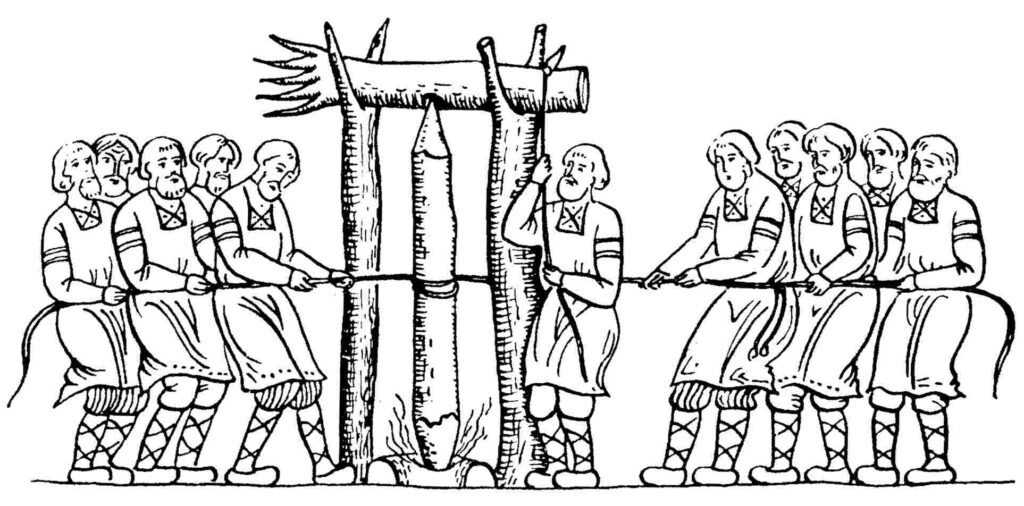
The Oak and the Wheel: The people had kindled the need-fires in broad daylight. They did so in such a way that they dug a wheel deep into the earth, then pulled a heavy beam of solid oak wood over it, and rubbed the wheel and the beam together for a long time—about two hours—until fire finally emerged. To call forth the sacred fire more quickly, sulfur and paper had been placed directly into the hub.
The Three Children: When the wood burned brightly, they took exactly three children and had them, wielding swords, drive the entire animal herd of the community right through the fire in the name of the Father, the Son, and the Holy Ghost.
The Hidden Women: According to this specific rite, the women were strictly not allowed to watch, which is why they were securely locked away during the entire profound procedure; otherwise, the absolute whole community had been present.
🐕 The Black Dog & The Magic Potion
The city protocols from the year 1623 recount an animal plague in Saarbrücken and the attempted profound healing thereof. A shepherd, summoned from Saarwerden, demanded wine to aggressively stamp out the plague and boiled a massive amount of ingredients within it:
Salt, Mace (Muskatblüte), Pepper, Ginger
Gentian (Enzian), Mary Magdalene Flowers, Calamus
Hellebore (Nieswurz), Carline Thistle (Eberwurz), Bay Leaf
Alum, Theriac, and Nutmeg
He then diluted this with water and prescribed the potent mixture as a potion for the grazing animals. The animals were also ordered to be bled. Yet, the plague fiercely continued, and the shepherd ultimately believed all animals must die.
The Dark Omen: Thereupon the stranger said that as long as the black dog ran about, there would be absolutely no luck. What this black dog was all about cannot be easily explained. It is highly fascinating that a dark legend of a ghostly black dog has persisted in Saarbrücken, for which there would be a solid record here from older times. According to this legend, a ghostly black poodle, dragging a heavy chain behind it, haunted the Etzel at night—a dark spirit that a Capuchin monk is once said to have banished.
🔨 Glowing Nails & Sun Wheels
Thuringia: In northern Thuringia, need-fires were still burned for swine plagues in the 1840s. The master wheelwright Krug from Gudersleben recounted that in his youth there, during an outbreak of the erysipelas plague (Rotlaufseuche), dry fir wood had been piled high in a hollow way and burned down. The still-healthy pigs in the entire community were then driven straight through the sacred smoke to fiercely protect them from the plague.
The Cold Iron: But particular care was taken that the need-fire was not created by a domestic hearth fire, but purely by wild fire. For this sacred purpose, a completely cold horseshoe nail had been struck and hammered in the forge until it was warm and finally glowing red-hot. A wisp of straw was then kindled with this glowing nail and carefully pushed under the fir wood.
Masuria (Poland): In Masuria, on St. John’s Eve, all fires were completely extinguished. An oak stake was rammed deep into the earth, a wheel was placed directly upon it, and turned until it finally ignited. Every person respectfully took a brand and kindled their hearth fire anew at home with it.
A Swiss Tale: From a profound tale of an old farmer from Lucerne, it has been recorded how the need-fire was actively practiced in his youth.
The Sacred Flames: In the doorpost of a house situated in a narrow valley, a fire was kindled on St. John’s Eve or on another day of the Solstice purely by turning an inserted stick. With this, a long, double row of piles made from bean straw, flax, and torn baskets, lying on both sides of the narrow valley lane, was set fiercely ablaze.
The Blessing of the Fields: Firebrands were carried to the brook in baskets and on heavy boards, and all the farm animals were driven directly between the two fires. Boys and girls joyfully leaped together through the flames. The boys lit pine torches (Kienholzfackeln) from the newly won flame created by friction and ran in a long line out onto the fields to thoroughly smoke-cleanse them. By doing this, they actively banished field ghosts and witches that were harmful to the crops and grazing animals.
☀️ The Wheel of the Sun: Conclusion & Meaning
All of this can be claimed as a profound heathen foundation for our Shrovetide fires, Easter fires, and St. John’s fires.
The Essence of the Need-Fire:
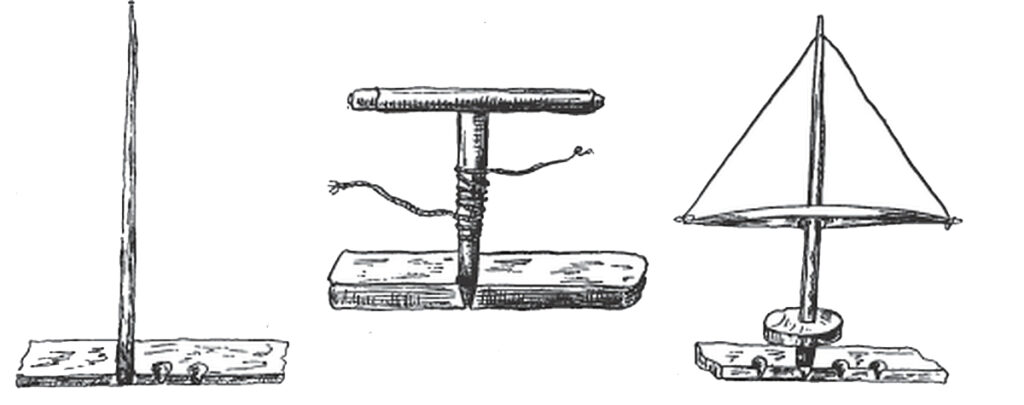
The Ancient Preparation: The need-fire was a sacred fire created after the complete extinguishing of all other fires in the village. It followed the most ancient way of fire preparation—purely by the friction of two woods, the turning of a stick in a round disc, or the hub of a wheel.
The Cleansing Path: Through this wild fire, the stable animals were driven during times of plague, and the people even courageously walked through it themselves to seek healing and protection.
The Image of the Sun: Even Grimm interpreted the wheel as a powerful image of the sun, from which light, fire, and deep health beautifully emanate. Wheels or wooden discs were rolled or turned as a physical representation of the sun.
Friction & The Solstice: In Obermedlingen in Bavaria, the Solstice fire was likewise kindled by pure friction, by turning a wheel around a heavy stake. This specific procedure of disc driving (Scheibentreiben) is likely an abbreviated remnant of an older cult of fire preparation, which simply consisted of the drilling rotation of a stick within a wooden disc.
A Widespread Custom: This beautiful Ancestral Knowledge also existed in Lithuania, Serbia, England, and Russia. In Sweden, fishing nets were deeply smoke-cleansed with it to ensure a bountiful catch.
🌿 Preserving the Ancestral Knowledge
I find that it was once again a very fascinating topic, about which one hardly reads or hears anything anymore. Such deep customs are unfortunately in complete decline, and not even our grandparents speak of them anymore. Therefore, it was incredibly important to me to delve a little into this topic and carefully preserve it here in the virtual realm.
I hope you enjoyed this article, even if it turned out to be incredibly long. I really had to restrain myself, because otherwise, there would have been even more text! I would deeply wish that you pass it on among your family, acquaintances, and friends, so that this profound Old Belief does not fall completely into oblivion.