Plague Vinegar: Historical Four Thieves Recipe & Vinegar Smoke
🌿 The Legend of the Four Thieves: The Plague Vinegar
This plague vinegar has many names:
Plague vinegar (Pestessig)
4-Thieves Vinegar (4-Räuber-Essig)
Spice vinegar (Gewürzessig)
Poison vinegar (Giftessig)
Robber’s vinegar (Räuberessig)
Scoundrel’s vinegar (Spitzbubenessig)
Thieves’ vinegar (Diebesessig), and many more.
In French, this vinegar is also called Vinaigre des quatre voleurs, and in English, The Four Thieves Vinegar.
The Legend: In France, where the plague reigned at that time, four thieves were roaming about. They robbed the plague dead without ever getting infected themselves. One day they were caught, and they were promised their release if they revealed the secret to the court of why they did not fall ill. Thus, they gave the judges the exact recipe of the Four Thieves Vinegar.
The Pomander’s Successor: The plague vinegar was actually nothing other than a fragrance blend and effectively replaced the popular pomanders (Bisamäpfel). Pomanders were a hard, beautifully fragrant mass pressed into specially shaped spheres. These spheres were worn on the belt or around the neck as a chain. They served medically and simultaneously as jewelry, but also as an intense perfume.
🛡️ The Power of the Thieves’ Vinegar
Especially in France, this vinegar was highly beloved, from where it later spread to large parts of Europe.
Ancestral Application: People rinsed their mouths with it, washed their hands and other body parts, and even drank a large sip when they had to go out into the rain or into damp environments.
The Healing Essence: The power of the plague vinegar consists of the essential oils that certain herbs possess. For they have antibacterial, disinfecting, anti-inflammatory, and immune-stimulating effects (for example, thyme).
Protection in Sickrooms: During times of the plague, the doctors held a cloth soaked in plague vinegar over their mouths to treat plague patients. In modern times, it was used to purify and clean sickrooms.

🥣 Historical Recipes: Crafting the Plague Vinegar
The plague vinegar was in high demand as a disinfecting and germ-killing remedy at that time. There are many recipes. I will write down the most beautiful and easiest recipes for you here.
1. The Tincture (for the cleaning water) You craft a tincture consisting of:
4 g each of fresh lavender, sage, thyme, rosemary, and rue (Weinraute).
Add 100 ml of 70% alcohol and let it steep for a good 4 weeks in a warm place; as a substitute, you can also use 40% alcohol.
It must be tightly sealed, because otherwise the essential oils will easily evaporate. Shake it a little bit frequently. This recipe is wonderfully suited to be mixed drop by drop into your cleaning water.
2. The Simple Vinegar (as a room spray)
Take 2 tablespoons each of lavender, rosemary, sage, and thyme.
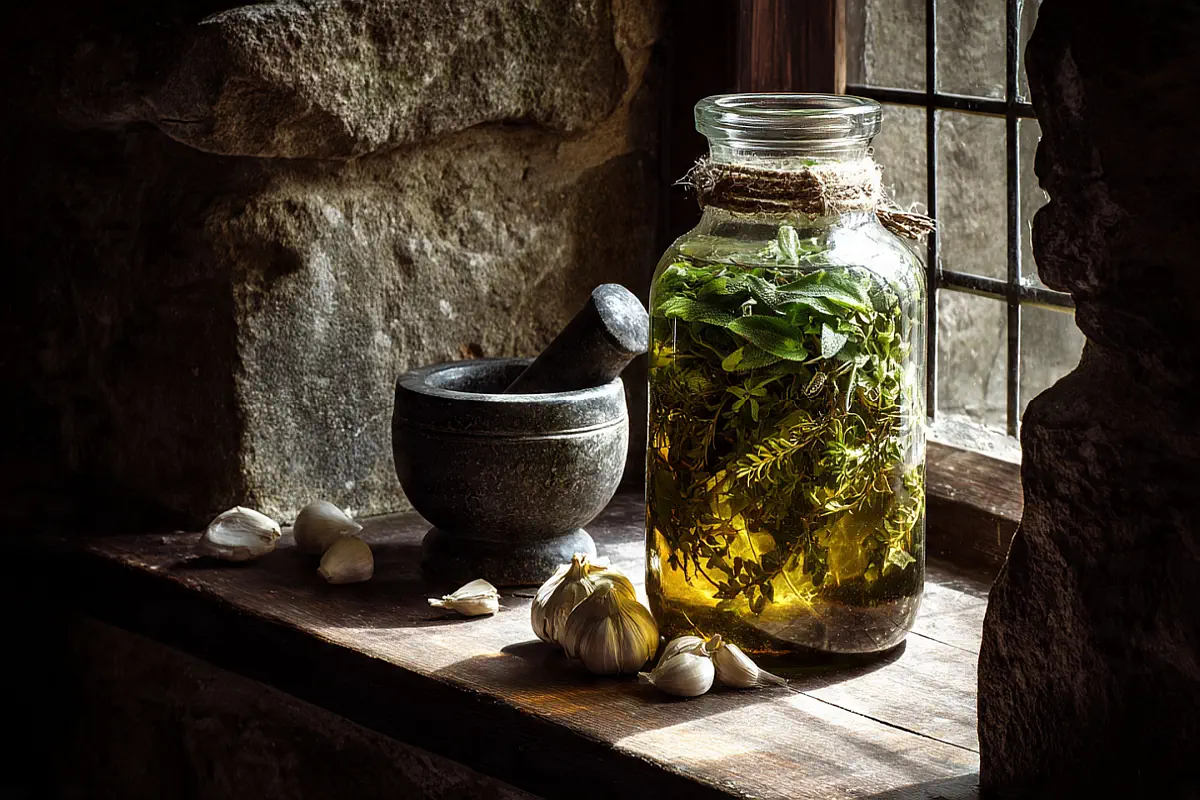
Then put them into a transparent glass jar and fill it up with a good 500 ml of white wine vinegar.
The mixture is left to stand warm for 3 weeks so that it can steep well. Afterward, filter it and store it in a dark place.
3. The Spicy One (more elaborate) For this, you need:
4 g each of wormwood, sage, mint, thyme, rosemary, and lavender.
Add 0.5 g each of garlic, cinnamon, and nutmeg, and 4 cloves.
Mix all of this well and pour 250 ml of white wine vinegar over it. Seal tightly and let it steep in a warm place for 3 weeks. Shake frequently. Filter it off and pour it into a clean bottle.
4. The Historical Recipe from the 19th Century For this traditional recipe, you take:
3 tablespoons each of wormwood, rosemary, sage, spearmint (Krauseminze), and rue. The herbs should be dried. Instead of spearmint, you can also take another strongly mentholated mint.
Then add 4 tablespoons of dried lavender blossoms and 1/2 tablespoon each of calamus root (Kalmuswurzel), garlic, cloves, and nutmeg.
All of this is filled into a large glass vessel and infused with 3 liters of white wine.
Now it should steep warm for 14 days; also gladly directly in the sun.
After the steeping time, dissolve approx. 1 tablespoon of camphor in 2 tablespoons of spirits (Weingeist) and add it to the mixture. Then filter, press out, and pour into other bottles.
With this recipe, rooms were sprinkled, the oral cavity was rinsed, it was taken as a smelling remedy, and it was also vaporized as a smoke-cleansing vinegar (Räucheressig).
🌿 A little tip from me: I always add this plague vinegar, no matter which variant, directly into my cleaning water. It smells very strong, and I absolutely love this extreme scent.
💨 Forgotten Knowledge: Smoke-Cleansing with Vinegar
In that time, it was extremely popular to vaporize and smoke-cleanse the house and sickrooms with sacred vinegars. Unfortunately, it has fallen completely into oblivion.
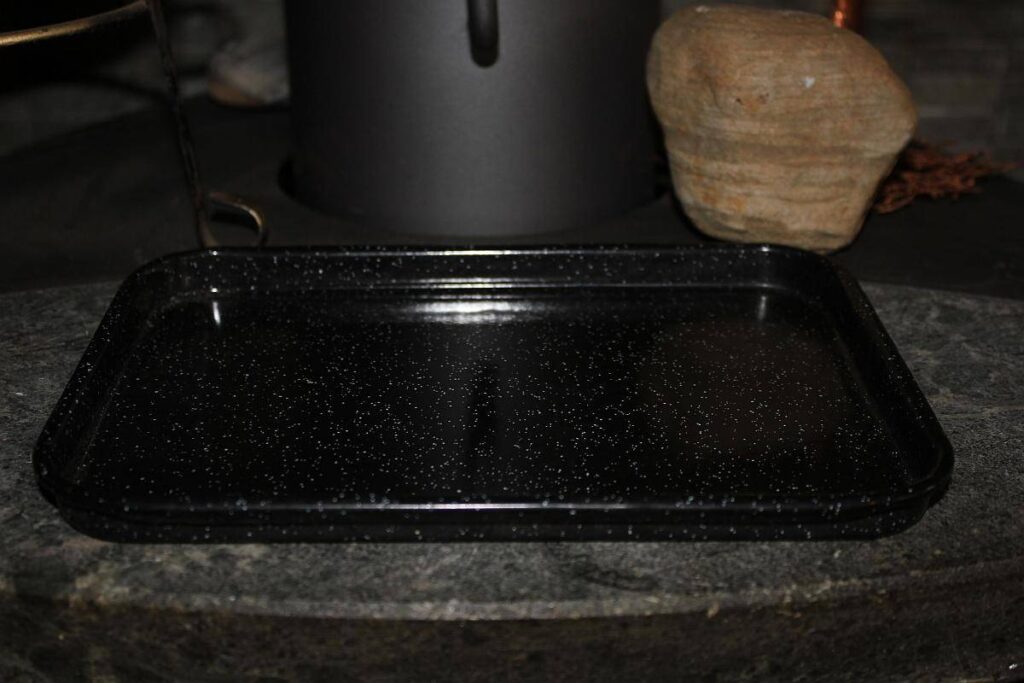
The Hot Stone: For the use of a smoke-cleansing vinegar, one needs a hot brick or a hot piece of iron, such as an iron pan. The smoking vinegar is placed onto this, strictly drop by drop. It produces a very intense scent.
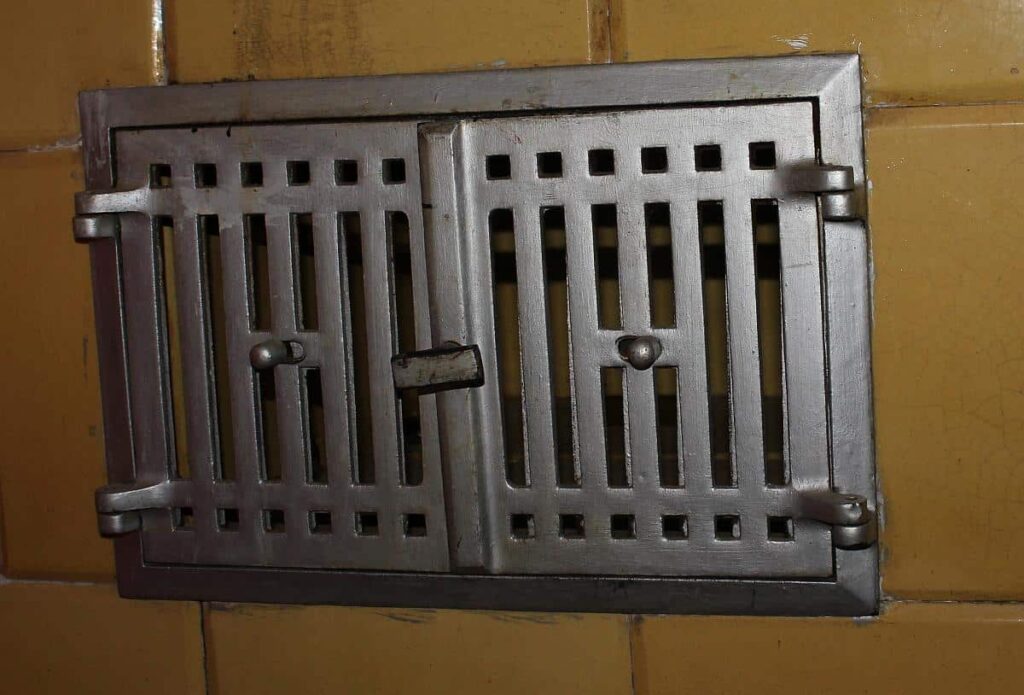
The Old Stoves: It is best if a tiled stove or wood stove is available, where one can place the hot object. Old tiled stoves sometimes have a compartment where objects and food were kept warm. The vinegar can be vaporized very beautifully in there.
⚠️ Caution: If you wish to smoke-cleanse with vinegar, I ask you to apply the vinegar strictly drop by drop, because otherwise a very strong, heavy smoke will emerge, which is certainly not healthy.

Katja
I am Katja. Rooted in the Old World—deep in the ancient landscapes of Mecklenburg—I gather the fading echoes of our European ancestors. My heart beats for wild plant spirits and the old ways. Through these pages, I carry the ancestral knowledge and the sacred nature magic of the past out into the world, so the ancient traditions may bloom once more.