🌿 The Birch Polypore: Ötzi’s Companion, Stone Age Magic & Healing Power
The birch polypore (Fomitopsis betulina) is a vital medicinal mushroom and holds many properties that are deeply soothing and beneficial for our body. Gathering mushrooms is always a passionate and profoundly sensual experience in nature.
🏔️ Ötzi’s Travel Pharmacy: A Mushroom from the Stone Age
The birch polypore is the true antibiotic of the Stone Age. Even Ötzi the Iceman wore a piece of birch polypore securely around his neck. Scientists deeply presume that Ötzi used this sacred mushroom as a travel pharmacy. It is a vital mushroom against stomach ailments and is actively used for this exact purpose to this very day.
Healing Wounds: Cut into delicate, thin slices, it serves as a blood-stopping and germ-reducing wound dressing.
A Bitter Bite: It is indeed edible when very young, but due to its fierce bitterness, it is not exactly a culinary delight.
✨ From Mushroom to Paper: Old Craft & Ancestral Knowledge
The birch polypore was used for far more than just the travel pharmacy:
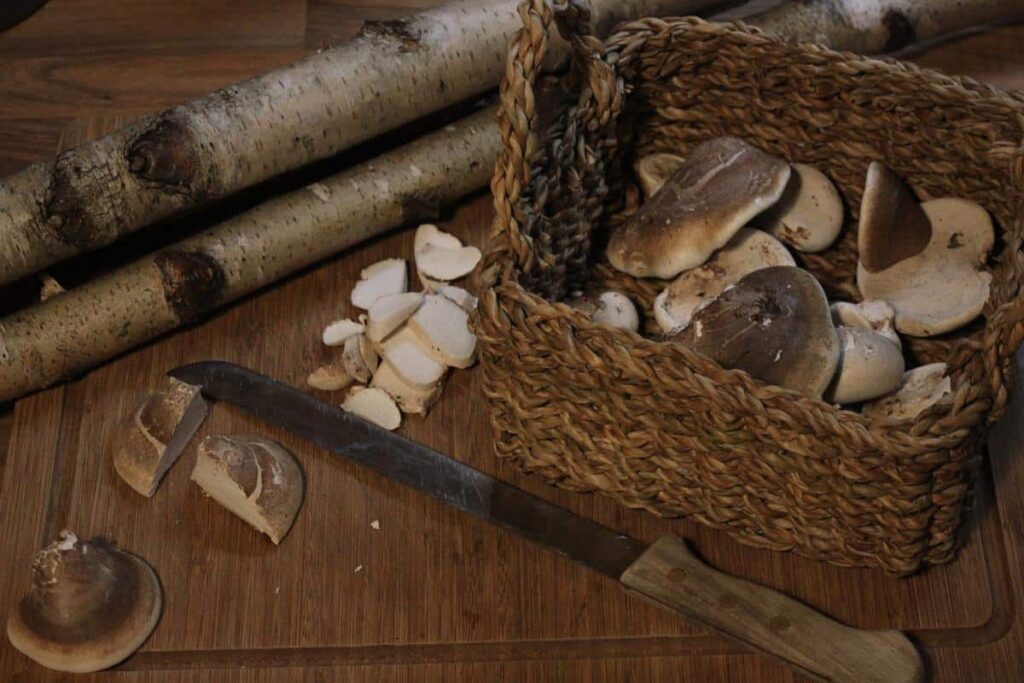
For Craftsmen: It was gladly used for the sheaths of knives, because it fiercely protects the blade against rust.
In the Household: With this wondrous mushroom, silver can be brought to a beautiful shine and knives can be sharply honed.
For Papermaking: In earlier times, the birch polypore was also creatively used for the making of paper.
To craft such a magical paper, you must proceed as follows:
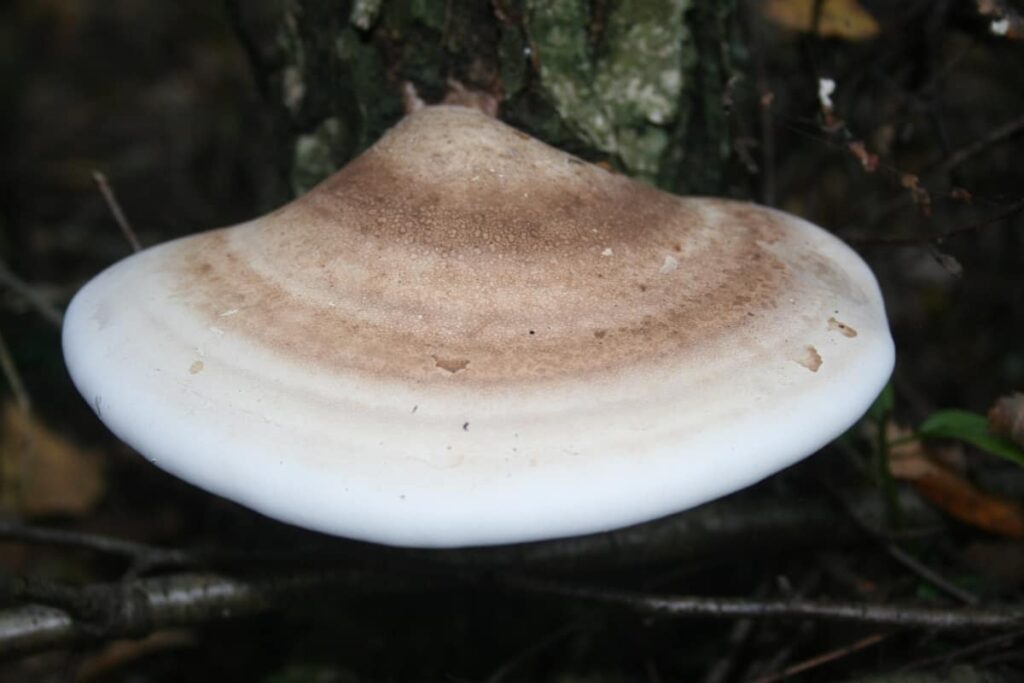
First, you must carefully peel off the brownish skin of the cap.
Cut the “naked” fruiting body into very small, delicate pieces.
Then you gently boil the mushroom pieces in a little water and let everything steep thoroughly for six full hours.
Puree everything well; it must become a real, thick mush.
Then you need a mold and deckle (Schöpfrahmen) and proceed exactly as you would with traditional handmade papermaking.
🌳 Finding the Tree-Mushroom in the Forest
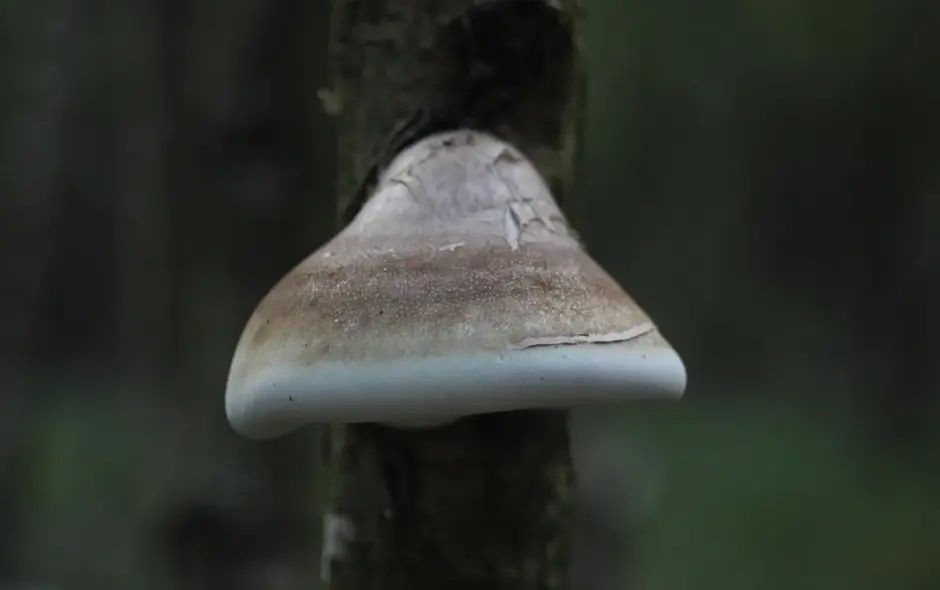
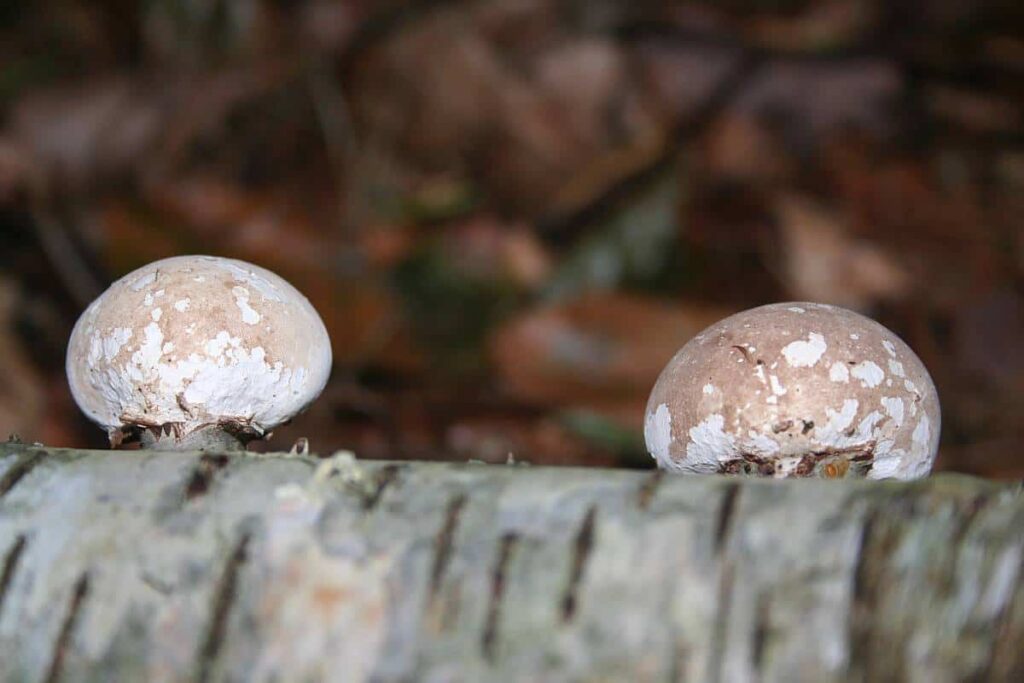
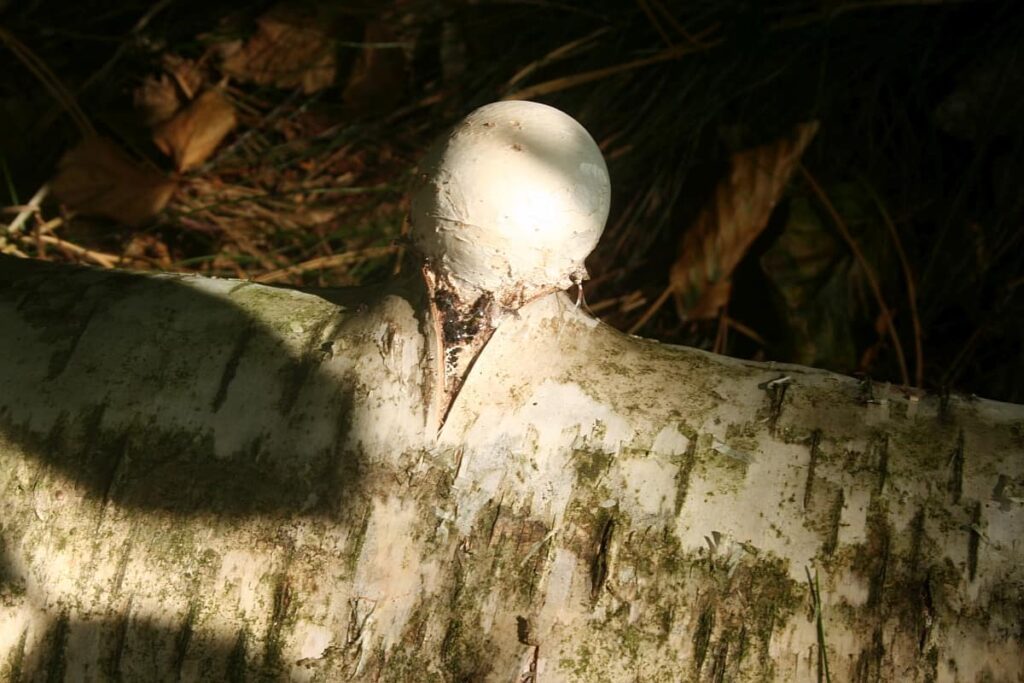
The birch polypore exclusively grows on birches. Mostly, the afflicted birches are already dead or standing right on the brink of dying. It lives actively as a parasite on the trunks of these trees, where it produces the brown rot.
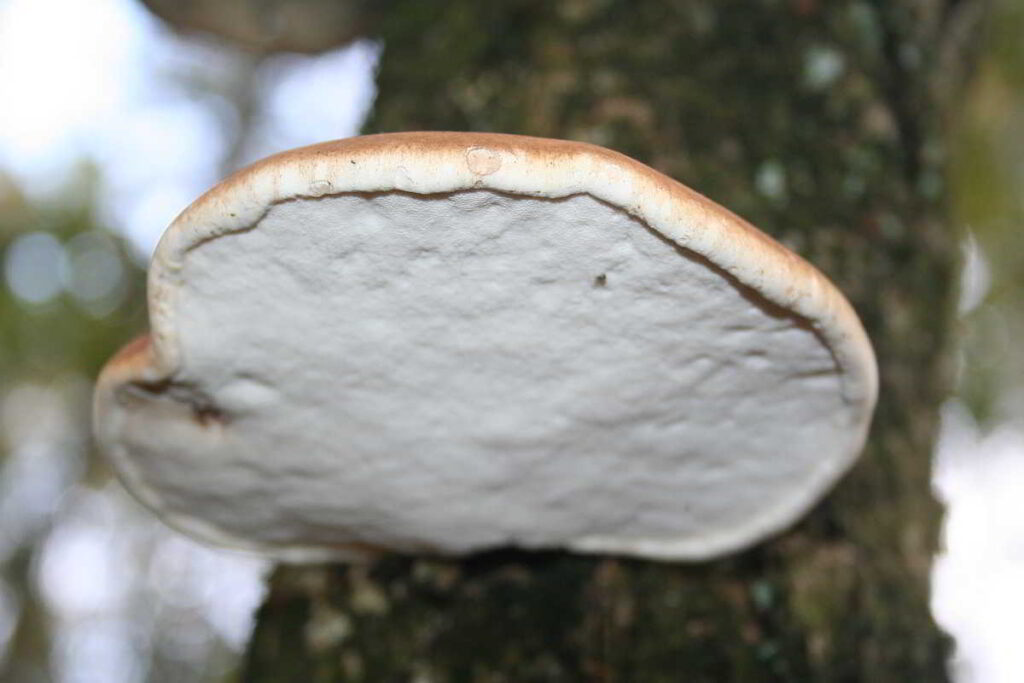
Appearance & Size: This remarkable tree-mushroom can reach a size of up to 20 cm. Its beautiful colors vary from cream-white to ochre-brown. The skin of the cap is easily peelable.
Flesh & Stem: The flesh is white and wonderfully soft in its young years. In a later stage, it becomes brittle, corky, and quite tough. The birch polypore possesses absolutely no stem.
Spores & Look-Alikes: Its spore color is white to cream-white in its youth, later turning yellowish to gray. The birch polypore can sometimes be confused with young mushrooms of the tinder fungus (Zunderschwamm) and the pine polypore (Fichtenporling).
Nature’s Abundance: The birch polypore is not endangered and does not stand on any Red List.
✨ Preserving the Power: Gathering & Drying
When is the Birch Polypore Gathered?
The Time of Harvest: The birch polypore can be gathered throughout the entire year. However, the absolute best time is from September to December, because it develops fresh, new fruiting bodies then.
A Gentle Harvest: This magical mushroom can be very easily detached from the dead birch wood, because the birch polypore is relatively soft-fleshed and not incredibly hard like other tree mushrooms, which can sometimes only be removed from a dead tree with intense effort.
The Wood Dweller: These mushrooms exclusively grow on dead or dying birch trunks. The birch polypore does not grow from the forest floor, as we know it from other mushrooms, for example, the porcini (Steinpilz), bay bolete (Maronen), etc. Its mycelium rests deep within the dead birch trunks, and from there the fruiting bodies, the birch polypore, grow outward.
Respecting the Forest: This mushroom is an important wood decomposer in the forest and produces brown rot. When gathering, only the actually needed amount should be respectfully taken. One large or two small fruiting bodies are perfectly sufficient for one person. By law, up to 1 kg of mushrooms may be gathered per person.
How to Dry the Birch Polypore
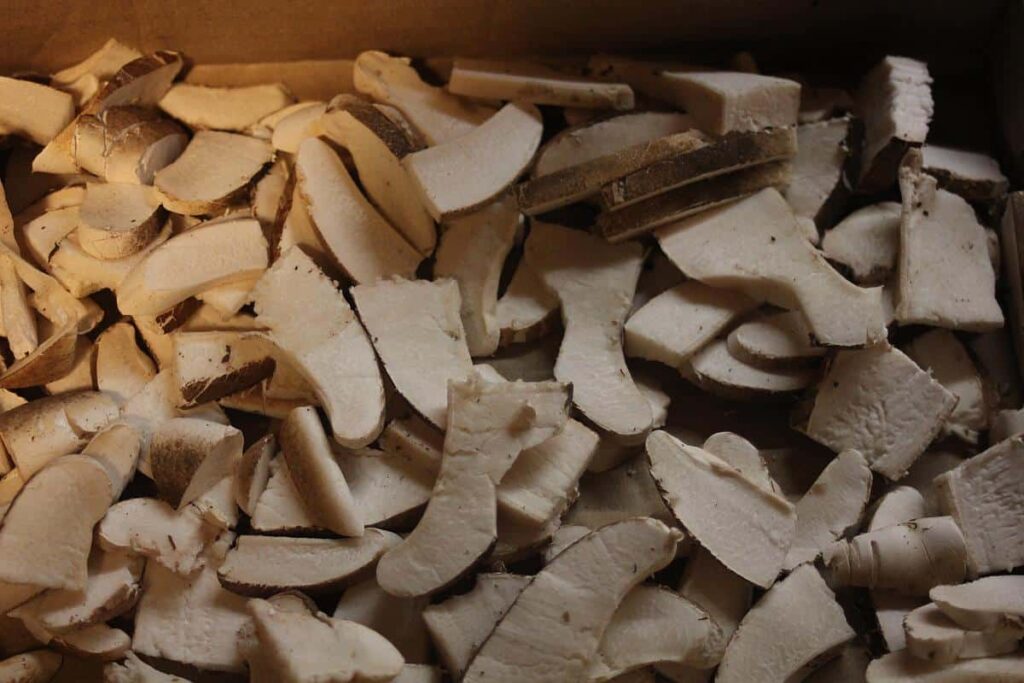
Slicing & Drying: The birch polypore is cut into small cubes and gently dried on the heater, the wood stove, or in the oven. Once dried, it can be kept for many years, but it can also be used completely fresh.
Taste & Scent: The taste is sour to bitter, and the smell is certainly not for everyone.
The Sound of Dryness: Completely dried mushroom pieces should produce a distinct “rustling” or “cracking” sound to entirely prevent mold formation. Dried mushrooms are best stored safely in dark glass jars or little paper bags.
Mushroom Powder: The completely dried birch polypore can also be processed into a fine mushroom powder using a blender.
Choosing the Best: It is highly recommended to gather young specimens, as older ones are often quite tough and brittle. One should also pay close attention to feeding marks or tiny holes on the underside, which can clearly indicate an animal infestation.
🍵 Brewing a Traditional Decoction: The Birch Polypore Tea
In earlier times, this profound tea was traditionally used as a gentle deworming agent or generally against intestinal parasites in the Ancestral Knowledge.
The Preparation: For a magical birch polypore tea, approximately 1 to 2 tablespoons of fresh or dried birch polypore are cut into small pieces and gently boiled for 30 full minutes in 1/2 liter of water.
The Sacred Dosage: One tablespoon of the decoction can be taken daily, although conscious pauses should be taken to actively avoid a habituation effect.
A Touch of Sweetness: The taste certainly takes some getting used to, but it can easily be refined with a little golden honey if needed.
⚠️ A Gentle Note on Healing: There are absolutely no known side effects, except for a possible habituation effect with prolonged intake of the tea or powder. Please note that this ancestral information does not replace a visit to the doctor.

🌿 Safe Foraging: A Note from My German Homeland
Please only gather mushrooms if you are truly familiar with them.
The German Tradition: Here in my home country of Germany, we are blessed with a wonderful tradition of official mushroom consultants (Pilzberater). We can take our gathered woodland treasures directly to these experts to have them safely identified.
International Foraging: If you are exploring the forests in other parts of the world, I warmly recommend reaching out to your local Mycological Society or an experienced foraging guide to safely identify your gathered mushrooms.